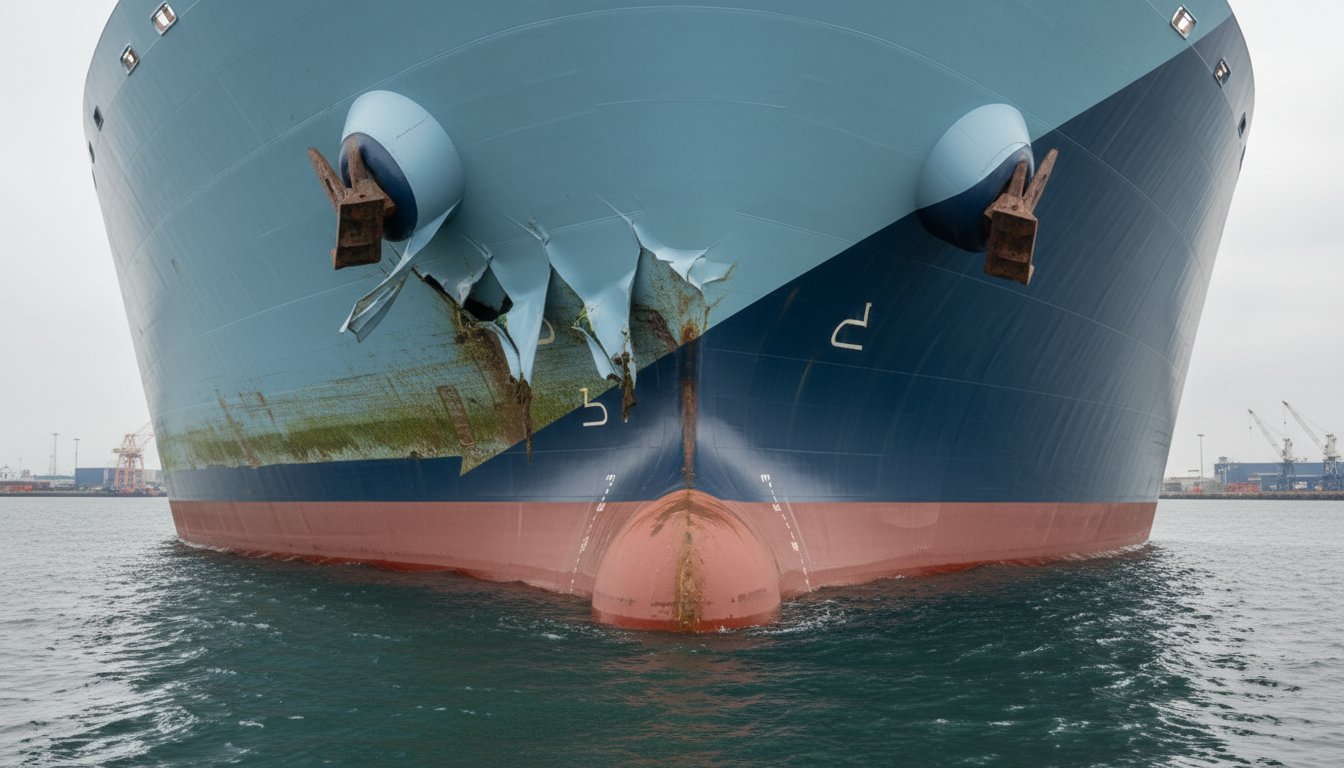
The industry’s most popular eco-friendly solution might actually be its most expensive liability. While soft silicone foul release systems were designed to reduce drag, performance data indicates that up to 40% of these coatings suffer mechanical damage within the first 24 months of service. You likely chose these systems to optimize fuel efficiency and maintain regulatory compliance, yet the reality of fragile films means that simple fender contact or routine hull cleaning often leads to catastrophic tearing. These problems with soft silicone hull coatings create a cycle of frequent, high-cost reapplications that undermine your initial investment.
This technical analysis reveals the mechanical and environmental drawbacks of traditional soft systems and explains why the industry is pivoting toward hard-film Silane-Siloxane technology. You’ll discover how a biocide-free, 10-year solution can provide the durability of a hard coating without sacrificing the hydrodynamic performance required for modern operations. We will examine the chemical transition from fragile elastomers to robust, zero-VOC siloxane structures that ensure long-term ROI and operational reliability.
Key Takeaways
- Understand why the structural vulnerability of elastomeric films leads to immediate tearing and mechanical failure under standard operational stressors like fender contact and floating debris.
- Analyze the inherent problems with soft silicone hull coatings, specifically how silicone oil leaching and restricted cleaning protocols create a costly maintenance paradox for vessel operators.
- Explore the technical shift toward Silane-Siloxane technology, which utilizes a rigid, cross-linked matrix to provide the abrasion resistance that traditional soft elastomers lack.
- Evaluate the economic and environmental advantages of biocide-free, zero VOC coatings that offer a ten-year life cycle and significant reductions in hydrodynamic drag.
- Discover how implementing a hard-film foul release system serves as a strategic asset for long-term hull integrity and regulatory compliance in sensitive marine ecosystems.
The Evolution and Inherent Limitations of Soft Silicone Foul Release
Soft silicone foul release coatings (FRCs) are defined as low-surface-tension elastomeric films. These coatings represent a significant shift in marine chemistry, moving away from the 1970s reliance on Tributyltin (TBT) and subsequent toxic copper biocides. Unlike traditional antifouling paints that leach pesticides to kill marine organisms, silicone coatings provide a “slick” surface that prevents organisms from forming a permanent bond. The maritime industry’s understanding of The Evolution and Inherent Limitations of Soft Silicone Foul Release has matured significantly since the early 2000s, revealing a core engineering paradox: surface slipperiness often comes at the expense of structural integrity.
The 2026 regulatory landscape is accelerating the demand for non-toxic alternatives. International Maritime Organization (IMO) targets and regional restrictions on biocides mean ship owners can’t rely on traditional leaching coatings much longer. However, the problems with soft silicone hull coatings involve more than just chemical composition. The inherent softness of these materials creates a vulnerability that often offsets their environmental benefits. While they offer a path toward compliance, they don’t always provide the operational resilience required for the rigors of commercial shipping.
How Soft Silicone Works (And Why It Fails)
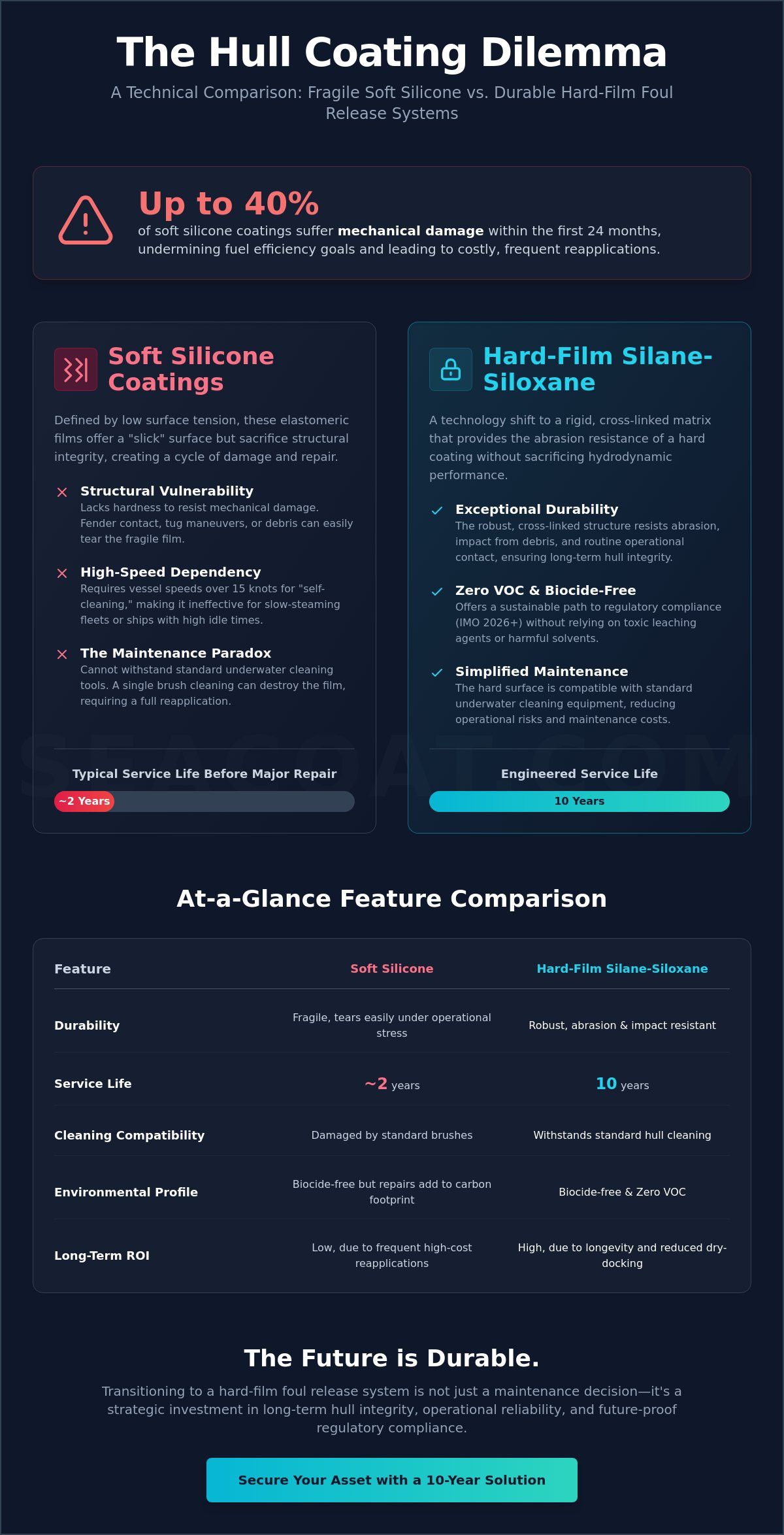
The primary mechanism of soft silicone is its low surface energy. This property minimizes the adhesive forces between the hull and marine larvae or algae. Instead of chemical poisoning, the system relies on hydrodynamic shear. For the coating to “self-clean,” a vessel typically must maintain speeds exceeding 15 knots. This requirement makes the technology less effective for slow-steaming fleets or vessels with high idle times.
The “softness” of the film is its primary failure point in commercial operations. Because the coating is an elastomer with a low modulus of elasticity, it lacks the hardness to resist mechanical damage. Common maritime occurrences, such as fender contact, tug maneuvers, or minor debris strikes, can easily tear the silicone film. Once the surface is compromised, the hydrodynamic profile is ruined, and biofouling quickly colonizes the exposed substrate.
Initial Adoption vs. Long-Term Operational Reality
Fleet managers originally chose soft silicone based on the promise of 6% to 10% fuel savings. On paper, the reduced skin friction of a pristine silicone surface is impressive. Over time, however, the reality of maintenance costs has tempered this enthusiasm. One of the recurring problems with soft silicone hull coatings is that they can’t withstand standard underwater cleaning tools. A single cleaning session with a brush can destroy the delicate film, leading to a total loss of foul-release properties.
This fragility has pushed the industry toward more robust environmental marine coatings. Modern vessel management requires a ten-year performance cycle, but soft silicones often require extensive repairs much sooner. The transition to non-toxic hulls is necessary, but it shouldn’t force a trade-off between environmental safety and physical durability. Reliance on soft films often leads to increased dry-docking frequency, which carries both high financial costs and a larger carbon footprint from the repair process itself.
Structural Vulnerability: Why Soft Coatings Are a Liability
Traditional silicone elastomers prioritize low surface energy over mechanical strength. This design choice results in a film that lacks the necessary abrasion resistance for demanding commercial maritime operations. According to a technical report from the Structural Vulnerability: Why Soft Coatings Are a Liability, these materials are inherently susceptible to mechanical failure caused by shearing and tearing. When a vessel encounters floating debris or ice, the soft polymer cannot distribute the energy of the impact; it shears instead. This physical weakness is one of the most critical problems with soft silicone hull coatings because it compromises the integrity of the entire underwater hull protection system.
The lack of durability leads to immediate delamination. A small tear, perhaps only a few millimeters in length, provides a foothold for hydrodynamic forces to strip the coating from the primer. Once the bond is broken, the “peeling” effect accelerates. This creates a ragged, uneven surface that drastically increases skin friction. Instead of the smooth, low-drag profile promised by manufacturers, the damaged coating becomes a source of significant hydrodynamic drag, which directly translates to increased fuel consumption and higher carbon emissions.
Mechanical Damage in Port and Transit
Commercial harbors are high-energy environments where vessel hulls frequently interact with external forces. Tugboat contact and berthing maneuvers exert localized pressure that soft films weren’t engineered to withstand. Mechanical fragility is the inability of a polymer to resist shear forces. Fender contact often results in “gouging,” where the coating is stripped down to the substrate. This damage isn’t just cosmetic. It creates an entry point for corrosion and aggressive biofouling. If you want to optimize your fleet’s uptime, you should evaluate hard-film alternatives that offer better resistance to these daily operational hazards.
The Problem of “Edge Tearing”
Failure often initiates at high-stress areas like the bow or the waterline. These zones experience extreme turbulent flow and constant aeration. A minor abrasion from a dock or floating timber creates a small flap of material. As the vessel reaches service speeds of 15 to 20 knots, the hydrodynamic pressure catches this edge. The resulting delamination can peel large sections of the coating away in a matter of hours. This peeling creates massive surface roughness, which destroys the fuel efficiency gains the coating was supposed to provide. Unlike these fragile systems, advanced marine coatings utilize high-modulus chemistry to prevent edge propagation. This ensures that problems with soft silicone hull coatings, such as catastrophic film detachment, don’t compromise your operational ROI or long-term maintenance schedules.
The Maintenance Paradox: Cleaning Challenges and Silicone Oil Leaching
Soft silicone coatings rely on low surface energy to prevent biofouling attachment. However, this architectural choice introduces significant problems with soft silicone hull coatings during routine maintenance. Unlike hard-film alternatives, these elastomers lack the structural integrity to withstand standardized mechanical grooming. The material’s inherent fragility means that the very act of maintaining a clean hull often results in permanent substrate damage.
A critical factor often overlooked is silicone oil leaching. To maintain their “slipperiness,” many formulations utilize unbound silicone oils that migrate to the surface over time. While this assists in foul release, it creates a persistent environmental footprint. A technical analysis of silicone coatings conducted by the Defense Technical Information Center (DTIC) highlights how these materials suffer from low tear strength and susceptibility to abrasive wear. These leachable components, identified in recent environmental studies as potential non-biocidal toxins, can accumulate in localized marine sediments. This challenges the “eco-friendly” narrative often marketed by manufacturers.
The Limitations of In-Water Grooming
Standard rotary brushes used by divers or ROVs will shred a soft silicone surface in a single pass. Operators must instead use specialized, non-abrasive tools that often fail to remove stubborn macro-fouling once it takes hold. This creates a cycle where cleaning actually “polishes away” the functional siloxane layer. It’s common to see the coating’s effective lifespan reduced by up to 40% due to aggressive cleaning. When the foul-release mechanism is compromised, vessel owners face premature dry-docking intervals long before the projected five-year mark.
Chemical Migration and Recoating Obstacles
The most enduring problems with soft silicone hull coatings emerge during the recoating phase. Silicone oils saturate the hull’s surface and can even migrate into the surrounding shipyard environment, contaminating nearby vessels. This leads to “fish-eyes,” which are circular voids where the new paint fails to adhere to the substrate. Achieving proper adhesion on a previously silicone-coated hull is notoriously difficult. It frequently requires a full, high-pressure grit blast to bare steel. This process can increase surface preparation costs by 50% compared to traditional overcoating. This contamination risk makes transitioning to a more durable system a costly, multi-stage engineering challenge that many fleet managers don’t anticipate.
Hard Film Foul Release: The Engineering Shift to Silane-Siloxane
The maritime industry’s transition from elastomeric coatings to hard film systems represents a fundamental shift in naval engineering. While the problems with soft silicone hull coatings stem from their low-modulus, rubbery nature, Silane-Siloxane technology offers a rigid, cross-linked matrix. This chemical architecture creates a permanent bond that doesn’t rely on the physical fragility of an elastomer. Unlike soft silicone, which functions through a peeling mechanism that often fails under high-velocity shear, hard film systems utilize a low-energy surface to prevent adhesion at the molecular level.
This engineering shift provides two critical operational advantages: scrubbability and impact resistance. Vessel operators can mechanically clean these surfaces without the risk of tearing the coating, a common failure point for softer alternatives. These systems are designed for a 10-year life cycle, significantly outperforming the three-to-five-year window typical of traditional foul release products. Hard film coatings transform the hull surface into a durable asset rather than a delicate membrane.
The Science of Sea-Speed V 10 X Ultra
Sea-Speed V 10 X Ultra utilizes a specialized Silane-Siloxane chemistry that achieves foul release properties without the use of leachable silicone oils. This is a critical distinction for environmental compliance and long-term performance. By eliminating oil migration, the surface maintains its integrity for over a decade. The coating achieves an ultra-smooth surface profile with a remarkably low Roughness Average (RSA), which reduces hydrodynamic drag and improves fuel economy. For a detailed technical breakdown of these mechanisms, consult the definitive guide to antifouling boat paint.
Comparing Durability and Performance Metrics
The performance gap is most evident when comparing hardness scales. Soft silicones typically measure on the Shore A scale, reflecting their rubber-like consistency. Silane-Siloxane is a hybrid molecular structure combining organic and inorganic properties, resulting in a surface that achieves high pencil hardness ratings. This rigidity allows the coating to survive fender impacts and ice navigation that would strip a soft silicone coating to the substrate. The ROI is realized through reduced dry-docking frequency and the elimination of the frequent touch-up cycles required by delicate systems.
Vessel owners seeking to mitigate the problems with soft silicone hull coatings should prioritize coatings that offer mechanical permanence. You can explore our high-durability foul release specifications to see how hard-film technology optimizes fleet efficiency.
Transitioning to Sea-Speed V 10 X Ultra for Long-Term Integrity
Addressing the systemic problems with soft silicone hull coatings requires a shift from delicate, temporary layers to robust, permanent solutions. Sea-Speed V 10 X Ultra represents this evolution. It’s a hard-film siloxane coating that eliminates the mechanical vulnerabilities associated with traditional foul-release systems. Unlike soft silicones that rely on a fragile surface tension, our technology creates a glass-like finish that’s chemically bonded to the substrate. It’s entirely biocide-free and carries a Zero VOC profile. This ensures your vessel meets the strictest environmental standards without compromising on durability.
Maintenance becomes a simplified operational task rather than a high-risk procedure. Soft coatings are notorious for tearing during routine grooming; however, Sea-Speed V 10 X Ultra is safe for standard brush cleaning and mechanical grooming. You don’t have to worry about ghosting or delamination during underwater inspections. This resilience allows for a proactive hull cleaning regimen that maintains peak performance throughout the entire service interval. Converting a fleet from failed silicone involves a thorough removal of the elastomeric layer followed by the application of our permanent system, creating a hull that remains smooth for years.
Operational Benefits for Fleet Managers
Transitioning to a hard-film system directly impacts the bottom line by extending dry-dock cycles to 10 years or more. This longevity reduces capital expenditure and increases vessel uptime. Because the surface remains smooth and intact, fuel savings are sustained over time. There’s no performance degradation from surface roughness caused by silicone tears or detachment. This optimized hydrodynamic profile is essential for compliance with EEXI and CII regulations. It provides a measurable reduction in carbon intensity that soft coatings simply can’t guarantee over a multi-year period.
- Extended Service Life: Designed for 10+ years of continuous immersion without recoating.
- Mechanical Durability: Resists abrasion from ice, debris, and fender contact.
- Regulatory Ease: Simplifies compliance with global biosecurity and emissions standards.
Why Hard-Film is the Future of Vessel Management
The industry is moving toward permanent coatings that function as strategic assets. Vessel managers are prioritizing systems that support global sustainability goals while providing maximum hull protection. Sea-Speed V 10 X Ultra bridges the gap between environmental stewardship and operational efficiency. It isn’t just a seasonal fix; it’s a long-term investment in the vessel’s structural and hydrodynamic integrity. If you’re ready to move beyond the recurring problems with soft silicone hull coatings, Explore Sea-Speed V 10 X Ultra for your fleet.
Engineering the Future of Hydrodynamic Performance
Transitioning from fragile, elastomer-based surfaces to advanced silane-siloxane technology represents a strategic shift in maritime asset management. The problems with soft silicone hull coatings, including structural vulnerability and the inevitable depletion of silicone oils, necessitate a more resilient approach to biofouling control. By moving away from materials that require frequent, delicate cleaning and offer limited service lives, operators can secure a permanent hydrodynamic advantage. SeaCoat’s engineering provides a non-toxic, hard-film alternative that doesn’t sacrifice durability for environmental safety.
With over 20 years of proven commercial and military success, our technology offers a 10-year life cycle characterized by zero biocide leaching and zero VOC emissions. This isn’t just a maintenance choice; it’s a performance upgrade that reduces fuel consumption by up to 12% through precision drag optimization. You’ll protect your hull while meeting the industry’s most rigorous regulatory standards and operational demands.
Upgrade your vessel to Sea-Speed V 10 X Ultra hard-film foul release to ensure your fleet remains efficient and compliant for the next decade. We’re ready to support your transition to a cleaner, more profitable maritime future.
Frequently Asked Questions
Are silicone hull coatings truly non-toxic?
Most soft silicone coatings are biocide-free but they aren’t strictly non-toxic because they frequently leach unreacted silicone oils into the water column. These oils, used to maintain the foul release properties, can persist in the marine environment for decades. SeaCoat’s silane-based technology achieves a zero VOC rating and eliminates the leaching of harmful additives. This ensures compliance with IMO environmental regulations while maintaining a 100% biocide-free profile for the entire life of the coating.
How long does a soft silicone coating typically last compared to a hard film?
A standard soft silicone coating typically requires replacement every 36 to 60 months due to physical degradation and loss of release oils. Hard-film silane-siloxane systems provide a service life exceeding 120 months, which effectively doubles the operational interval. This longevity stems from the covalent bonding of the hard film to the substrate. It eliminates the need for frequent dry-docking cycles and reduces long-term maintenance costs by 50% over a decade.
Can you apply a different paint over a silicone coating?
You can’t apply traditional anti-fouling or epoxy paints directly over an existing silicone layer because the low surface energy prevents adhesion. Attempting to overcoat usually results in 100% bond failure within weeks. To transition to a different system, you must mechanically remove every trace of the silicone through abrasive blasting to a Sa 2.5 standard. This intensive removal process is one of the major problems with soft silicone hull coatings during vessel refits.
What causes silicone coatings to peel or delaminate?
Delamination occurs because soft silicone has a low tear strength of approximately 2 to 5 Newtons per millimeter, making it vulnerable to impact. Even a minor scrape from a fender or submerged debris can initiate a peel that spreads across the hull surface. Once the edge is lifted, hydrodynamic pressure at speeds above 15 knots forces water under the film. This mechanical vulnerability leads to localized failures that compromise the entire hydrodynamic profile of the vessel.
Is in-water cleaning safe for silicone-based foul release systems?
Traditional in-water cleaning with rotating brushes is unsafe for soft silicone because the abrasive bristles easily gouge the delicate 150-micron surface. Even specialized soft-brush systems can strip away the essential silicone oils required for foul release performance. If a vessel remains idle for more than 14 days, the resulting macro-fouling often requires aggressive cleaning that permanently damages the coating. This creates a cycle of increased drag and frequent, expensive repairs.
What is the difference between silicone and Silane-Siloxane coatings?
Silicone coatings are soft elastomers that rely on physical thickness, while Silane-Siloxane systems are hard-film polymers that form a permanent covalent bond with the hull. Silane-based technology provides a surface hardness of 6H on the Mohs scale, which is significantly more durable than soft silicone. This chemical structure allows for a thinner application that doesn’t sacrifice protection. It offers a permanent solution that maintains its integrity through extreme mechanical stress and environmental exposure.
Do hard-film coatings provide the same fuel savings as soft silicone?
Hard-film coatings offer fuel savings of 6% to 12%, which matches or exceeds the initial performance of soft silicone. The primary advantage of a hard film is its ability to maintain a surface roughness of less than 100 microns over a 10-year period. Soft silicone surfaces often degrade and roughen within 24 months, leading to a steady decline in fuel efficiency. By preserving a smooth hydrodynamic profile, hard films ensure consistent operational savings throughout the entire docking cycle.
How does mechanical damage to a silicone hull affect vessel speed?
Mechanical damage to a silicone hull creates localized turbulence that increases total hull drag by 5% to 8% for every 10% of surface area affected. These tears disrupt the laminar flow, forcing the propulsion system to consume more energy to maintain a constant speed. This is one of the most persistent problems with soft silicone hull coatings, as even small abrasions lead to measurable performance loss. Repairing these sections requires dry-docking, as underwater patches rarely achieve the necessary adhesion.