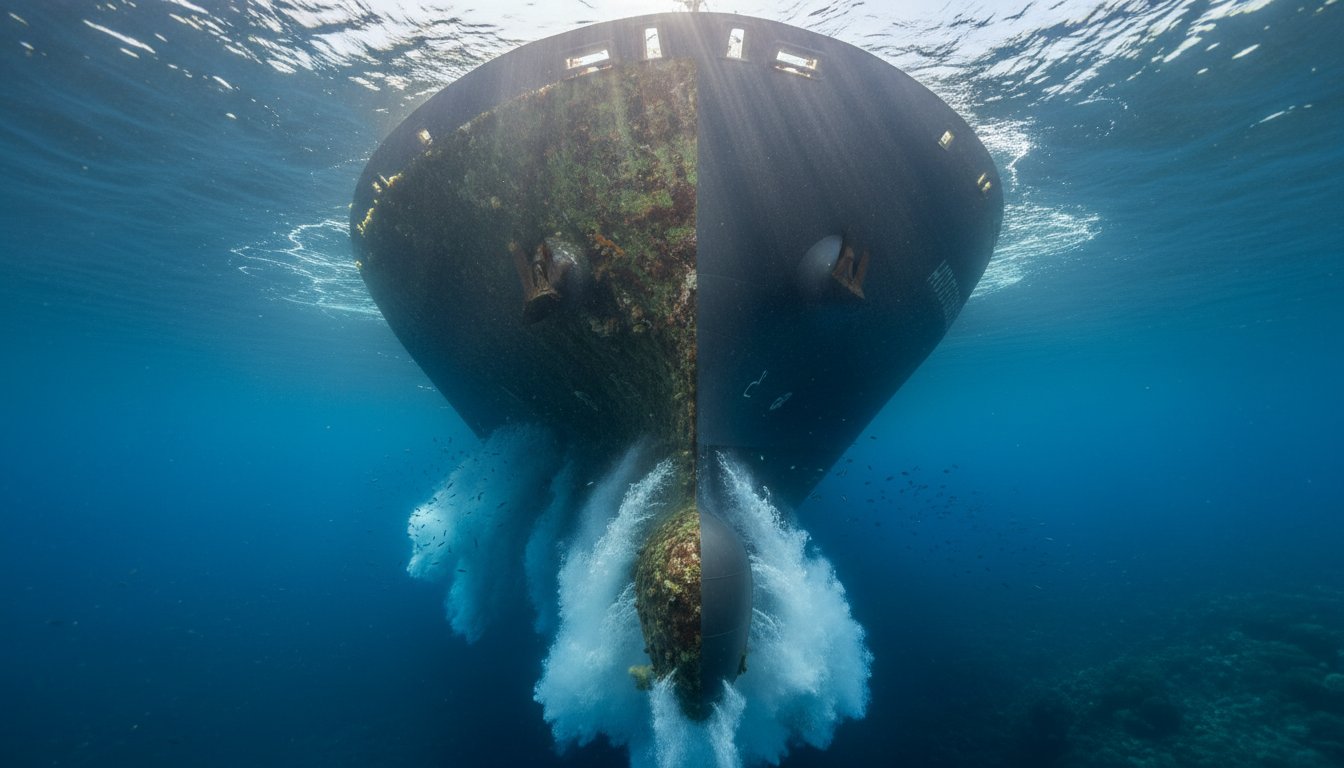
According to International Maritime Organization data, even a light coating of slime just 0.5 millimeters thick can increase a vessel’s fuel consumption by 25% through frictional drag. For fleet managers, protecting hull from marine growth has historically required a difficult trade-off between toxic efficacy and environmental stewardship. You’ve likely felt the operational strain of rising fuel costs and the poor durability of soft silicone coatings that fail to survive a full dry-dock cycle. It’s clear that the industry’s reliance on leaching biocides is no longer a viable strategy for high-performance asset management. Efficiency is no longer optional.
This article demonstrates how advanced foul release technology provides a permanent, non-toxic solution that optimizes vessel hydrodynamics. You’ll discover how these biocide-free systems eliminate marine growth while facilitating a 10-year maintenance cycle and ensuring compliance with 2026 environmental standards. We’ll examine the chemical transition from sacrificial coatings to hard-film siloxane surfaces, framing this shift as a strategic move toward zero-VOC operations and significant drag reduction. This is the future of maritime protection.
Key Takeaways
- Understand how microscopic slime layers increase frictional drag and compromise vessel hydrodynamics, leading to significant escalations in operational costs.
- Analyze the biological adhesion mechanisms of marine organisms to identify why physical non-stick surfaces are more effective than traditional biocide-reliant coatings.
- Evaluate the environmental and performance benefits of transitioning to advanced, biocide-free technology when protecting hull from marine growth.
- Compare the total cost of ownership between traditional paints and foul release systems to uncover the superior ROI of ten-year, high-durability coatings.
- Discover how advanced silane-siloxane chemistry provides a zero-VOC solution that maximizes vessel efficiency without compromising marine ecosystems.
The Impact of Biofouling on Vessel Performance and Economics
Biofouling represents a complex biological challenge for any maritime asset, starting the moment a hull enters the water. It’s the accumulation of microorganisms, plants, and animals on submerged surfaces, creating a living crust that compromises the vessel’s design. The science of biofouling distinguishes between microfouling, such as bacterial slime, and macrofouling, which includes barnacles, mussels, and seaweed. While macrofouling is visually obvious, even a microscopic “slime” layer creates significant operational hurdles. This thin biological film increases surface roughness, which directly amplifies frictional drag as the vessel moves through the water column.
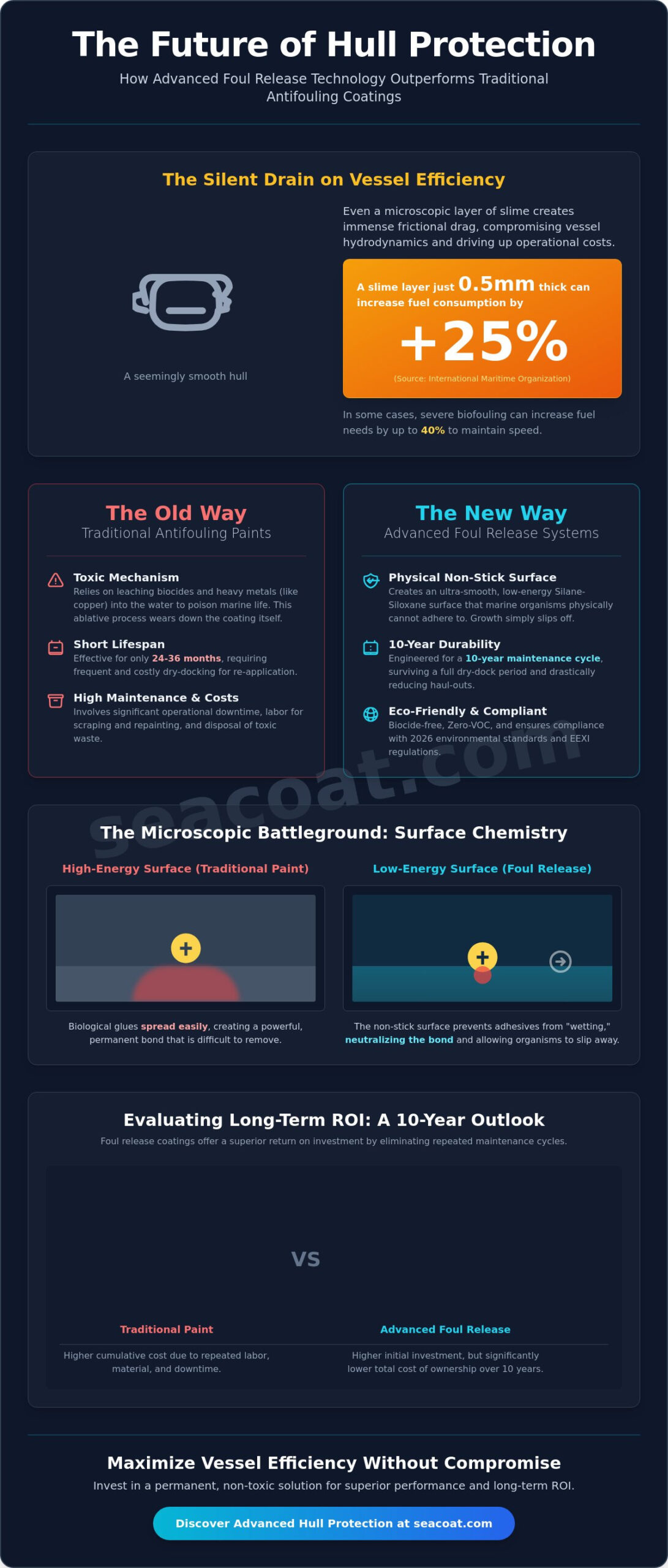
The economic consequences of this drag are severe. Data from the International Maritime Organization (IMO) indicates that biofouling can increase fuel consumption by up to 40% to maintain a constant speed. For commercial fleets, this translates to millions of dollars in wasted fuel and a massive increase in operational overhead. Beyond the immediate financial drain, protecting hull from marine growth is now a regulatory necessity. Effective hull management is essential for meeting global carbon reduction goals and ensuring EEXI (Energy Efficiency Existing Ship Index) compliance. Poorly maintained hulls lead to higher emissions, making it difficult for operators to stay within tightening environmental frameworks.
The Hidden Costs of Traditional Maintenance
Traditional anti-fouling paints often rely on ablative mechanisms, where layers of biocidal paint slowly wear away to reveal fresh toxins. This approach necessitates frequent haul-outs, often every 24 to 36 months, to scrape away exhausted layers and reapply the coating. The labor costs for scrubbing hulls and the lost revenue during dry-docking downtime are substantial. Viewing boat hull paint as a strategic performance asset rather than a simple maintenance line item allows operators to invest in long-term ROI. Modern siloxane-based coatings offer 10-year life cycles, drastically reducing the frequency of expensive haul-outs.
Hydrodynamics and Frictional Drag
The relationship between surface energy and water flow dictates how much energy is required to move a hull. When roughness exists at the molecular level, it disrupts laminar flow and creates turbulence that resists forward motion. High-performance foul release coatings optimize the surface energy to ensure water slips past the hull with minimal resistance. Hydrodynamic efficiency is the ratio of power to speed maintained over time. By protecting hull from marine growth with smooth, non-toxic films, vessels can maintain their intended speed without the power surges typically required to overcome biological drag.
The Chemistry of Adhesion: How Marine Organisms Attach to Hulls
The process of biofouling is a sophisticated biological sequence that begins the moment a vessel enters the water. Marine organisms don’t colonize surfaces by chance; they follow a rigorous “settlement” phase driven by chemical signaling and surface physics. Larvae from species like barnacles and tubeworms use specialized sensory organs to detect suitable substrates, favoring surfaces where they can establish a permanent, secure bond. For those focused on protecting hull from marine growth, understanding this molecular attraction is the first step toward effective mitigation.
Once a larva selects a site, it secretes biological glues composed of complex, cross-linked proteins and polypeptides. These natural adhesives are engineered by evolution to cure instantly in saltwater, creating a bond strength that can exceed 1.5 megapascals. On high-energy surfaces like bare steel or standard epoxy, these glues spread easily, maximizing the contact area and making the organism nearly impossible to remove without mechanical force. To counter this, advanced marine chemistry utilizes Silane-Siloxane compounds. These molecules create a low-energy, non-stick structure that prevents biological adhesives from “wetting” the surface, effectively neutralizing the organism’s ability to gain a foothold.
Primary Biofilm Formation
The initial 24 hours of immersion are the most critical in the life cycle of hull fouling. During this window, a microbial film known as a biofilm forms as organic molecules and “pioneer” species, such as Pseudomonas bacteria and diatoms, adhere to the substrate. This layer acts as a biochemical primer, changing the surface’s pH and texture to make it more attractive to larger macro-foulers. In global maritime hubs, these pioneers are the catalysts for rapid colonization. Preventing this initial layer is the only way to ensure 10-year performance cycles and maintain hydrodynamic efficiency.
Surface Energy and the Foul Release Mechanism
Surface energy, or surface tension, dictates how easily a substance can stick to a coating. Foul release systems are engineered to maintain exceptionally low surface energy, which creates a “slippery” profile at the molecular level. This technology doesn’t rely on toxins to kill organisms; instead, it ensures the bond between the organism and the hull is so weak that it cannot withstand external pressure. Adhering to the IMO Biofouling Guidelines is essential for modern fleets, as these regulations highlight the environmental necessity of managing biofouling to prevent the spread of invasive species.
The self-cleaning property of these coatings is tied to a “critical speed.” For most high-performance Siloxane-based systems, a vessel speed of 10 to 12 knots generates enough hydrodynamic drag to wash away any settled organisms. This mechanism transforms the vessel’s movement into a maintenance tool, ensuring that protecting hull from marine growth becomes a passive, energy-efficient process. Utilizing these advanced coatings serves as a strategic asset for vessel management, reducing drag and fuel consumption simultaneously.
Comparing Protection Strategies: Traditional Antifouling vs. Foul Release Systems
Traditional methods for protecting hull from marine growth rely on chemical warfare. Biocidal antifouling paints function through the controlled leaching of toxins, primarily cuprous oxide or co-biocides, to create a lethal boundary layer. While effective in the short term, these coatings are inherently sacrificial. Ablative paints wear away like a bar of soap, meaning their efficacy diminishes as the film thickness reduces. This creates a cycle of constant maintenance and reapplication that increases long-term operational costs.
Foul release systems represent a fundamental shift in maritime chemistry. Instead of poisoning the marine environment, these systems utilize low surface energy to prevent organisms from gaining a mechanical grip. This physical non-stick mechanism is significantly more efficient than chemical leaching. It provides a consistent hydrodynamic profile over a 10-year life cycle, whereas traditional paints often suffer from increased surface roughness as they age. The environmental footprint of copper-based paints is also a growing liability; heavy metals accumulate in harbor sediments and disrupt local ecosystems. Transitioning to a biocide-free, zero-VOC system isn’t just an ecological choice, it’s a strategic move to optimize vessel performance and reduce drag.
The Failure of Soft Silicone Coatings
Early iterations of foul release technology relied heavily on soft silicone elastomers. These coatings were effective at shedding growth but lacked the mechanical integrity required for commercial or high-performance use. They were notoriously fragile. Simple contact with a fender, a dock, or even high-pressure cleaning could cause tearing or “ghosting,” where the coating shears away from the primer. This fragility led to premature failure and exposed the hull to immediate colonization. Modern Silane-Siloxane systems have solved this issue. By creating a permanent hard-film surface, these advanced coatings provide the durability of an epoxy with the non-stick properties of silicone. They resist abrasion and physical impact, ensuring the hull remains protected even in demanding environments.
Regulatory Compliance and Biocide Bans
The maritime industry faces a tightening net of environmental legislation. The IMO’s ban on organotin compounds (TBT) in 2008 was only the beginning. Current regulations are targeting Cybutryne and other harmful biocides that persist in the water column. Many sensitive marine zones and ports have already implemented strict limits on copper leaching. For a deep dive into the 2026 regulatory shift and how it impacts your fleet, see the antifouling boat paint guide. Investing in non-toxic, foul release technology is the only way to future-proof an asset. As more regions adopt zero-tolerance policies for biocidal runoff, the transition to sustainable, hard-film coatings becomes a necessity for global compliance and protecting hull from marine growth without legal or environmental risk.
Evaluating Long-Term ROI: Durability, Maintenance, and Fuel Savings
Traditional ablative paints often appear economical during the initial procurement phase. However, a 10-year lifecycle analysis reveals a different reality. Biocidal coatings typically require full reapplication every 36 to 60 months, incurring recurring labor costs, material expenses, and hazardous waste disposal fees. Advanced siloxane-based foul release systems provide a decade of service life. While the initial investment is higher, the elimination of multiple repainting cycles creates a net positive return by year five. Drag kills profit. By effectively protecting hull from marine growth, operators maintain a smooth hydrodynamic profile that persists for years rather than months.
Fuel efficiency drives the majority of the return on investment. Even minor biofouling can increase vessel drag by 40%, forcing engines to work harder and consume more bunkers. This leads to an average fuel consumption reduction of 6% to 10% compared to aged biocidal surfaces. For a large container vessel, these savings can exceed $500,000 annually based on current market fuel prices. The financial argument for high-performance coatings isn’t just about avoiding paint; it’s about optimizing the entire energy profile of the ship.
Extending Dry-Docking Intervals
A 10-year life cycle fundamentally restructures fleet management logistics. Traditional coatings necessitate frequent dry-docking purely for anti-fouling maintenance. By utilizing a permanent hard-film solution, operators align hull maintenance with mandatory five-year classification surveys rather than paint degradation schedules. This minimizes lost charter time and reduces expensive shipyard fees. A durable hull coating should be viewed as a capital improvement rather than a maintenance expense.
In-Water Cleaning Best Practices
Hard coatings demonstrate superior mechanical resilience compared to soft, self-polishing copolymers. Mechanical cleaning on traditional paint often strips the active biocidal layer, leading to premature coating failure. Foul release systems rely on a low-energy surface that allows for easy removal of macro-fouling without damaging the integrity of the film. To maximize performance, follow these protocols:
- Utilize soft-brush tools to preserve the non-stick surface properties.
- Implement a quarterly inspection schedule to identify early-stage slime or tubeworm settlement.
- Clean hulls in-water to maintain peak hydrodynamic performance between dry-dockings.
- Ensure cleaning equipment is calibrated to the specific thickness of the hard-film coating.
Advanced Silane-Siloxane Technology: The Future of Hull Protection
Sea-Speed V 10 X Ultra represents the current pinnacle of silane-siloxane technology, offering a robust alternative to outdated chemical antifoulants. As the lead product in the SCT line, it’s engineered as a biocide-free, zero VOC solution that prioritizes both environmental safety and vessel longevity. This technology makes protecting hull from marine growth a matter of surface energy and physics rather than toxic leaching. Unlike traditional ablative paints that wear away and release heavy metals into the water, Sea-Speed creates a permanent, non-migratory barrier. For a deeper look at how these standards are evolving, see the analysis on environmental marine coatings and the 2026 regulatory landscape.
The application protocol is designed for maximum efficiency across commercial, military, and recreational sectors. The process involves a high-build application that results in a durable, glass-like finish. This surface doesn’t just repel organisms; it resists the physical abrasion common in high-traffic maritime operations. Because the coating is a hard-film foul release, it doesn’t require the constant depletion of material to remain effective. This allows for extended dry-dock intervals, often reaching ten years of service life without the need for a full re-coat.
The Sea-Speed Performance Advantage
The primary benefit of this technology is its ultra-smooth hydrodynamic profile. By reducing surface roughness to microscopic levels, Sea-Speed V 10 X Ultra allows vessels to reach higher top speeds with less engine strain. To protect critical propulsion components, the Armor-Sil R/G system is utilized specifically for propellers and running gear. It handles the high-stress environment of rotating parts where standard coatings often fail. For racing applications where every knot counts, the “Clear” variant offers the same friction-reduction properties without altering the vessel’s original hull color or branding.
Securing Your Vessel for 2026 and Beyond
Moving to a non-toxic hard-film coating is the most logical step for modern fleet managers. Regulatory bodies are moving away from heavy metals and biocides; adopting Sea-Speed now ensures your vessel remains compliant for years. We recommend that vessel managers immediately audit their fuel-to-speed ratios to identify efficiency gaps caused by biofouling. A single application can provide a ten-year service life, drastically improving long-term ROI and operational readiness. Explore the Sea-Speed V 10 X Ultra Technical Data to see the performance metrics for your specific vessel class.
Optimizing Vessel Performance for the Next Decade of Operations
Effective maritime management requires moving beyond temporary fixes toward permanent, scientifically-backed solutions. The transition from traditional biocidal coatings to advanced foul release systems represents a fundamental shift in how the industry approaches hydrodynamic efficiency. By utilizing proprietary Silane-Siloxane technology, operators can eliminate the environmental hazards of toxic leaching while simultaneously reducing hull roughness. This isn’t theoretical; global military and commercial fleets currently utilize these coatings to achieve documented drag reduction and significant fuel savings across their operations. Protecting hull from marine growth through molecular adhesion science ensures that your vessel maintains peak performance without the need for frequent, costly re-applications.
Choosing a hard-film, biocide-free coating provides the durability necessary for a 10-year service life while maintaining a Zero VOC profile. This strategic approach to hull maintenance prioritizes both long-term ROI and environmental stewardship, positioning your fleet at the forefront of modern maritime standards. It’s time to secure your asset’s future with a coating that delivers on its promises of efficiency and longevity. Your fleet deserves a solution that’s as resilient as the environments it navigates.
Upgrade to Sea-Speed V 10 X Ultra for 10-Year Protection
Frequently Asked Questions
Is non-toxic foul release as effective as copper-based antifouling?
Non-toxic foul release coatings like Sea-Speed are as effective as copper-based alternatives while providing superior longevity and hydrodynamic efficiency. Traditional ablative paints rely on the leaching of biocides, which depletes the coating over 24 to 36 months. In contrast, our silane-siloxane technology creates a permanent, low-surface-energy barrier that prevents organisms from adhering. Data shows that maintaining a smooth, biocide-free surface is a critical strategy for protecting hull from marine growth without environmental degradation.
Can I apply Sea-Speed over my existing bottom paint?
You can’t apply Sea-Speed directly over existing ablative or leaching bottom paints because the bond requires a stable, high-profile substrate. Effective application involves removing old coatings via abrasive blasting to a Near-White Metal (SSPC-SP 10) or equivalent composite standard. This ensures the 100% solids epoxy base adheres correctly. A clean start is necessary to achieve the 10 year life cycle and the ultra-smooth surface profile required for maximum fuel efficiency.
How much fuel can I really save by protecting my hull from marine growth?
Vessel operators typically achieve fuel savings between 6% and 12% by switching from traditional antifouling to a high-performance foul release system. This occurs because the coating reduces hull roughness to less than 100 microns, significantly lowering frictional drag. According to IMO MEPC studies, even minor slime layers increase fuel consumption by 10% to 15%. By protecting hull from marine growth with a hard-film coating, you maintain peak hydrodynamic performance throughout the entire dry-dock cycle.
What is the life expectancy of a Silane-Siloxane coating?
The life expectancy of a Sea-Speed silane-siloxane coating is 10 years or more, which is triple the lifespan of standard biocidal paints. Because it’s a non-depleting hard film, it doesn’t wear away or lose effectiveness over time. This durability allows vessels to extend their dry-docking intervals significantly. We’ve documented applications from 2014 that continue to exhibit high gloss and low-energy surface properties, proving the long-term ROI of this specialized chemistry.
How fast does a boat need to go for foul release to “self-clean”?
Most vessels need to reach speeds of 10 to 12 knots for the hydrodynamic shear force to initiate the self-cleaning process. At these velocities, the water movement overcomes the weak mechanical bond of any accumulated biofouling. For slower vessels or those with high idle times, the coating still provides an advantage. Any growth that does attach remains loosely adhered, making it much easier to remove during routine operations compared to traditional porous paints.
Is Sea-Speed coating safe for aluminum hulls and outdrives?
Sea-Speed is completely safe for aluminum hulls, outdrives, and IPS units because it’s a non-metallic, non-conductive coating. Unlike copper-based paints that trigger galvanic corrosion on aluminum, our biocide-free formula acts as a high-build dielectric barrier. This eliminates the risk of electrolysis that often destroys expensive underwater hardware. It provides a 100% solids epoxy shield that protects the metal substrate while ensuring the surface remains slick and free of invasive species.
What happens if growth does occur on a foul release coating?
If marine growth occurs during extended stationary periods, it sits on the surface rather than rooting into the film. You can remove 95% of this accumulation using a soft brush or a simple microfiber cloth while the boat is in the water. Because the coating is a hard-film epoxy, you won’t release toxic plumes or strip away the coating material during cleaning. This easy-clean characteristic ensures the hull returns to its optimal hydrodynamic state immediately.
Does a hard-film coating require special cleaning equipment?
You don’t need specialized high-pressure equipment or aggressive scrubbing tools to maintain a hard-film foul release coating. Standard soft-bristle brushes or even sponges are sufficient for removing biofilm and light grass. In fact, using abrasive pads or metal scrapers is discouraged because they aren’t necessary for the low-energy surface. This simplicity reduces maintenance costs by 50% over the life of the vessel and prevents the physical degradation common with traditional soft paints.