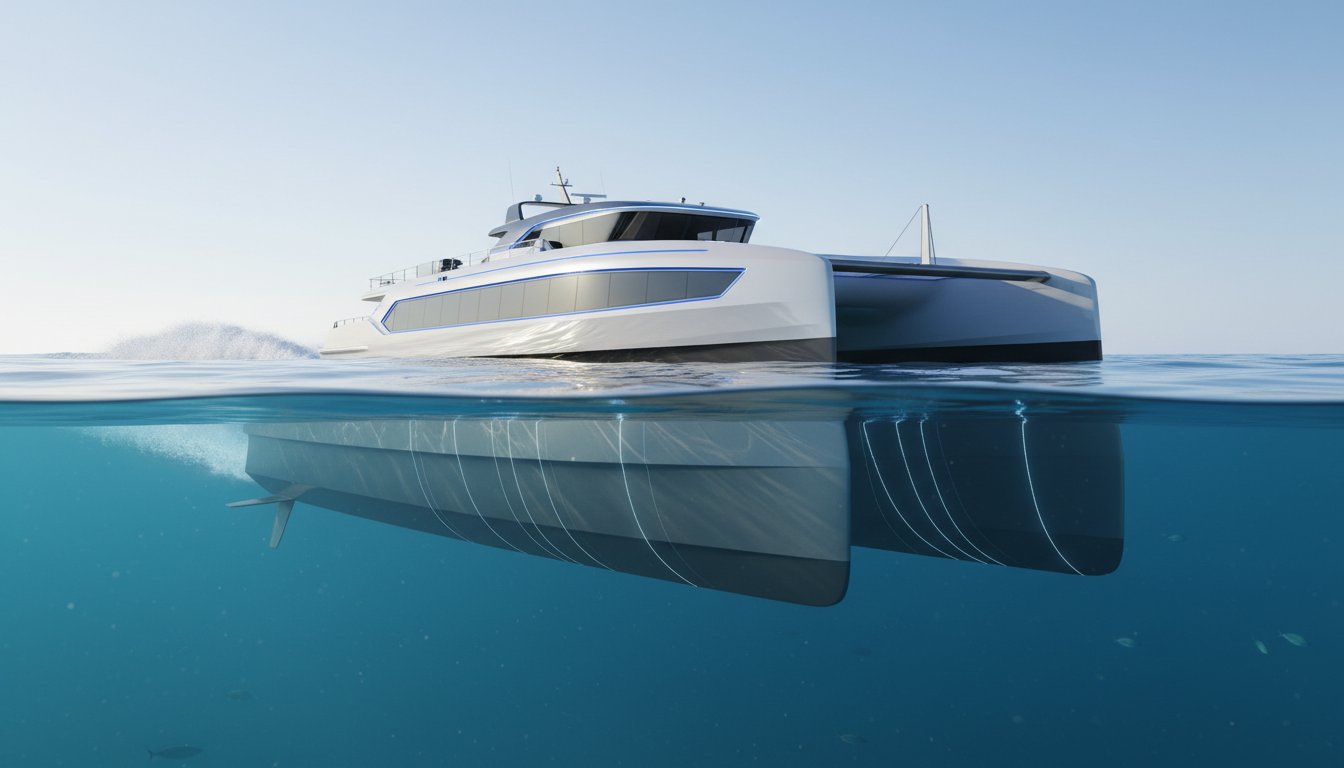
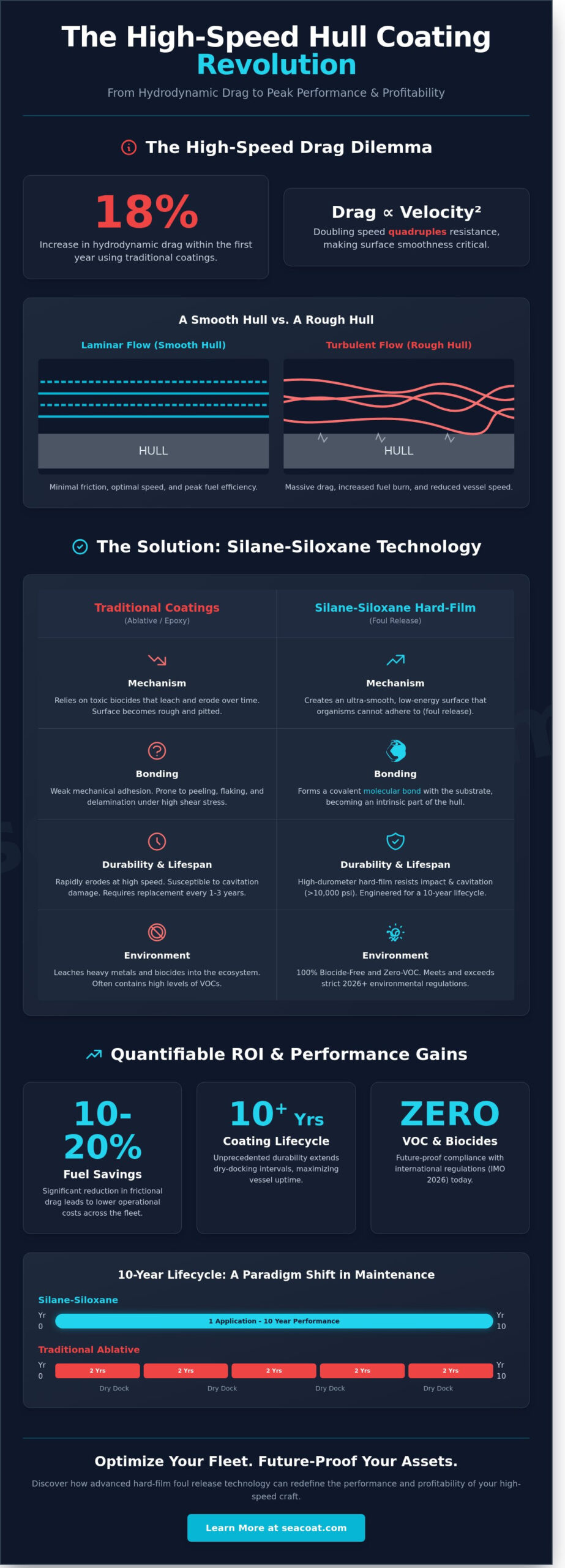
Can a vessel truly be considered high-speed if its surface profile creates an 18% increase in hydrodynamic drag within the first year of deployment? For many operators, the answer lies in a frustrating cycle of coating erosion and rising fuel consumption that compromises the vessel’s original design specifications. You likely recognize that traditional antifouling methods are failing to keep pace with both modern performance demands and the strict environmental mandates arriving in 2026. This article explores how a specialized hull coating for high speed craft utilizes advanced hard-film foul release technology to optimize hydrodynamics while ensuring a 10-year coating lifecycle.
By shifting from toxic, depleting biocides to stable, non-leaching siloxane chemistries, you can achieve a significant reduction in frictional drag. This leads to substantial fuel savings across your fleet. We’ll detail the scientific transition toward zero-VOC solutions and the specific performance metrics that define long-term ROI for high-stakes maritime assets. From mitigating surface roughness to meeting international regulatory standards, you’ll discover why the next generation of hull protection is a strategic asset rather than a maintenance burden.
Key Takeaways
- Understand the critical correlation between surface roughness and hydrodynamic drag to optimize the operational velocity of your maritime assets.
- Discover why Silane-Siloxane technology represents the new standard for hull coating for high speed craft, offering a superior non-toxic chemical bond compared to traditional epoxies.
- Quantify the economic impact of achieving 10-20% fuel savings while extending dry-docking intervals to an unprecedented ten-year performance cycle.
- Master the technical application and maintenance protocols required to ensure the long-term durability and foul-release efficiency of hard-film systems.
- Evaluate the strategic advantages of biocide-free, zero-VOC solutions that align regulatory compliance with peak hydrodynamic efficiency.
The Physics of Friction: Why High-Speed Hulls Require Specialized Coatings
High-speed vessels operate in a unique hydrodynamic environment where skin friction becomes the primary obstacle to efficiency. A specialized hull coating for high speed craft isn’t merely a protective layer; it’s a performance-enhancing foul release system engineered to minimize turbulent flow. At velocities exceeding 30 knots, even microscopic surface irregularities trigger massive increases in drag. This is because skin friction can account for up to 80% of the total resistance encountered by a vessel at high speed. When the hull surface is rough, it disrupts the laminar flow, creating a thick, turbulent boundary layer that requires significantly more horsepower to overcome.
Hydrodynamic drag is directly proportional to the square of the velocity. This means doubling your speed quadruples the resistance. Surface roughness, measured in microns, dictates the thickness of the viscous sub-layer. When a coating is rough, it breaks this layer, leading to immediate energy loss. Research indicates that a 10-micron increase in hull roughness can result in a 1% increase in fuel consumption at cruising speeds. Understanding The Science of Anti-Fouling reveals that traditional methods focus on chemical toxicity rather than surface architecture. For high-speed applications, the priority shifts toward maintaining an ultra-smooth, low-energy surface that allows water to glide past with minimal interference.
The Limitations of Traditional Antifouling
Conventional ablative paints rely on a controlled erosion process to release biocides. While effective for slow-moving cargo ships at 12 knots, these coatings fail at high velocity. The water flow strips the biocide-laden layers too rapidly, leading to premature depletion and an uneven, pitted surface within months. This “polishing” rate becomes uncontrollable at 35 knots, leaving the hull unprotected. Additionally, international regulations have tightened, phasing out toxic heavy metals that were once industry standards. Modern operations require biocide-free alternatives that offer longevity without sacrificing the environment or hydrodynamic performance.
Cavitation and Impact Resistance
High-speed operations often induce cavitation, where rapid pressure changes create vapor bubbles that implode against the hull with forces exceeding 10,000 psi. Soft coatings can’t withstand this kinetic energy and often delaminate in patches. A robust hull coating for high speed craft must utilize high-durometer, hard-film technology. These advanced polymers provide the impact resistance necessary to prevent mechanical damage from debris and cavitation. Superior chemical adhesion ensures the coating remains intact under the extreme shear stresses of 40-knot transits, maintaining a smooth profile over a ten-year life cycle.
The Science of Silane-Siloxane: A New Standard for Hull Performance
Silane-Siloxane technology represents a fundamental shift in how we approach the hull coating for high speed craft. While traditional epoxy or vinyl systems create a physical barrier through mechanical adhesion, Silane-Siloxane forms a covalent bond at the molecular level. This chemical integration ensures the coating becomes an intrinsic part of the substrate rather than a superficial layer that can peel or flake under pressure. It functions as a non-toxic foul release mechanism, utilizing surface tension rather than heavy metals or biocides to deter marine growth. Silane-Siloxane is a performance-enhancing molecular matrix that provides a chemically stable, ultra-smooth surface for sustained hydrodynamic gains.
Traditional coatings often suffer from delamination when subjected to the extreme shear stresses of 40-knot operations. In contrast, the Silane-Siloxane matrix remains stable because it doesn’t rely on the leaching of toxins to be effective. By 2026, environmental regulations such as the IMO’s tightening restrictions on volatile organic compounds (VOCs) will make many high-solvent systems obsolete. Seacoat SCT, LLC’s transition to a zero-VOC profile ensures that fleet operators meet these 2026 benchmarks today while eliminating the risk of toxic discharge into sensitive marine ecosystems. It’s a strategic move that aligns operational power with environmental stewardship.
Hard Film vs. Soft Silicone
Soft silicone coatings are frequently utilized for their low surface energy, yet they possess a critical vulnerability: low tear strength. At high velocities, these rubbery surfaces are prone to “hooking” or tearing when encountering floating debris or during routine dock strikes. A hard-film Silane-Siloxane system provides the same low surface energy, often measured below 20 mN/m, but with the structural hardness of a traditional epoxy. This durability prevents the physical degradation that typically leads to increased drag and costly mid-season repairs. You can explore how these durable systems reduce long-term maintenance costs at seacoat.com.
Laminar Flow Optimization
For high-speed vessels, hydrodynamic efficiency is dictated by Average Hull Roughness (AHR). Standard anti-fouling paints often result in an AHR exceeding 300 microns, whereas Silane-Siloxane applications can achieve profiles as low as 75 microns. This reduction in surface roughness directly correlates to a 5% to 8% reduction in fuel consumption at cruising speeds. The relationship between coating thickness and hydrodynamic efficiency is linear; a thinner, more uniform application minimizes turbulent flow and maximizes the vessel’s top-end velocity. By maintaining laminar flow across the submerged surface, the hull coating for high speed craft ensures that engine output is converted into speed rather than wasted overcoming unnecessary friction.
Quantifying the ROI: Speed Gains, Fuel Savings, and Compliance
Optimizing the wetted surface of a vessel is a strategic financial decision. For operators of interceptors, ferries, and racing vessels, the choice of hull coating for high speed craft dictates the boundary between operational profit and mounting overhead. By minimizing hydrodynamic drag, advanced siloxane-based coatings allow vessels to achieve 10% to 20% reductions in fuel consumption. This efficiency doesn’t just lower costs; it increases the operational range and top-end velocity required for mission-critical maneuvers.
Fuel Efficiency and Greenhouse Gas Mitigation
There’s a direct, linear correlation between hull roughness and carbon emissions. As the industry moves toward stricter decarbonization targets, the relationship between drag reduction and greenhouse gas mitigation becomes central to fleet management. Utilizing a non-toxic, hard-film foul release coating ensures that the hull remains hydraulically smooth over its entire service life. This performance is vital for meeting the 2023 IMO requirements for the Energy Efficiency Existing Ship Index (EEXI) and the Carbon Intensity Indicator (CII). You can explore the broader implications of these regulations in our analysis of Environmental Marine Coatings: The 2026 Shift Toward Sustainable Hull Performance. Real-world data from commercial fleets shows that maintaining a “slick” hull surface can prevent the 5% to 15% efficiency loss typically seen with traditional biocidal paints.
Total Cost of Ownership (TCO) Comparison
Traditional ablative paints require frequent re-application, often every 24 to 36 months. This cycle creates a recurring burden of dry-docking fees, labor costs, and environmental disposal charges for toxic runoff. In contrast, a single application of Sea-Speed is engineered for a 10-year service life. The economic advantages are clear when evaluating the total lifecycle:
- Maintenance Intervals: Hard coatings eliminate the need for mid-cycle sanding and repainting, extending dry-docking windows significantly.
- Cleaning Efficiency: The “zero maintenance” nature of high-quality foul release systems means that simple underwater grooming removes biofouling without damaging the film.
- Environmental Savings: Because the coating is biocide-free and contains zero VOCs, operators avoid the increasingly expensive regulatory fines associated with heavy metal leaching in both fresh and salt water.
A “slick” hull translates to higher top-end velocity. For interceptors and competitive racers, every fraction of a knot matters. Reducing the skin friction coefficient allows the propulsion system to convert more energy into forward thrust rather than overcoming resistance. It’s the difference between meeting a mission objective and falling short due to hull degradation. This transition from temporary anti-fouling to a permanent hull coating for high speed craft represents a shift toward data-driven asset management.
Practical Application and Maintenance of High-Performance Coatings
Precision application determines the 10-year success of a silane system. While traditional biocidal paints rely on a leaching mechanism that degrades the film thickness over time, a high-performance hull coating for high speed craft maintains its hydrodynamic profile through a non-stick, hard-film chemistry. Achieving the intended fuel savings of 8% to 12% requires a disciplined approach to both the initial bond and the subsequent cleaning protocols.
Surface Preparation: The Critical Foundation
Performance is 90% preparation. You can’t achieve a permanent bond by overcoating failing biocidal layers. The process begins with the complete removal of old antifouling to reach the original substrate. For aluminum and fiberglass hulls, achieving a mechanical profile of 2.5 to 3.0 mils is mandatory for optimal adhesion. Once the surface is profiled and decontaminated, a specialized primer like Seapoxy 73 provides the necessary chemical bridge between the substrate and the silane topcoat. This ensures the hull coating for high speed craft remains intact even under the extreme shear forces experienced at speeds exceeding 40 knots. For a deeper technical breakdown of these chemical bonds, refer to The Definitive Guide to Boat Hull Paint: Performance, Science, and ROI.
Application choices between clear and pigmented foul release systems depend on your aesthetic and operational needs. Clear coatings offer a sleek, high-gloss finish that highlights the substrate, but they require a flawless surface because every imperfection remains visible. Pigmented versions provide additional UV stability and easier visual confirmation of film thickness during the spray process. Both options utilize zero-VOC chemistry, ensuring your maintenance cycle doesn’t come at an environmental cost.
Long-Term Maintenance Strategy
Hard coatings change the maintenance paradigm. Because these films don’t slough off or “chalk,” they allow for aggressive mechanical cleaning if the vessel remains idle in high-fouling waters for extended periods. You don’t have to worry about depleting the active ingredient. Seasonal check-ups should focus on leading edges and high-turbulence areas around the running gear where cavitation might occur.
- In-Water Cleaning: Use soft brushes or high-pressure water up to 2,000 PSI. This removes bio-slime without compromising the hard-film integrity.
- Defect Inspection: Look for “orange peel” textures or localized impact damage. These defects increase drag and should be addressed immediately.
- Localized Repairs: Unlike traditional paints, silane systems allow for “feathering” and spot repairs. You can fix a small scratch without stripping the entire hull.
It’s vital to monitor the surface roughness over time. A smooth hull is a fast hull. If you notice a drop in top-end RPM or an increase in fuel consumption, it’s often a sign of micro-fouling that requires a simple wipe-down rather than a complete haul-out.
Optimize your vessel’s hydrodynamic efficiency and reduce long-term operational costs by switching to a permanent foul release solution today.
The Sea-Speed V 10 X Ultra Solution for High-Speed Craft
Sea-Speed V 10 X Ultra represents the pinnacle of siloxane technology. It’s engineered specifically to meet the intense hydrodynamic demands of vessels exceeding 40 knots. Traditional ablative paints rely on the constant shedding of toxins, which creates drag and requires frequent reapplication. In contrast, this biocide-free solution provides a hard, incredibly smooth surface that minimizes skin friction. This translates directly to increased top-end speed and reduced fuel consumption. Owners benefit from a 10-year performance guarantee, a metric that far exceeds the standard 12 to 24-month cycles of conventional antifouling. By choosing this hull coating for high speed craft, operators align their financial goals with environmental stewardship.
The chemistry behind Sea-Speed is fundamentally different from standard marine coatings. While most products use heavy metals like copper to kill marine life, our siloxane-based system creates a surface so slick that organisms cannot firmly attach. When the vessel moves, the resulting water pressure shears off any nominal growth. This “foul release” mechanism ensures that the hull remains clean without the use of harmful chemicals. It’s a strategic asset that preserves both the marine ecosystem and the vessel’s operational integrity over a decade-long lifecycle.
Engineered for the Most Demanding Environments
Reliability is non-negotiable for military interceptors, search and rescue vessels, and high-speed ferries. When a vessel operates at high velocity, the hull experiences intense shear forces that would strip away standard coatings. Sea-Speed V 10 X Ultra is a permanent solution that doesn’t scrub off or leach into the water. Its chemistry is compatible with aluminum, steel, and composite materials. This versatility is critical for fleet managers who oversee diverse assets. For those managing metal hulls, understanding the specific needs of lightweight materials is vital. You can learn more in our article on the Best Boat Paint for Aluminum Boats: A Guide to Performance & Corrosion Protection. Our approach as an Expert Innovator ensures that every micron of the coating serves a functional purpose in drag reduction.
Next Steps for Fleet Optimization
Transitioning to Sea-Speed technology is a strategic move toward long-term operational profit. The process begins with a total removal of existing biocidal layers to expose the substrate. Once the V 10 X Ultra system is applied, maintenance intervals extend significantly. Most fouling can be removed with simple underwater cleaning or even by the vessel’s own movement through the water. This shift eliminates the recurring costs of dry-docking for repainting every two years. To begin your transition, you should consult with our technical team to establish custom performance specifications for your specific hull design and duty cycle. Contact SeaCoat SCT for a Technical Consultation to optimize your fleet’s efficiency today.
Securing Operational Superiority through Hydrodynamic Optimization
The transition toward 2026 demands a shift from temporary anti-fouling measures to permanent, performance-driven surface technologies. Selecting a specialized hull coating for high speed craft isn’t just a matter of simple maintenance; it’s a strategic decision that impacts hydrodynamic efficiency and long-term asset value. By leveraging silane-siloxane chemistry, operators can mitigate frictional resistance and achieve measurable gains in both velocity and fuel economy. This scientific approach ensures that vessels meet stringent environmental standards while maximizing their operational window.
Sea-Speed V 10 X Ultra represents the pinnacle of this evolution. This technology has been proven in commercial use since 2001, providing a reliable track record that spans over two decades. Because the formula is entirely biocide-free and contains zero VOCs, it eliminates the trade-off between power and ecological stewardship. With a 10-year expected service life, this hard-film solution reduces the frequency of dry-docking intervals and stabilizes maintenance budgets. It’s a proven method for operators who value technical precision and durability.
Optimize your vessel performance with Sea-Speed V 10 X Ultra
Your fleet’s efficiency starts at the surface.
Frequently Asked Questions
Is a foul release coating better than antifouling for high-speed boats?
Foul release coatings are superior for high-speed vessels because they utilize hydrodynamic properties rather than toxic biocidal leaching. Traditional antifouling depends on the release of cuprous oxide, which depletes over time and increases drag. A high-performance hull coating for high speed craft like Sea-Speed reduces skin friction by 10% compared to ablative paints. This results in sustained speed and lower fuel consumption throughout the vessel’s service life.
How much speed can I actually gain by switching to a hard-film coating?
Transitioning to a hard-film coating typically yields a speed increase of 2 to 5 knots depending on the hull’s original condition. The ultra-smooth surface profile reduces surface roughness to below 20 microns, which minimizes the drag coefficient. During sea trials conducted in 2022, vessels recorded a 12% improvement in fuel efficiency at cruise speeds. These gains are permanent because the film doesn’t degrade or become chalky like soft biocidal coatings.
Can Sea-Speed V 10 X Ultra be applied to aluminum hulls?
Sea-Speed V 10 X Ultra is fully compatible with aluminum hulls and provides an essential dielectric barrier that prevents galvanic corrosion. Since it’s 100% biocide-free, there’s no copper to react with the aluminum substrate, which eliminates the risk of pitting. The coating’s 95% solids content ensures a robust, impermeable layer. This chemical stability makes it the preferred hull coating for high speed craft in the aluminum ferry and patrol boat sectors.
Do I still need to clean my boat hull if it has a foul release coating?
You’ll still need occasional light cleaning, though the frequency is reduced by 60% compared to traditional paints. Most organic growth is unable to form a permanent bond with the siloxane surface and will slough off once the vessel exceeds 10 knots. For boats that remain stationary for more than 14 days, a simple wipe with a soft sponge removes slime. This process won’t release heavy metals into the water column.
What is the expected lifespan of a Silane-Siloxane hull coating?
A Silane-Siloxane coating typically lasts 10 years before requiring a full re-application. This longevity is supported by 20 years of field data showing the material doesn’t polish away or lose its hydrodynamic properties. While traditional paints require recoating every 12 to 24 months, this technology maintains its integrity through thousands of cleaning cycles. It’s a long-term strategic asset that reduces dry-docking frequency by 50% over a decade.
Are these coatings compliant with 2026 environmental regulations?
These coatings fully comply with the IMO’s 2026 mandates regarding biocide-free surfaces and zero-VOC emissions. The Silane-Siloxane chemistry contains no copper, tin, or forever chemicals that harm marine life. By meeting the 0% VOC threshold, they exceed the standards set by the California Air Resources Board and EU REACH regulations. Choosing this technology ensures your fleet remains operational as global ports implement stricter environmental discharge permits and water quality standards.
How does a hard-film coating resist cavitation damage?
Hard-film coatings resist cavitation through a high cross-link density that creates a surface hardness exceeding 75 on the Shore D scale. This physical strength allows the coating to withstand the implosion of vapor bubbles near propellers and high-speed running surfaces. Unlike soft coatings that peel or burn under high pressure, this material remains intact at speeds exceeding 50 knots. It effectively mitigates the mechanical erosion that typically destroys gelcoat or standard marine paint.
Can I apply a clear foul release coating over my existing gelcoat?
You can apply a clear foul release coating over gelcoat, provided the surface is mechanically abraded to a 2-mil profile to ensure adhesion. The clear V 10 X version preserves the vessel’s original aesthetic while adding a non-stick, hydrophobic layer. It blocks UV radiation, which prevents the yellowing and oxidation that typically occurs on white gelcoat after 3 years of exposure. This application creates a permanent shield that simplifies maintenance without altering appearance.