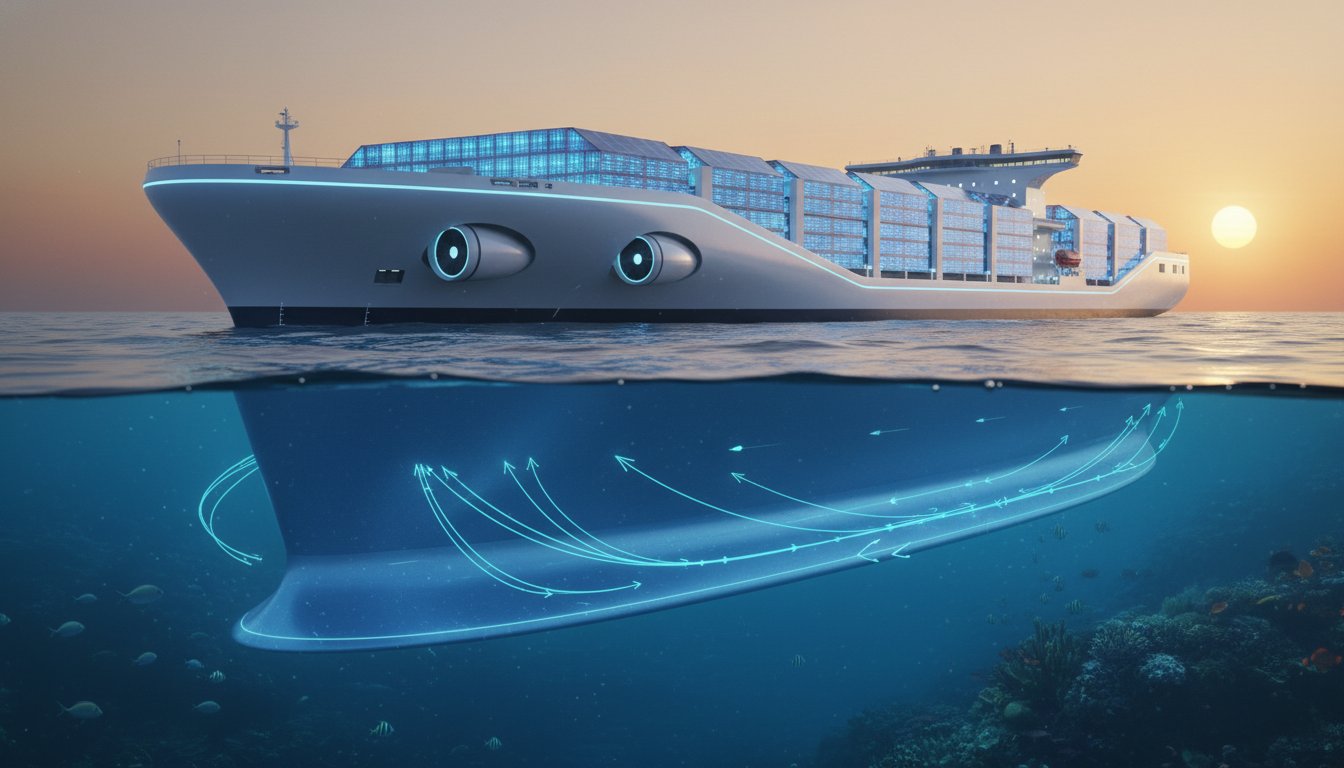
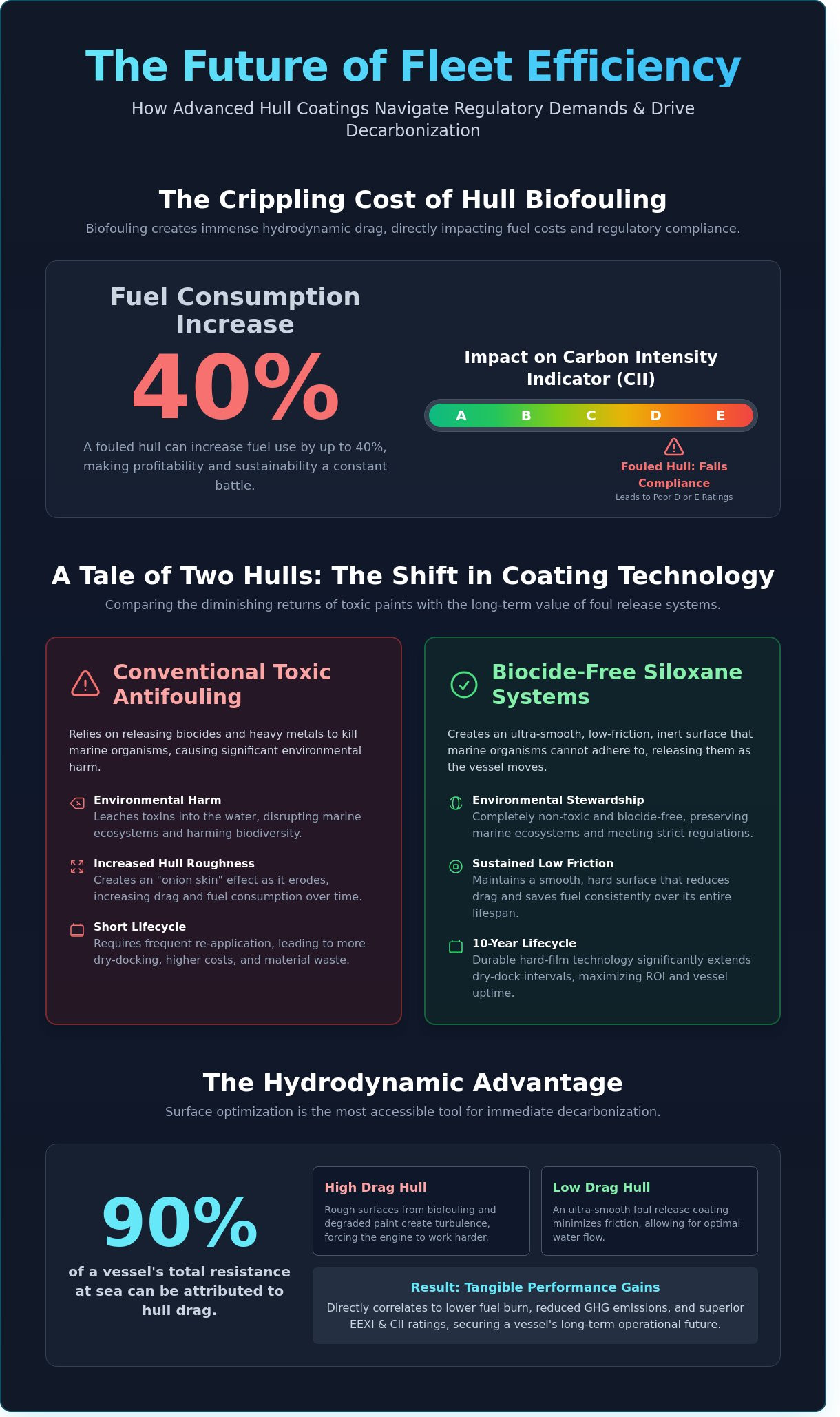
According to the International Maritime Organization, biofouling on a ship’s hull can increase fuel consumption by as much as 40%, a figure that makes achieving a favorable Carbon Intensity Indicator (CII) rating nearly impossible for many aging fleets. You’ve likely felt the mounting pressure of the 2026 regulatory updates, where the margin for operational error has effectively disappeared. We recognize that the industry’s historical reliance on toxic biocides has reached a point of diminishing returns, both for the environment and for your bottom line. This article demonstrates how sustainable shipping solutions, specifically advanced hull coatings and hydrodynamic optimization, serve as the technical foundation for meeting global maritime sustainability goals.
You’ll discover why biocide-free siloxane technologies aren’t just an environmental choice but a strategic asset for vessel management. Reliability matters. We’ll analyze how these foul release systems achieve a ten-year life cycle, significantly extending your dry-dock intervals and reducing surface roughness. By prioritizing drag reduction and hard film durability, your fleet can realize immediate fuel savings while securing its long-term operational future in a decarbonizing industry.
Key Takeaways
- Analyze the strategic shift from voluntary environmentalism to mandatory IMO regulatory compliance as the new baseline for 2026 maritime operations.
- Identify the direct correlation between hydrodynamic drag and carbon intensity to leverage surface optimization as a primary decarbonization tool.
- Evaluate the operational and environmental advantages of biocide-free, siloxane-based foul release systems over conventional toxic antifouling methods.
- Master the application of advanced hull coatings to secure and maintain superior EEXI and CII ratings through measurable friction reduction.
- Implement high-performance sustainable shipping solutions that utilize a 10-year lifecycle to maximize long-term ROI and minimize material waste.
Defining Sustainable Shipping in the 2026 Maritime Landscape
By 2026, sustainable shipping solutions have evolved from discretionary “green” initiatives into the foundational architecture of maritime operations. We define sustainable shipping as the strategic integration of advanced technologies that minimize environmental impact while securing the economic viability of the fleet. The industry has moved past the era of voluntary greening. Today, we operate within a rigid framework of mandatory compliance dictated by the International Maritime Organization (IMO) 2023 Greenhouse Gas Strategy. This regulatory shift makes maritime decarbonization efforts a central requirement for any vessel’s license to operate. True sustainability in this sector rests on three interconnected pillars: environmental stewardship, social responsibility, and economic durability.
For most fleet managers, hull performance represents the most accessible “low-hanging fruit” for immediate decarbonization. While alternative fuels like green ammonia or hydrogen require significant infrastructure overhauls, optimizing the hull’s hydrodynamic profile yields immediate results. It’s a pragmatic starting point. By reducing friction, operators can achieve double-digit efficiency gains without waiting for a total engine retrofit. This logical progression from surface optimization to systemic change defines the current technical landscape.
The Environmental Imperative
Reducing greenhouse gas (GHG) emissions is the primary focus of energy efficiency measures in 2026. The goal is a 20% reduction by 2030, a target that requires immediate action on energy density and drag. Beyond carbon, the industry is increasingly scrutinized for the leaching of heavy metals and biocides into the water column. Traditional anti-fouling systems that rely on the controlled release of toxins are no longer ethically or legally defensible in many jurisdictions. Non-toxic, biocide-free coatings preserve marine biodiversity by preventing the accumulation of invasive species and chemical toxins in sensitive aquatic habitats. This transition to inert, siloxane-based technologies ensures that the vessel’s presence does not disrupt the delicate chemistry of the marine ecosystem.
The Economic Case for Sustainability
The financial logic for sustainable shipping solutions is rooted in the direct correlation between hydrodynamic efficiency and fuel consumption. Fuel consistently represents 50% to 60% of total ship operating costs; therefore, any reduction in drag translates directly to the bottom line. Investing in premium, durable technologies like permanent foul-release systems offers a far higher return on investment than sacrificial coatings that require frequent re-application. These advanced systems maintain a low surface roughness over a ten-year life cycle, significantly extending dry-docking intervals. Furthermore, sustainability ratings now dictate commercial success. A vessel’s Carbon Intensity Indicator (CII) rating influences everything from chartering preferences to resale value and access to green financing. Performance is no longer just about speed. It’s about the cost-per-mile in a carbon-constrained economy.
The Hydrodynamic Factor: How Hull Performance Drives Decarbonization
The physics of maritime transport dictate that hull drag accounts for up to 90% of a vessel’s total resistance at sea. When a hull’s surface isn’t perfectly smooth, it creates friction that forces the engine to work harder, consuming more fuel and increasing greenhouse gas emissions. Aligning with the UK’s Maritime Decarbonisation Strategy requires a shift toward optimizing these hydrodynamic profiles. Implementing sustainable shipping solutions involves more than just alternative fuels; it requires minimizing the energy lost to the water itself through superior surface engineering.
Understanding Surface Roughness
Average Hull Roughness (AHR) is a critical metric measured in microns, where even marginal increases lead to exponential drag. Traditional ablative paints often exacerbate this problem through the “onion skin” effect. As these coatings erode to release biocides, they leave behind uneven layers and craters that disrupt water flow. This degradation increases roughness over the vessel’s docking cycle, forcing operators to compensate with higher power outputs. For a deeper analysis of how these coating choices affect your bottom line, see The Definitive Guide to Boat Hull Paint for a breakdown of ROI and performance science.
Drag Reduction and Fuel Efficiency
The transition from turbulent flow to laminar flow is essential for achieving peak efficiency. Turbulent flow occurs when surface irregularities cause the water to “trip,” creating energy-sapping eddies along the hull. Hard-film foul release systems, particularly those utilizing Silane-Siloxane technology, create an ultra-smooth, low-energy surface that maintains laminar flow for longer periods. This molecular structure prevents biofouling from adhering without the use of toxic biocides, ensuring the hull remains clean and streamlined.
- Biofouling Impact: Even light slime can increase drag by 10% to 15%, while heavy calcareous growth can increase it by over 40%.
- Quantifiable Gains: Data from fleet case studies shows that a 10% reduction in hydrodynamic drag can yield fuel savings of 5% to 8% depending on vessel speed and design.
- Emission Correlation: Hydrodynamic efficiency is the most direct lever for reducing CO2 output because it lowers the total energy demand of the propulsion system.
By maintaining a smooth, low-friction hull, operators can achieve sustainable shipping solutions that meet 2026 regulatory benchmarks like the Carbon Intensity Indicator (CII). If you’re looking to optimize your fleet’s long-term performance, exploring advanced siloxane coatings provides a clear path to both environmental compliance and operational efficiency. This strategic shift from sacrificial coatings to permanent surface optimization is the hallmark of modern, responsible fleet management.
Beyond Toxins: Evaluating Foul Release Systems vs. Traditional Antifouling
The maritime industry is undergoing a fundamental shift in how it manages hull performance. For decades, traditional antifouling relied on biocidal leaching; a process where toxic agents like copper or zinc pyrithione are released from the paint matrix to kill settling organisms. While effective at preventing growth, this “killing” mechanism creates a sacrificial layer that requires frequent replenishment. In contrast, foul release systems utilize non-stick surface chemistry to prevent attachment. These systems don’t rely on chemical toxicity but rather on low surface energy to ensure that biofouling cannot gain a mechanical grip on the hull. As global regulations tighten, these sustainable shipping solutions are transitioning from optional upgrades to operational necessities.
The Problem with Biocides
Regulatory frameworks are rapidly closing the door on traditional biocides. The 2008 ban on Tributyltin (TBT) was only the beginning. More recently, the IMO’s 2023 ban on Cybutryne has forced shipowners to reconsider their coating strategies. Heavy metals like copper continue to accumulate in harbor sediments at alarming rates; studies show that nearly 95 percent of copper found in busy ports originates from ship coatings. This environmental burden creates long term liability for fleet operators. Transitioning to biocide-free technology is a critical component of the Environmental Marine Coatings shift, ensuring that vessels remain compliant with local and international water quality standards through 2026 and beyond.
The Foul Release Advantage
Modern foul release technology provides a dual benefit: environmental safety and superior hydrodynamics. By creating a surface with extremely low tension, these coatings allow organisms to be washed away by the water’s shear force as the vessel moves. This contributes directly to maritime decarbonization by maintaining a smooth hull profile that minimizes drag. While early silicone-based foul release systems were prone to tearing, the latest hard-film siloxane systems offer the durability required for ice-class vessels and high-wear environments. These sustainable shipping solutions offer distinct advantages over soft alternatives:
- Durability: Hard-film systems resist mechanical damage from tug impact or fender friction, whereas traditional ablative coatings wear down by design.
- Longevity: While biocidal paints typically require full application every 36 to 60 months, advanced siloxane systems are engineered for 10-year life cycles.
- Efficiency: Constant hull smoothness reduces fuel consumption by 5 to 10 percent compared to degraded biocidal surfaces.
The reduction in dry-docking frequency is perhaps the most significant economic driver. Because foul release systems don’t “run out” of active ingredients, maintenance cycles focus on minor touch-ups rather than full-hull grit blasting and re-coating. This shift optimizes the total cost of ownership while drastically reducing the Volatile Organic Compound (VOC) emissions associated with frequent repainting operations.
Navigating Regulatory Compliance: EEXI, CII, and Advanced Coatings
The maritime industry faces a rigid regulatory environment where compliance isn’t just about avoiding fines; it’s about asset viability. The Energy Efficiency Existing Ship Index (EEXI) sets a technical baseline that many older vessels struggle to meet without significant hardware modifications. Advanced coatings provide a non-mechanical way to optimize these scores. By refining the hydrodynamic profile of the hull, these sustainable shipping solutions mitigate the total power required to maintain service speeds. This allows owners to avoid aggressive Engine Power Limitations (EPL) that would otherwise compromise commercial competitiveness and schedule reliability.
Compliance with the Carbon Intensity Indicator (CII) requires a continuous focus on operational efficiency. Unlike the EEXI, the CII rating is calculated annually, meaning a vessel’s performance must remain consistent over time. Biofouling is the primary enemy here. A clean, siloxane-based surface maintains its smoothness throughout the docking interval, preventing the friction-induced fuel spikes that push vessels into the D or E categories. Data from 2024 fleet performance reviews indicates that a 10% reduction in hull friction can translate to a 3% to 5% optimization in overall efficiency scores.
The European Union’s “Fit for 55” package, specifically the extension of the EU ETS to the maritime sector, has turned carbon into a direct operational cost. Starting in 2026, 100% of emissions from ships calling at EU ports must be accounted for. Advanced hull coatings serve as a primary mitigation tool, directly lowering the volume of carbon credits required for each voyage. Proving these gains to carbon auditors requires rigorous documentation. Owners must maintain ISO 19030-compliant data that correlates coating condition with speed-power performance. Without technical data sheets and class-approved performance reports, the benefits of advanced coatings won’t be recognized in official carbon accounting.
CII Rating Optimization
Maintaining an A or B rating is essential to prevent mandatory corrective action plans required for underperforming ships. High-performance coatings help achieve this by minimizing the rating decay that happens as traditional paints degrade. Foul-release technology prevents the 20% to 30% drag increase typically seen with traditional biocidal paints over a 60-month docking cycle. This margin is often the difference between a B and a C rating. Strategic coating upgrades allow older hulls to remain operational until 2030 and beyond, delaying costly decommissioning and maximizing the return on investment for existing assets.
Global Standards and Certifications
Regulatory proof requires more than just internal data. Verification from bodies like Lloyd’s Register ensures that coating performance claims are technically sound and globally recognized. Modern standards also prioritize the elimination of harmful chemicals. Transitioning to zero VOC (Volatile Organic Compound) sustainable shipping solutions is no longer optional for companies aiming for long-term environmental stewardship. These coatings ensure that while the hull is protected, the surrounding marine ecosystem isn’t compromised by leaching toxins. For a deeper look at these requirements, see the Definitive Guide to Antifouling Boat Paint for 2026 standards.
Implementing Sea-Speed V 10 X Ultra for Long-Term Fleet Sustainability
Sea-Speed V 10 X Ultra represents a paradigm shift in hull protection, moving away from the toxic depletion models of the past. As a biocide-free, hard-film siloxane coating, it provides a non-stick surface that prevents marine organisms from adhering without leaching heavy metals into the water. This technology is central to implementing sustainable shipping solutions because it addresses both environmental impact and operational longevity. A single application offers a documented 10-year life cycle, which effectively doubles the standard dry-dock interval for many operators. This longevity reduces material waste by 50% and minimizes the carbon footprint associated with frequent hull maintenance and repainting cycles.
The versatility of the Sea-Speed V 10 X Ultra system allows it to serve a wide range of maritime sectors. Whether applied to commercial tankers, high-speed military craft, or luxury cruise liners, the performance remains consistent. SeaCoat adopts an “Expert Innovator” approach, positioning these coatings as a critical component of maritime stewardship. By choosing a solution that lasts a decade, fleet managers move beyond temporary fixes and embrace a permanent, sophisticated strategy for vessel protection.
A Strategic Asset for Fleet Management
Vessel owners often view hull coatings as a recurring maintenance expense, yet Sea-Speed V 10 X Ultra functions as a strategic performance asset. The hard-film structure is exceptionally durable, allowing for regular in-water cleaning using soft brushes or high-pressure water. Unlike traditional ablative coatings, this process doesn’t damage the film or release harmful pollutants into the harbor. This durability ensures that the hull remains smooth, maintaining its hydrodynamic profile over the long term. For specific vessel types, see our guide on boat paint for aluminum boats to understand how material choice impacts protection and corrosion resistance.
The Future of Sustainable Vessel Protection
The maritime industry’s transition toward net-zero targets requires more than incremental changes; it demands the adoption of next-generation Silane-Siloxane technology. SeaCoat’s commitment to scientific stewardship ensures that every vessel contributes to broader ESG goals by eliminating VOCs and reducing hydrodynamic drag. This drag reduction translates directly into lower fuel consumption, often resulting in savings of 6% to 10% depending on vessel speed and hull condition. Partnering with SeaCoat allows fleet managers to secure their environmental legacy while optimizing bottom-line performance. It’s a proactive step toward a cleaner, more efficient global supply chain. Contact SeaCoat to optimize your fleet’s sustainability profile.
Securing Fleet Performance in the Decarbonization Era
The maritime industry’s path to 2026 requires a shift from reactive maintenance to proactive hydrodynamic management. Achieving compliance with EEXI and CII regulations isn’t a matter of simple adjustments; it’s about the fundamental science of surface friction. By integrating sustainable shipping solutions that prioritize drag reduction, operators can mitigate fuel consumption and carbon output simultaneously. Sea-Speed V 10 X Ultra represents this shift, utilizing a proprietary Silane-Siloxane technology to create a hard-film surface that’s entirely biocide-free. This system provides a 10-year life cycle with zero VOCs, offering a significant upgrade over traditional toxic antifouling methods that require frequent reapplication. Commercial and military fleets have already documented measurable fuel savings through this approach, proving that environmental stewardship and operational efficiency aren’t mutually exclusive. It’s time to move beyond temporary fixes and invest in the long-term integrity of your vessels. Your fleet is ready for a more efficient future.
Optimize your fleet with Sea-Speed V 10 X Ultra
Frequently Asked Questions
What is the most sustainable shipping solution for reducing fuel consumption?
Advanced hull coatings that optimize hydrodynamics are the most effective sustainable shipping solutions for immediate fuel reduction. Minimizing drag through surface smoothness can reduce fuel consumption by up to 10% according to IMO 2023 greenhouse gas studies. These coatings create a permanent, non-leaching barrier that maintains low surface roughness over the entire dry-dock cycle. This efficiency directly impacts the vessel’s energy efficiency index and lowers total operational costs.
How do hull coatings help with EEXI and CII compliance?
High-performance coatings improve a vessel’s Energy Efficiency Existing Ship Index (EEXI) and Carbon Intensity Indicator (CII) by reducing hydrodynamic resistance. Low-friction siloxane coatings can provide a 5% to 15% reduction in carbon emissions, which is critical for meeting the IMO 2026 decarbonization targets. Since CII ratings are calculated based on annual efficiency, maintaining a clean, smooth hull ensures the vessel stays within the required A or B rating categories.
Are non-toxic marine coatings as effective as traditional antifouling paint?
Modern non-toxic coatings often outperform traditional biocidal paints in both durability and long-term fouling prevention. While traditional paints rely on the controlled leaching of heavy metals like copper, sustainable hard-film solutions use advanced surface energy properties to prevent organisms from adhering. Data from the 2022 Clean Shipping Act reports indicate that foul-release technologies maintain performance for up to 120 months without the degradation common in older ablative systems.
What is the difference between foul release and antifouling coatings?
Antifouling coatings use chemical biocides to kill marine life, while foul release coatings utilize physical surface properties to prevent attachment. Siloxane-based foul release systems create a low-energy surface that makes it difficult for barnacles or algae to stick. When the vessel moves at speeds over 10 knots, the water pressure naturally washes away any accumulated slime. This mechanical approach eliminates the need for toxic chemicals that contaminate sensitive marine ecosystems.
How long do sustainable hard-film hull coatings last?
Sustainable hard-film coatings are engineered for a 10-year service life, significantly exceeding the 3 to 5-year cycle of traditional biocidal paints. These systems don’t wear away or require frequent reapplications because they’re chemically stable and physically robust. This longevity reduces dry-docking frequency by 50%, allowing operators to maintain peak hydrodynamic performance without the expense of mid-cycle hull cleaning or the labor costs associated with frequent recoating.
Can sustainable coatings be used on aluminum or military vessels?
Yes, biocide-free siloxane coatings are ideal for aluminum hulls and military assets because they don’t cause the galvanic corrosion often triggered by copper-based paints. These coatings provide the high-durability protection required for the rigorous duty cycles of naval operations and high-speed aluminum ferries. Their zero-VOC composition ensures compliance with strict environmental regulations while maintaining the 95% surface smoothness necessary for tactical speed and maximum fuel efficiency.
What are the environmental benefits of biocide-free marine paint?
Biocide-free paints eliminate the release of toxic heavy metals and microplastics into the ocean, protecting biodiversity in ports and coastal regions. Traditional coatings can leach up to 40 micrograms of copper per square centimeter every day. By switching to non-leaching sustainable shipping solutions, fleet owners remove these contaminants from the water column entirely. These products also feature zero Volatile Organic Compounds (VOCs), which improves air quality during the application process.
Do sustainable shipping solutions provide a good return on investment (ROI)?
Sustainable coatings deliver a high ROI through significant fuel savings and reduced maintenance costs over a 10-year period. A vessel using advanced drag-reduction technology can see a 6% to 12% reduction in total fuel expenditure, which often covers the initial application cost within the first 18 months of operation. Lower dry-docking costs and extended asset life further enhance the financial benefits for ship owners focusing on long-term profitability and regulatory safety.