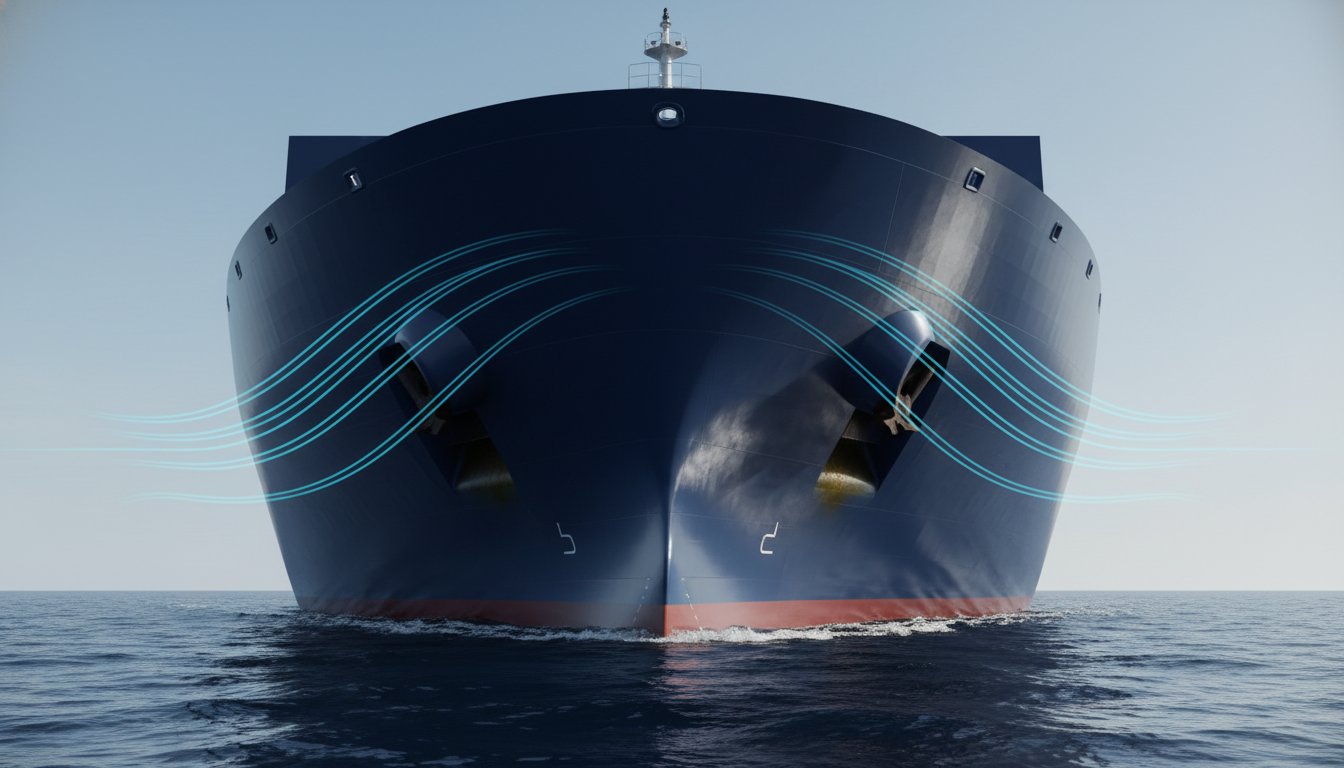
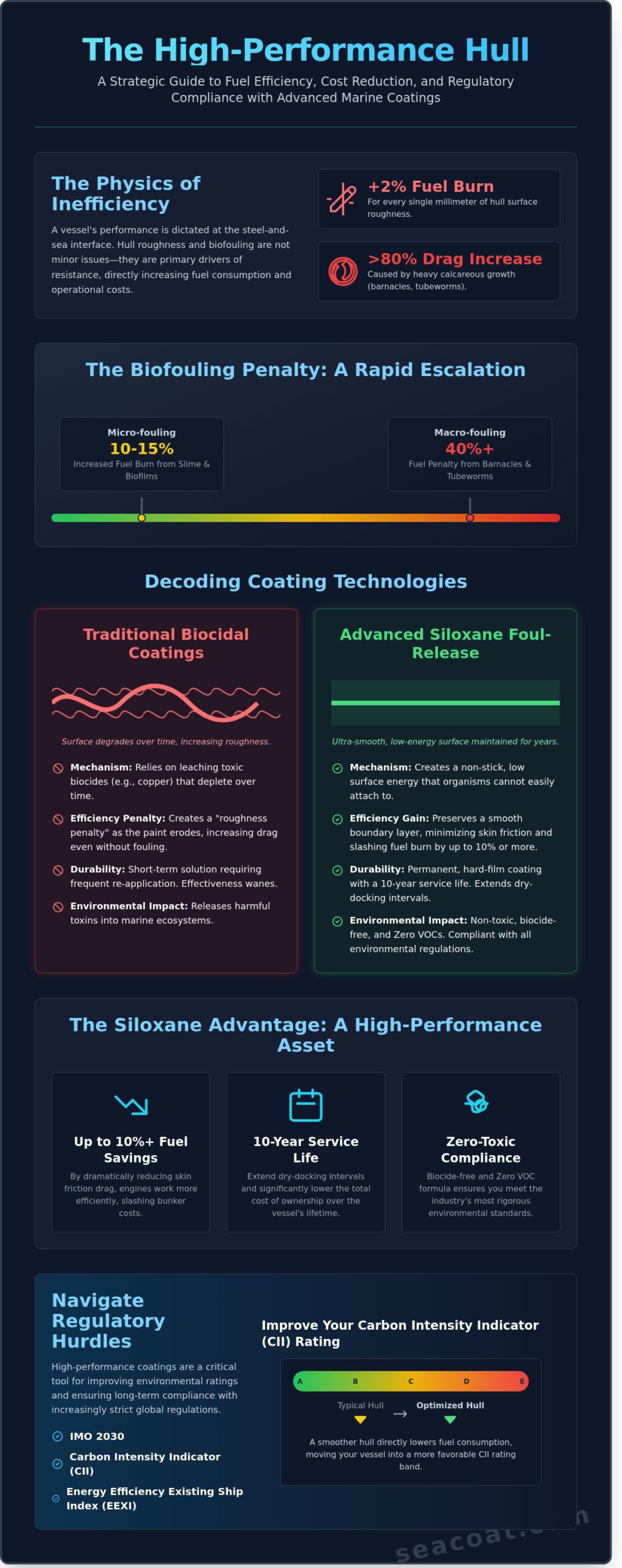
A single millimeter of hull surface roughness can trigger a 2% increase in fuel consumption, while heavy calcareous growth often spikes drag by more than 80% according to IMO studies. For fleet managers navigating the strict 2023 carbon intensity indicators, these aren’t just technical metrics; they’re direct threats to your operational viability. You’re likely already feeling the squeeze of volatile bunker prices and the mounting pressure of EEXI compliance. Selecting the right marine coating for fuel efficiency is no longer a simple maintenance task. It’s a strategic decision in hydrodynamic optimization that dictates your vessel’s earning potential and environmental footprint for the next decade.
We’ll show you how advanced siloxane-based technologies and biocide-free formulas allow modern fleets to slash fuel burn by 10% or more. This article explores the chemical engineering behind foul-release systems that extend dry-docking intervals to 10 years while ensuring zero-toxic regulatory compliance. You’ll gain a clear understanding of how surface tension and hard-film durability work together to transform your hull into a high-performance asset that meets the industry’s most rigorous environmental standards. We’ll examine the transition from temporary anti-fouling fixes to permanent, sophisticated solutions that prioritize both ROI and ecosystem stewardship.
Key Takeaways
- Understand how Average Hull Roughness (AHR) and skin friction dictate power requirements, allowing you to mitigate hydrodynamic drag through scientific surface optimization.
- Evaluate the performance gap between traditional biocides and advanced silane-siloxane systems to select the optimal marine coating for fuel efficiency and durability.
- Move beyond short-term maintenance cycles by calculating the long-term ROI and total cost of ownership associated with a ten-year hard-film coating strategy.
- Learn how high-performance hull coatings serve as a critical tool for improving Carbon Intensity Indicator (CII) ratings and ensuring IMO 2030 regulatory compliance.
- Discover the operational advantages of non-toxic, Zero VOC solutions that combine extreme hard-film durability with superior foul-release properties.
The Physics of Fuel Efficiency: Drag, Roughness, and Skin Friction
A vessel’s performance begins at the critical interface of steel and sea. Average Hull Roughness (AHR) serves as a mathematical determinant of operational success, measuring the mean peak-to-valley height across the submerged surface. It isn’t merely an aesthetic concern; it’s a primary driver of resistance. Data from naval architecture studies indicate that for every 10-micron increase in AHR, a vessel requires approximately 1% more power to maintain a constant speed. This inefficiency creates a direct correlation between surface quality and the bottom line.
The relationship between hydrodynamic drag and greenhouse gas emissions is absolute. When drag increases, the engine must work harder, burning more fuel and elevating the vessel’s carbon footprint. Choosing a high-performance marine coating for fuel efficiency is no longer just a maintenance task; it’s a strategic response to the Carbon Intensity Indicator (CII) and other stringent maritime regulations. By reducing the physical resistance of the hull, operators can achieve significant mitigation of emissions while extending the operational range of their fleet.
Traditional anti-fouling paint technologies often fail to solve the roughness problem over the long term. These coatings typically rely on a controlled depletion mechanism where biocides leach out of the paint matrix. As the active ingredients leave the film, the surface becomes increasingly pitted and uneven. This “roughness penalty” means that even if the hull remains free of organisms, the physical degradation of the paint itself increases fuel consumption as the drydock cycle progresses.
Understanding Skin Friction Drag
Vessel hulls interact with water through a complex boundary layer. In an ideal scenario, water flows in a smooth, laminar pattern. However, microscopic surface imperfections trigger a transition to turbulent flow, which dramatically increases skin friction. This friction accounts for up to 80% of the total resistance on low-speed vessels like tankers and bulk carriers. A superior marine coating for fuel efficiency works by creating a stable, ultra-smooth surface that preserves the boundary layer, ensuring that energy is spent on propulsion rather than overcoming avoidable drag.
The Biofouling Penalty
Biofouling introduces an exponential drag effect that begins the moment a ship leaves the dock. The progression is rapid:
- Micro-fouling: Slime and bacterial biofilms can increase fuel burn by 10% to 15%.
- Macro-fouling: The attachment of barnacles, tubeworms, or calcareous growth can escalate the fuel penalty by 40% or more.
Modern siloxane-based foul release systems provide a permanent, non-toxic solution. Unlike biocide-leaching paints that lose effectiveness, these hard-film coatings maintain a 10-year life cycle with zero VOCs. They don’t just kill organisms; they create a surface with such low energy that attachment becomes physically difficult, ensuring the hull remains smooth and efficient in all water temperatures.
Decoding Marine Coating Technologies: Why Chemistry Dictates Performance
The selection of a marine coating for fuel efficiency isn’t merely a maintenance decision; it’s a strategic engineering choice. At the molecular level, the interaction between a vessel’s hull and the seawater determines the total hydrodynamic drag. While traditional coatings relied on chemical leaching to deter growth, modern advancements focus on surface energy and mechanical durability. Understanding these chemical distinctions is vital for operators aiming to optimize their fleet’s performance over a 10 year service life.
The Failure of Sacrificial Antifouling
Ablative paints operate on a principle of controlled erosion. These coatings are designed to wear away, theoretically exposing a fresh layer of biocides like copper or zinc pyrithione. However, this mechanism is inherently flawed for long term efficiency. As the paint erodes, it creates an uneven, microscopically rough surface that increases skin friction. This roughness can account for a 10% to 20% increase in fuel consumption as the coating ages.
Beyond performance degradation, the environmental cost of heavy metal leaching has triggered global regulatory shifts. The maritime industry is currently adapting to the IMO’s Carbon Intensity Indicator (CII), which penalizes inefficient vessels. Relying on the sacrificial cycle of ablative bottom paint makes it increasingly difficult to meet these carbon targets. These older technologies are becoming a liability for both the ecosystem and the balance sheet.
Soft Silicone vs. Hard Film Foul Release
The industry’s first attempt to move away from biocides involved soft silicone foul release systems. While these coatings offer low surface energy, they are notoriously fragile. Silicone films are prone to tearing during fender contact or minor groundings. Once the film is compromised, biofouling quickly takes hold in the damaged area. Furthermore, soft silicones cannot withstand the mechanical stress of proactive in-water cleaning, which often results in the coating peeling away from the substrate.
- Surface Energy: Measured in millinewtons per meter (mN/m), siloxane systems often reach levels below 15 mN/m, making it nearly impossible for organisms to adhere.
- Surface Roughness: Hard film coatings can be applied with a finished roughness of less than 75 microns, significantly lower than the 150+ microns common in ablative paints.
- Mechanical Resistance: Unlike silicone, these coatings are hard enough to endure frequent cleaning without losing their hydrodynamic properties.
By prioritizing a non-leaching, permanent surface, operators can achieve consistent drag reduction across the entire docking interval. Evaluating a specialized siloxane system allows for a more predictable ROI by eliminating the performance dip associated with traditional paint degradation.
Economic Performance: Calculating Fuel Savings and Long-Term ROI
Vessel owners often view hull coatings as a maintenance expense, yet the transition to a premium marine coating for fuel efficiency represents a strategic capital investment. Fuel consumption typically accounts for 50% to 60% of a vessel’s total operating costs. Even a marginal reduction in hydrodynamic drag translates into substantial annual savings. To calculate a true Return on Investment (ROI), operators must look beyond the initial application cost and evaluate the Total Cost of Ownership (TCO) over a decade of service.
The 10-Year Life Cycle Advantage
Traditional biocidal antifouling systems operate on restrictive 3-year or 5-year cycles. These cycles require frequent dry-docking, extensive hull cleaning, and repeated layers of paint that eventually lead to coating buildup and increased surface roughness. In contrast, a 10-year permanent coating system minimizes the need for aggressive grit blasting and intensive surface preparation during intermediate dockings. By extending the service life of the coating, fleet managers increase vessel availability and reduce the labor costs associated with frequent repainting. For a detailed breakdown of these variables, consult The Definitive Guide to Boat Hull Paint: Performance, Science, and ROI.
The economic benefits of a long-term cycle include:
- Reduced Material Volume: Fewer gallons of paint purchased over the life of the asset.
- Lower Disposal Fees: Minimal removal of toxic waste and spent grit.
- Increased Charter Days: Shorter stays in dry-dock keep vessels in active service longer.
Operational Speed and Power Savings
Real-world performance data from commercial tankers and cruise ships demonstrates that advanced foul-release technology delivers an average fuel savings of 10% to 12%. This efficiency is critical for maintaining compliance with IMO carbon intensity regulations, which dictate strict operational efficiency standards for existing vessels. A slicker hull surface improves the speed-power curve, allowing a ship to maintain its required schedule at lower engine RPMs.
This hydrodynamic optimization enables “slow steaming” without compromising maneuverability or safety. When a vessel requires less power to overcome skin friction, the daily fuel burn drops significantly. For a large container ship, a 10% reduction in fuel consumption can result in millions of dollars saved over a 10-year period. These metrics prove that a high-performance marine coating for fuel efficiency is not merely a protective layer; it is a critical tool for operational profitability and regulatory resilience in a decarbonizing industry.
Navigating Regulatory Standards: IMO, CII, and EEXI Compliance
The International Maritime Organization (IMO) has established a rigorous framework to achieve a 40% reduction in carbon intensity by 2030. For many fleet operators, optimizing hull performance represents the “low-hanging fruit” in this decarbonization strategy. Unlike capital-intensive engine retrofits or the uncertain availability of alternative fuels, applying a high-performance marine coating for fuel efficiency offers a predictable, immediate path to carbon reduction. By minimizing hydrodynamic drag, these coatings directly lower the energy required for propulsion, which is the primary driver of vessel emissions.
Improving CII Ratings with Advanced Coatings
The Carbon Intensity Indicator (CII) creates a transparent “A to E” rating system that measures how efficiently a vessel transports cargo. It’s a dynamic metric that becomes increasingly stringent every year. Vessels that fall into the D or E categories face significant commercial risks, including reduced charter appeal and mandatory corrective action plans. Data from recent performance trials indicates that a 10% reduction in fuel consumption can effectively move a vessel from a C rating to a B rating. Achieving this requires more than just luck; it demands consistent hull performance monitoring. High-performance coatings maintain a smooth surface profile over five to ten years, ensuring that the vessel’s reported efficiency remains stable during regulatory audits.
EEXI and Technical Compliance
The Energy Efficiency Existing Ship Index (EEXI) focuses on the technical design of the vessel rather than its operational patterns. Many owners find that improving hull efficiency is significantly more cost-effective than implementing an Engine Power Limitation (EPL), which can restrict operational flexibility and transit speeds. By reducing the technical frictional resistance of the hull, operators can meet EEXI requirements while maintaining the ship’s full commercial speed potential.
Compliance also extends to the chemical composition of the coatings themselves. The global ban on Cybutryne, which took effect on January 1, 2023, signals a broader regulatory shift toward non-toxic hull protection. To future-proof a fleet, owners must look toward biocide-free certifications. These standards are increasingly required for entry into environmentally sensitive ports and strictly regulated coastal waters. You can explore the technical requirements of this transition in our detailed analysis of Environmental Marine Coatings: The 2026 Shift Toward Sustainable Hull Performance.
- CII ratings are recalculated annually, making long-term hull smoothness a critical asset.
- Drag reduction through advanced siloxane technology helps older vessels meet EEXI targets without sacrificing speed.
- Non-toxic, biocide-free coatings eliminate the risk of future regulatory bans on harmful chemical leachable.
Selecting the right marine coating for fuel efficiency isn’t just a maintenance decision; it’s a strategic move to ensure the longevity of your maritime assets in a zero-carbon future.
Contact our technical team to evaluate your fleet’s compliance strategy through advanced surface technology.
The Sea-Speed Advantage: Implementing High-Efficiency Hull Systems
Sea-Speed V 10 X Ultra stands as the industry standard for hard-film Silane-Siloxane solutions. This technology provides a permanent, non-depleting surface that moves beyond the limitations of traditional biocidal paints. By utilizing a Zero VOC (Volatile Organic Compound) formulation, the Seacoat SCT, LLC product line eliminates the release of toxic heavy metals into the water column. It’s an ideal marine coating for fuel efficiency for operators who prioritize both bottom-line savings and environmental stewardship. The application process is streamlined because the high-solids chemistry allows for a thinner, more effective profile. Most vessels require significantly less product compared to standard ablative paints, which reduces the overall weight and drag of the hull. This performance-enhancing tool serves diverse sectors, including commercial shipping, military assets, and high-performance recreational craft.
Superior Durability and In-Water Cleaning
The resilience of Sea-Speed V 10 X Ultra is rooted in its hard-film structure. Traditional foul-release coatings are often fragile, but this siloxane-based system withstands ice, debris, and frequent fender rub without peeling or degradation. Because the coating is non-ablative, it doesn’t wear away over time. Divers can perform frequent in-water cleanings using standard equipment without releasing harmful toxins or damaging the film. This is particularly vital for specialized vessels that require high-level maintenance. For instance, finding the Best Boat Paint for Aluminum Boats involves balancing corrosion protection with hydrodynamic smoothness. Sea-Speed provides an inert barrier that prevents electrolysis while maintaining a low-friction surface for years.
Sustainable Innovation for the Modern Fleet
Sustainable operations are now a regulatory necessity rather than an optional goal. Sea-Speed offers a clear path toward a reduced carbon footprint by minimizing drag and eliminating biocide leaching. Seacoat SCT, LLC supports global fleet managers through a robust network that provides technical expertise and worldwide distribution. Integrating this marine coating for fuel efficiency into a maintenance cycle ensures a ten-year life expectancy, which is a massive leap over the two-year cycle typical of legacy systems. This longevity maximizes ROI and simplifies logistics for large-scale operations. It’s a strategic asset that transforms hull maintenance from a recurring expense into a performance advantage. Reach out to Seacoat SCT, LLC for technical performance assessments and procurement specifications to begin optimizing your fleet’s operational profile.
Future-Proofing Your Fleet with Hydrodynamic Precision
Success in the modern maritime sector depends on a shift from reactive maintenance to strategic hydrodynamic optimization. By minimizing skin friction and surface roughness, operators can directly mitigate the drag forces that account for up to 80% of a vessel’s total resistance. Navigating the stringent requirements of the IMO’s Carbon Intensity Indicator (CII) and EEXI standards requires more than temporary fixes; it demands a permanent chemical solution. Selecting the right marine coating for fuel efficiency transforms the hull into a high-performance asset that delivers measurable returns. SeaCoat’s Silane-Siloxane technology provides over 20 years of proven field performance, offering a hard-film surface that’s both durable and ecologically responsible. This DNV-verified system achieves significant drag reduction without the use of toxic biocides. It’s a zero VOC solution that ensures your fleet remains compliant and cost-effective for the long term. Investing in advanced hull chemistry isn’t just about protection; it’s about maximizing every nautical mile through scientific precision. Your transition toward a more efficient and sustainable future begins with the science of the surface.
Optimize your fleet’s fuel efficiency with Sea-Speed V 10 X Ultra
Frequently Asked Questions
How much fuel can a marine coating actually save?
High-performance coatings can reduce fuel consumption by 6% to 10% depending on the vessel type and its specific operating profile. According to data from the International Maritime Organization (IMO), maintaining a smooth hull surface prevents the frictional drag that accounts for up to 80% of a ship’s total resistance. By applying an advanced marine coating for fuel efficiency, operators can mitigate the impact of biofouling and maintain design speeds with significantly lower engine power requirements.
What is the difference between antifouling and foul release coatings?
Traditional antifouling paints rely on the controlled release of biocides, such as cuprous oxide, to kill settling organisms through chemical toxicity. In contrast, foul release coatings use low-surface-energy materials like siloxane to create a hydrophobic surface that organisms cannot strongly adhere to. This mechanical approach ensures that biofouling is washed away by the hydrodynamic forces generated when the vessel reaches speeds above 10 knots, providing a biocide-free solution for modern fleets.
How do hull coatings help with EEXI and CII compliance?
Hull coatings directly influence the Carbon Intensity Indicator (CII) by lowering the total fuel oil consumption required per capacity-mile. Since the IMO’s 2023 regulations require ships to meet specific Energy Efficiency Existing Ship Index (EEXI) thresholds, reducing hydrodynamic drag is a critical technical measure. A clean hull can improve a vessel’s CII rating by a full grade, moving it from a C to a B category through a 5% to 8% reduction in annual carbon emissions.
Can a hard-film coating really last for 10 years?
Yes, advanced hard-film coatings are engineered to maintain their integrity for a 10-year service life without the need for full re-application during intermediate dry-docking. Unlike self-polishing copolymers that deplete over time, these non-ablative systems utilize a durable polymer matrix that resists mechanical damage and ultraviolet degradation. This longevity was validated in a 2021 industry study showing that certain siloxane-based systems retained 95% of their original film thickness after a decade of continuous maritime operation.
Are non-toxic marine coatings as effective as traditional copper-based paints?
Modern biocide-free coatings match or exceed the performance of traditional copper-based paints by focusing on surface tension rather than toxicity. Research from the Horizon 2020 project demonstrated that non-toxic siloxane coatings achieved a 5% higher propulsion efficiency over a five-year period compared to conventional biocidal alternatives. These systems eliminate the risk of heavy metal accumulation in marine sediments while providing superior protection against micro-fouling and slime layers that increase drag.
What is the impact of surface roughness on ship fuel consumption?
Surface roughness significantly increases drag, where a 10-micrometer increase in average hull roughness can lead to a 1% increase in fuel consumption. New vessels typically feature a roughness of 75 to 125 micrometers, but biofouling and mechanical wear can quickly double these values if the surface isn’t protected. Utilizing a marine coating for fuel efficiency ensures the hull remains smooth; it prevents the turbulent flow that forces the propulsion system to work harder to maintain velocity.
Is in-water cleaning safe for high-performance hull coatings?
In-water cleaning is safe for high-performance coatings provided that soft-brush technology or high-pressure water jets are used to avoid abrasive damage to the surface. Because hard-film and foul release systems don’t rely on a soft, depleting surface, they can withstand regular grooming sessions without losing their hydrodynamic properties. Frequent cleaning of a non-ablative surface can maintain a “near-new” hull condition, which helps operators sustain peak efficiency throughout the entire five-year or ten-year dry-docking cycle.