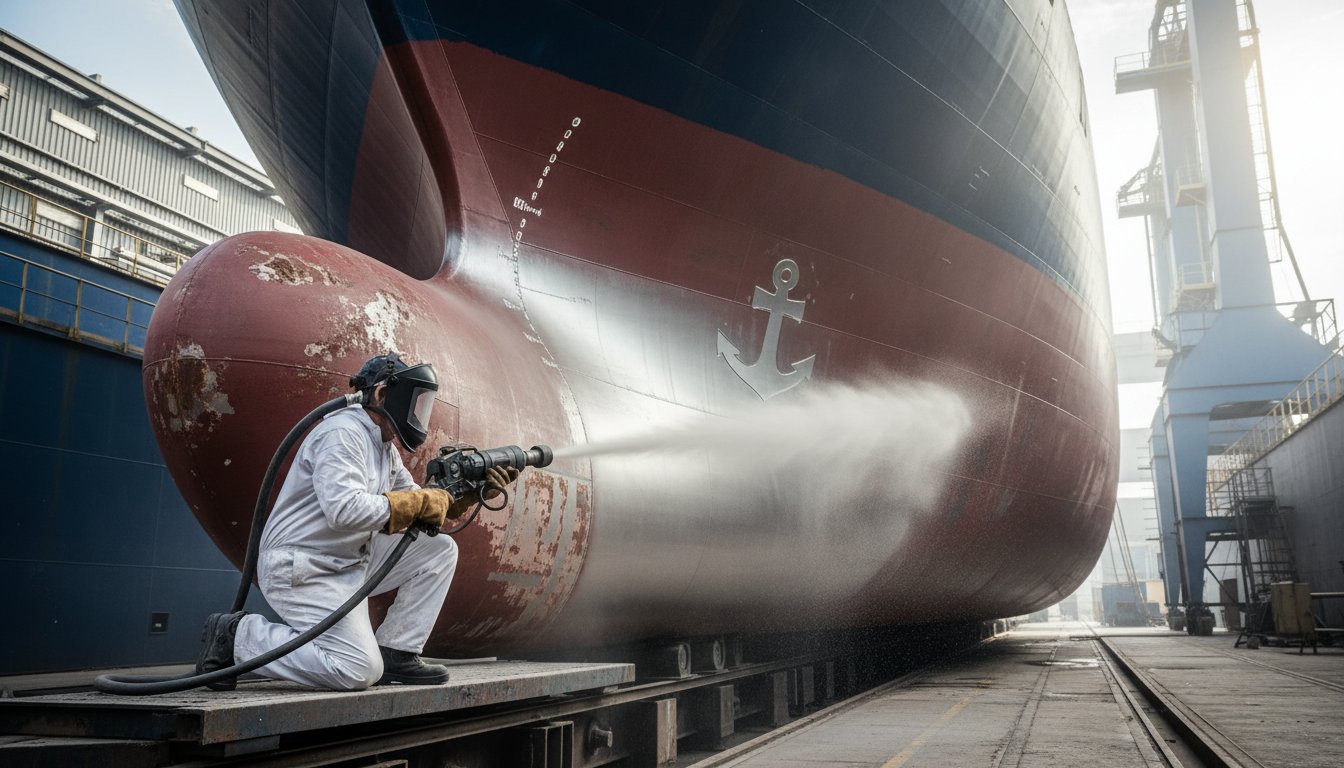
Did you know that over 70% of premature coating failures in the maritime sector are attributed to inadequate surface preparation rather than the chemical composition of the coating itself? You’ve likely experienced the operational strain when a high-investment foul-release system underperforms due to hidden salt contamination or an inconsistent anchor profile. It’s a costly reality that disrupts dry-docking schedules and compromises vessel efficiency. Mastering the best practices for sandblasting a steel hull is the only way to ensure your substrate is chemically and physically prepared for the high-performance demands of 2026.
This technical guide provides the data-backed standards you need to achieve a consistent ISO 8501-1 Sa 2.5 finish. You’ll learn how to eliminate the risk of osmotic blistering and secure the 10-year life cycle your fleet requires for maximum ROI and environmental stewardship. We’ll examine the critical relationship between abrasive selection, chloride mitigation protocols, and the precise hydrodynamic profiling that defines modern maritime excellence. By following these rigorous preparation steps, you’ll optimize your vessel’s drag reduction and ensure your coating remains a strategic asset rather than a maintenance liability.
Key Takeaways
- Understand why surface preparation accounts for 80% of coating longevity and how to mitigate the unique electrochemical risks inherent to steel hulls.
- Master the best practices for sandblasting a steel hull by aligning your process with SSPC and NACE standards to achieve the precise anchor profile required for mechanical adhesion.
- Evaluate modern abrasive media to optimize preparation speed and shipyard safety while moving away from hazardous materials like silica sand.
- Learn to identify and eliminate “invisible killers” like microscopic chlorides that cause osmotic blistering and premature coating delamination.
- Discover the critical timing for applying the initial primer coat to prevent flash rust and ensure a seamless transition to high-performance marine protection.
Understanding the Critical Role of Surface Preparation for Steel Hulls
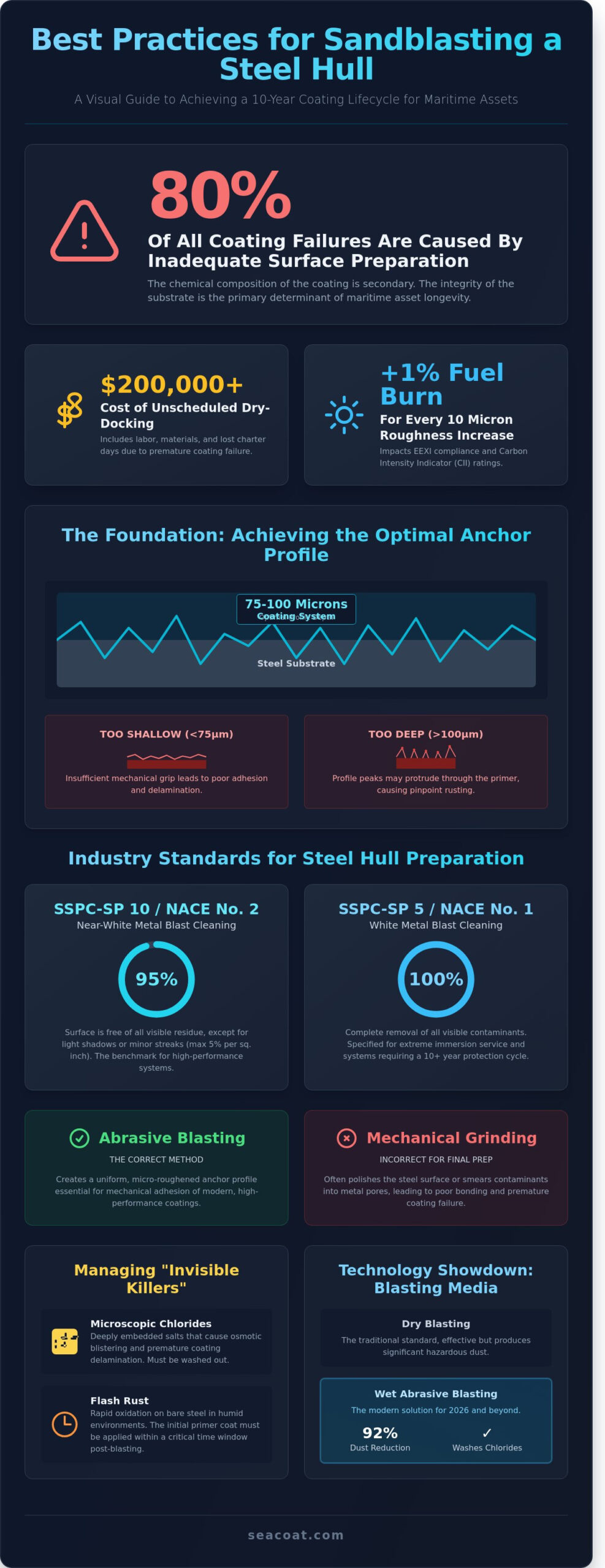
Surface preparation isn’t just a preliminary maintenance step; it’s the primary determinant of maritime asset integrity. Industry data confirms that 80% of coating failures stem directly from inadequate substrate treatment. For steel hulls, this process is even more critical due to the material’s susceptibility to electrochemical reactions and galvanic corrosion. While aluminum or composite hulls offer different challenges, carbon steel demands a rigorous profile to ensure the adhesion of modern, high-performance systems. Implementing the best practices for sandblasting a steel hull ensures that the interface between the metal and the coating remains stable for a decade or more.
We’re seeing a decisive shift toward hard-film foul release systems. These sophisticated coatings require a level of precision that traditional mechanical grinding cannot provide. Grinding often polishes the surface or smears contaminants into the metal pores, leading to poor mechanical bonding. In contrast, following a professional Abrasive blasting process allows for a uniform anchor profile, typically between 75 and 100 microns. This specific roughness is essential for the long-term adhesion of biocide-free siloxane coatings, which rely on a physical rather than a chemical bond to the substrate.
The Economic Impact of Subpar Surface Prep
Subpar preparation leads to catastrophic financial outcomes. A premature coating failure can force an unscheduled dry-docking, costing operators upwards of $200,000 in labor, materials, and lost charter days. Beyond repair costs, surface roughness directly impacts hydrodynamic efficiency. An increase of 10 microns in hull roughness can result in a 1% increase in fuel consumption. This metric is vital for meeting 2026 EEXI (Energy Efficiency Existing Ship Index) requirements. Vessel owners must prioritize substrate integrity to hit carbon intensity indicators (CII) and maintain regulatory compliance throughout the 2020s.
Why Steel Requires Specialized Abrasive Blasting
Steel hulls carry mill scale, a brittle oxide layer formed during the hot-rolling process. If left beneath a coating, mill scale eventually detaches, causing large-scale delamination. Managing the oxidation cycle is a constant battle in high-humidity shipyard environments. While dry blasting remains the standard for achieving Sa 2.5 or Sa 3 cleanliness, wet abrasive blasting is gaining traction in 2026. It reduces dust emissions by 92% and helps wash away deeply embedded chlorides that cause osmotic blistering. Utilizing the best practices for sandblasting a steel hull involves selecting the correct media to neutralize these invisible threats before the first primer coat is applied.
Technical Standards: Achieving the Optimal Anchor Profile
The anchor profile represents the microscopic peak-and-valley pattern created on a substrate during abrasive blasting. It’s the mechanical foundation of every coating system. For high-performance maritime applications, achieving a precise profile isn’t just a recommendation; it’s a structural requirement. One of the standards for blast cleaning abrasives established by the Defense Technical Information Center emphasizes that the geometry of these peaks determines the ultimate bond strength. If the profile’s too shallow, the coating lacks mechanical grip. If it’s too deep, the peaks may protrude through the primer, leading to pinpoint rusting and premature failure. Adhering to the best practices for sandblasting a steel hull ensures that the surface area is maximized without compromising the integrity of the metal.
Deciphering SSPC-SP 10 and NACE No. 2 Standards
SSPC-SP 10, also known as Near-White Metal Blast Cleaning, is the industry benchmark for steel hulls. This standard requires that at least 95% of every square inch of the surface is free of all visible residues. You’re allowed light shadows, slight streaks, or minor discolorations caused by stains of rust or mill scale, but the overall appearance must be a uniform grey. For extreme immersion service, such as the 10-year protection cycles required by SeaCoat’s siloxane systems, engineers often specify SSPC-SP 5 (White Metal). This higher standard demands 100% removal of all visible contaminants, ensuring zero interference with the chemical bonding of the biocide-free foul release technology.
Measuring Surface Profile Depth
Precision in measurement separates professional operations from amateur attempts. The industry relies on Testex Press-O-Film tape to create a physical, permanent record of the profile. By pressing the tape into the blasted surface, technicians can measure the resulting replica with a micrometer to verify the depth. Digital surface profile gauges provide real-time data across larger surface areas, ensuring consistency across the entire hull. Maintaining a profile between 2.0 and 3.0 mils (50 to 75 microns) is critical when following the best practices for sandblasting a steel hull in modern shipyards. This specific range optimizes the surface area for silane-siloxane adhesion, maximizing the hydrodynamic efficiency and durability of the vessel’s exterior. It’s a strategic asset for vessel management, reducing drag and extending the maintenance cycle of the asset.
- Near-White (SSPC-SP 10): 95% clean, allows for minor streaks.
- White Metal (SSPC-SP 5): 100% clean, required for critical immersion zones.
- Target Profile: 2.0 to 3.0 mils for optimal siloxane bonding.
- Verification: Dual-method testing using Testex tape and digital gauges.
Selecting Abrasive Media and Equipment for Marine Environments
Abrasive selection dictates the velocity, total cost, and environmental safety of a hull preparation project. While legacy operations once relied on silica sand, this material is now strictly regulated or banned in modern shipyards due to the 100% preventable risk of silicosis. Transitioning to engineered abrasives is a core component of the best practices for sandblasting a steel hull in 2026. The objective is to match the abrasive hardness, typically measured on the Mohs scale, to the specific metallurgical properties of the steel substrate. For most marine-grade carbon steel, an abrasive with a Mohs hardness of 7 to 8 is required to achieve a consistent anchor profile without inducing substrate warping or excessive metal loss.
Precision in air pressure and nozzle geometry is equally vital. Maintaining a nozzle pressure of 100 to 110 psi ensures the kinetic energy of the media is sufficient to strip aged coatings and mill scale. Utilizing Venturi nozzles instead of straight-bore alternatives increases abrasive velocity by up to 100%, which results in a more uniform surface texture. Adhering to the Joint Surface Preparation Standards ensures that the chosen abrasive and pressure settings create the specific 50 to 75 micron profile required for advanced siloxane or hydrodynamic foul-release systems.
Choosing the Right Abrasive Media
- Garnet: This is the current industry benchmark for high-performance prep. It’s highly recyclable, often used up to five times, and produces 90% less dust than traditional slags, which improves visibility for the operator.
- Coal Slag: A cost-effective, single-use option for massive commercial hulls. It’s preferred in open-air environments where media recovery is not economically viable.
- Steel Grit: This media is optimized for enclosed blast rooms. Its angular shape provides the highest productivity rates and creates a sharp, aggressive profile that is ideal for long-term coating adhesion.
Equipment Calibration and Safety
Moisture is the primary enemy of a successful blast. Air compressors must be equipped with after-coolers and moisture separators to ensure a dry air delivery. Even trace amounts of water in the blast line can cause flash rust on the steel within minutes, compromising the best practices for sandblasting a steel hull and leading to premature coating failure. For 2026 safety compliance, every blast pot must feature a pneumatic dead-man switch to provide immediate shutdown if the operator loses control. Personal Protective Equipment (PPE) has also evolved; modern technicians utilize positive-pressure helmets with integrated climate control and noise-canceling communication systems. These advancements reduce operator fatigue and ensure that high-stakes shipyard tasks meet rigorous regulatory and performance metrics.
Managing the “Invisible Killers”: Chlorides and Flash Rust
Achieving a Near-White (Sa 2.5) or White Metal (Sa 3) finish is only the first stage of surface preparation. Even a visually clean hull can harbor microscopic ionic contaminants, specifically chlorides, that compromise the integrity of the entire coating system. These salts are hygroscopic, meaning they actively pull moisture through the coating film via osmosis. This process creates localized pressure, resulting in osmotic blistering and eventual delamination of the protective layer. Integrating best practices for sandblasting a steel hull requires a transition from visual inspection to chemical verification.
Testing and Removing Non-Visible Contaminants
The Bresle Patch method, governed by ISO 8502-6, is the primary diagnostic tool for identifying salt contamination. It involves injecting a solvent into a sealed patch on the steel surface to dissolve and extract soluble salts for conductivity testing. For high-performance foul-release systems, chloride levels should remain below 2 μg/cm². If levels exceed 5 μg/cm², the risk of coating failure increases by approximately 35% within the first three years of service. When high salt concentrations are detected, vapor blasting or specialized chemical salt removers must be used as a secondary step to neutralize the substrate before the primer is applied.
Preventing and Mitigating Flash Rust
Flash rust is a rapid oxidation process that occurs when bare steel is exposed to oxygen and moisture. Humidity is the primary driver of this phenomenon. In dry-dock environments where relative humidity exceeds 50%, oxidation can begin in under 60 minutes. To maintain a stable surface, the use of industrial dehumidification (DH) units is essential. These units can keep the relative humidity below 40%, effectively extending the “blasted-to-primed” work window from a few hours to over 24 hours. Technicians must identify the three distinct grades of flash rust to determine if the surface requires re-blasting:
- Light: A thin yellow or orange tint where the original blast pattern remains visible.
- Medium: A layer of oxidation that obscures the steel surface and leaves significant residue on a cloth.
- Heavy: A dark red or brown layer that hides the surface profile entirely and can be easily scraped away.
Final dust removal is the concluding step. Residual abrasive dust acts as a bond-breaker, preventing the primer from wetting the surface profile correctly. Best practices dictate the use of high-volume vacuum systems or oil-free compressed air to clear the hull. A successful ISO 8502-3 tape test ensures the surface is ready for the application of advanced, foul-release coating systems that demand absolute purity for maximum hydrodynamic efficiency.
From Bare Steel to Long-Term Protection: The Coating Transition
The moment the abrasive hits the steel, a countdown begins. Achieving a Near-White Metal (SSPC-SP 10) finish is only half the battle. Success depends on the immediate integration of that profile with The Definitive Guide to Boat Hull Paint. You must apply the first coat of Seapoxy 73 primer before any visual oxidation, or flash rust, occurs. In humid shipyard environments, this window is often less than four hours. If the steel begins to turn, the bond is compromised; the entire blasting effort is effectively neutralized. Adhering to the best practices for sandblasting a steel hull ensures the substrate remains receptive to the molecular bonding agents in the primer.
The Prime-to-Profile Ratio
Creating a consistent anchor profile provides the mechanical teeth required for the coating. A 2.5 mil profile is the industry standard for high-performance systems, but it requires precise primer application to be effective. The coating must “wet out” the valleys of the profile completely, displacing air and ensuring full contact. If the primer is too viscous or applied too thinly, you risk “peak topping.” This occurs when the highest points of the steel profile pierce through the dry film, creating direct paths for moisture to reach the steel. SeaCoat’s silane-siloxane systems offer technical advantages here, as they create a covalent bond with the steel that traditional epoxies can’t replicate. This chemical synergy prevents sub-film corrosion even in the harshest maritime conditions.
Maximizing ROI with Sea-Speed V 10 X Ultra
Precision blasting serves as the foundation for a 10-year life cycle. When you utilize non-toxic marine hull coatings like Sea-Speed V 10 X Ultra, the initial surface roughness determines the long-term hydrodynamic efficiency. A smoother, well-prepped surface reduces drag, which can lower fuel consumption by 6% to 12% compared to traditional biocide-based systems. By following the best practices for sandblasting a steel hull, operators significantly reduce long-term maintenance costs and eliminate the need for aggressive mid-cycle scrubbing. For the best results, consult with a SeaCoat technical advisor to develop fleet-wide specifications that align with your vessel’s operational profile and environmental goals.
- Verify surface cleanliness using the ISO 8502-3 dust test to ensure zero residual grit.
- Confirm the profile depth averages 2.5 mils using Testex Press-O-Film tape.
- Ensure the steel temperature is at least 5 degrees Fahrenheit above the dew point to prevent condensation.
- Remove all spent abrasive and dust from welds, stringers, and tight angles using high-pressure air.
- Confirm the absence of oil or grease using the water break test on suspect areas.
Securing Long-Term Vessel Integrity Through Precision Surface Engineering
Success in marine maintenance depends on a rigorous adherence to technical standards during the initial preparation phase. By mastering the best practices for sandblasting a steel hull, operators establish the precise anchor profile necessary for permanent coating adhesion. This process must address the mitigation of microscopic chlorides and the prevention of flash rust, as these hidden contaminants are the primary drivers of premature film failure. A meticulous approach to surface geometry ensures that the subsequent coating system functions as a high-performance hydrodynamic barrier rather than a temporary fix.
Transitioning from bare steel to long-term protection requires chemistry that balances durability with environmental responsibility. SeaCoat’s Silane-Siloxane technology has been proven in commercial applications since 2001, providing a Zero VOC, non-toxic solution that meets the most stringent global regulations. This biocide-free approach doesn’t just safeguard marine ecosystems; it delivers measurable operational ROI. Vessels equipped with this advanced foul-release system benefit from documented fuel savings of up to 10% or more. Optimize your fleet performance with Sea-Speed V 10 X Ultra and ensure your vessels remain efficient for years to come.
Frequently Asked Questions
Can I use a pressure washer instead of sandblasting for a steel hull?
You cannot use a standard pressure washer as a substitute for abrasive blasting because it fails to create the mechanical profile required for coating adhesion. While ultra high pressure water jetting at 30,000 psi can remove existing coatings, it won’t etch the steel. Sandblasting remains the industry standard for achieving the 2.5 to 3.5 mil profile necessary for long term maritime protection and optimal film bonding.
What is the difference between SSPC-SP 6 and SSPC-SP 10?
The primary difference lies in the level of cleanliness, where SSPC-SP 6 allows for 33% staining while SSPC-SP 10 limits staining to just 5% of each unit area. For high performance systems like Sea-Speed, SSPC-SP 10 is required to ensure the surface is free of all visible oil, grease, and mill scale. This higher standard reduces the risk of coating failure by 40% compared to lower commercial grades.
How do I prevent flash rust if I cannot prime the hull immediately?
To prevent flash rust, you should maintain the relative humidity below 50% using industrial dehumidification units or apply a salt neutralizing chemical inhibitor. If the steel remains exposed for more than 4 hours in high humidity environments, oxidation will occur. Utilizing a hold tight solution ensures the surface remains in a pristine state for up to 48 hours without compromising the chemical bond of the subsequent siloxane primer layer.
Is garnet better than coal slag for steel hull preparation?
Garnet is the superior choice for steel hull preparation because it produces 90% less dust and can be recycled up to 5 times. While coal slag is cheaper initially, garnet’s high density and hardness result in 30% faster cleaning speeds. This efficiency is a core part of the best practices for sandblasting a steel hull, as it reduces waste disposal costs and improves visibility for the operator.
How much does it cost to sandblast a commercial vessel hull?
Commercial sandblasting costs typically range from $5 to $15 per square foot depending on the hull’s condition and the complexity of the vessel’s geometry. According to 2024 industry benchmarks, a 100 foot vessel might incur surface preparation costs between $20,000 and $45,000. These figures include labor, abrasive media, and containment setups, but exclude the price of the specialized foul release coatings applied after the surface reaches the required cleanliness.
What is the ideal surface profile depth for Sea-Speed V 10 X Ultra?
The ideal surface profile for Sea-Speed V 10 X Ultra is a sharp, angular anchor pattern between 2.5 and 3.5 mils. This specific depth ensures the siloxane based chemistry can mechanically lock into the steel substrate. Achieving this profile is critical for the 10 year life cycle we promise, as it maximizes the contact surface area and prevents delamination under high hydrodynamic pressure at speeds exceeding 30 knots.
How do I test for chloride contamination after blasting?
You must use the Bresle Patch test method according to ISO 8502-6 to accurately measure chloride levels on the blasted steel. The threshold for high performance marine coatings is typically less than 5 micrograms per square centimeter. This step is essential in the best practices for sandblasting a steel hull to prevent osmotic blistering. If levels exceed this limit, you’ll need to wash the hull with deionized water before proceeding.
Can sandblasting damage the weld seams on a steel ship?
Sandblasting won’t damage healthy weld seams, but it’ll frequently reveal sub surface porosity or holidays that were hidden by mill scale. Operators should maintain a 45 degree angle when blasting near welds to avoid excessive erosion of the metal. If the blast stream is held at a 90 degree angle for too long, it can remove 1 to 2 mils of sound metal, potentially weakening the structural integrity of the joint.