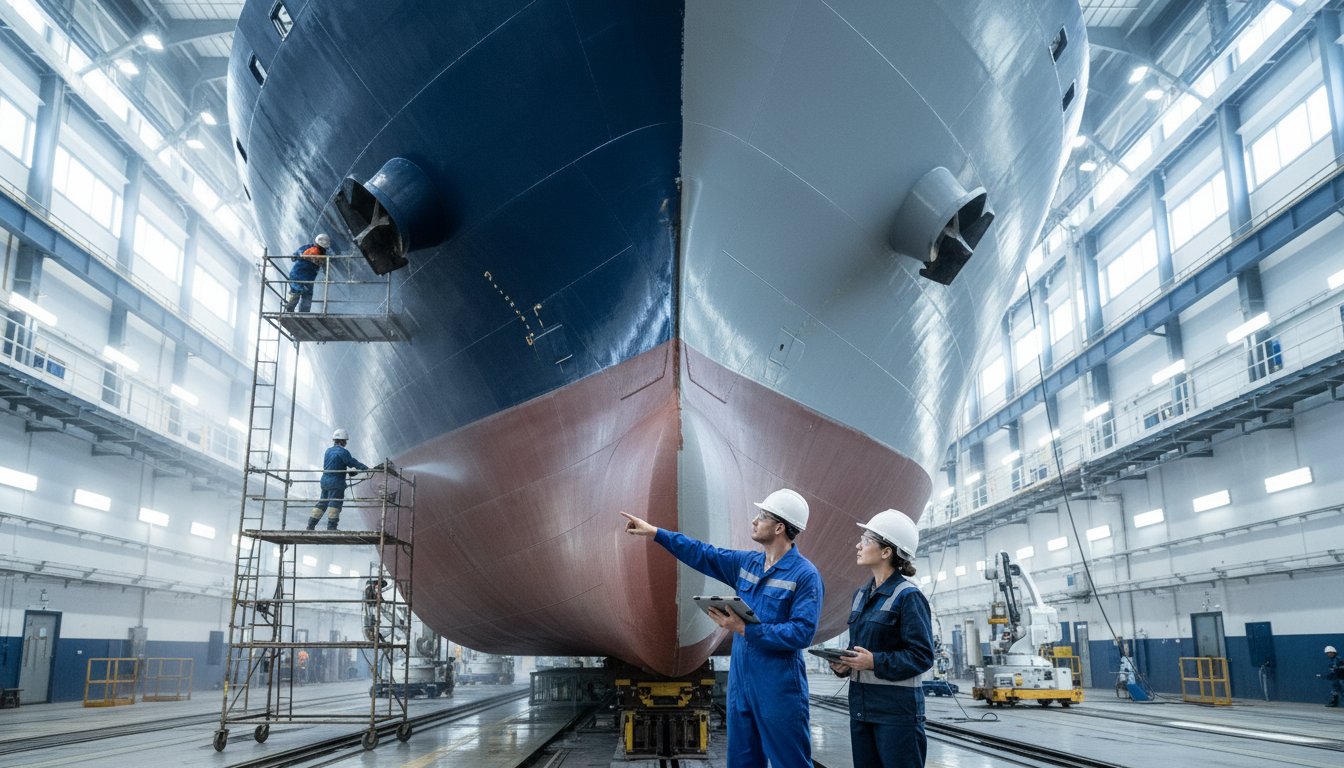
For a standard merchant vessel, the daily cost of inactivity in a shipyard often exceeds $35,000, excluding the actual repair expenses. When you factor in the recurring necessity of grit-blasting toxic ablative paints every 36 to 60 months, the financial burden on fleet management becomes unsustainable. You’re likely struggling to balance these overheads with the stringent demands of EEXI and CII regulations. We recognize that reducing dry dock time and costs is the primary lever for maintaining your competitive edge and achieving long term asset integrity.
This strategic guide reveals how advanced hard-film foul release technology can fundamentally compress your maintenance schedules and eliminate the cycle of toxic paint removal. You’ll learn the technical pathway to a 10 year service life and how reducing surface roughness can lower fuel consumption by as much as 6% to 10% through optimized hydrodynamics. We’ll examine the shift toward biocide-free, permanent coatings that transform the hull from a maintenance liability into a high-performance asset.
Key Takeaways
- Analyze the hidden economic impact of escalating shipyard availability constraints and off-hire revenue loss to better quantify the true ROI of hull maintenance.
- Understand the scientific mechanism of Silane-Siloxane technology as a non-toxic, hard-film alternative that optimizes hydrodynamic performance without biocidal leaching.
- Implement a strategic 5-step framework for reducing dry dock time and costs by transitioning from labor-intensive paint removal to permanent, high-durability primer systems.
- Evaluate the long-term operational advantages of a 10-year warranted foul release coating in stabilizing maintenance schedules and extending vessel service life.
- Discover how to eliminate hazardous material handling and zero-VOC requirements to align fleet operations with evolving global environmental and safety regulations.
The Economics of Vessel Maintenance: Why Dry Dock Costs are Escalating
Global shipping dynamics have shifted the financial burden of vessel maintenance. Shipyard capacity in major hubs like Singapore and Busan has tightened since 2022; berth availability is often booked 6 to 9 months in advance. Labor costs in European yards rose by approximately 15% between 2021 and 2023, making the efficiency of every yard day critical. These factors ensure that reducing dry dock time and costs is no longer just a goal but a requirement for operational survival. Off-hire time remains the most significant hidden expense. For a Capesize bulk carrier, daily hire rates can fluctuate between $20,000 and $50,000. Every day the vessel sits in dock represents a direct loss of that earning potential, often dwarfing the actual cost of repairs.
The True Cost of Traditional Antifouling
Traditional biocidal coatings rely on a leaching mechanism that leaves behind a depleted, brittle matrix over time. To understand the operational burden, owners must consider what are anti-fouling paints and how their chemical degradation affects the hull. Removing these accumulated, exhausted layers requires intensive grit blasting. This process frequently generates 50 to 100 tons of contaminated waste per vessel. Modern shipyards now apply environmental surcharges of up to $250 per ton for the disposal of toxic biocide residues. This labor-intensive removal extends dock stays by 3 to 5 days compared to advanced foul-release systems. The “Roughness Penalty” also creates a long-term drain on capital; every 10-micron increase in hull roughness correlates to a 1% increase in fuel consumption.
Regulatory pressures are accelerating the need for smoother surfaces. EEXI and CII compliance requirements in 2026 demand strict carbon intensity reductions. A fouled hull can increase drag by as much as 20%, which directly impacts a vessel’s CII rating. If a ship’s hydrodynamic efficiency drops, operators may be forced to reduce sailing speeds to remain compliant, further eroding the commercial viability of the asset.
Planning for Asset Longevity
The maritime industry is moving away from the rigid 5-year maintenance cycle. High-efficiency vessels now target 10-year intervals for major hull overhauls. This shift redefines maintenance as a strategic performance investment rather than a simple expense. A pristine hull condition, maintained through advanced siloxane-based technology, can preserve a vessel’s resale value by as much as 10% over a decade. Owners who prioritize hydrodynamic optimization see a measurable ROI through lower fuel bills and fewer days of lost revenue. Ultimately, reducing dry dock time and costs begins with selecting a coating system that treats the hull as a long-term performance asset rather than a recurring problem.
What is a Hard-Film Foul Release System?
A hard-film foul release system represents a paradigm shift in hull protection by moving away from the toxic, sacrificial mechanisms of traditional coatings. Unlike conventional antifouling paints that rely on the controlled leaching of biocides like cuprous oxide to kill marine organisms, Silane-Siloxane technology functions through physical surface properties. It’s a non-toxic, biocide-free alternative that creates a surface so slick and low-energy that fouling organisms cannot secure a permanent attachment. While ablative paints degrade over a 2 to 3 year cycle, advanced hard-film coatings are engineered for a 10-year life cycle. This longevity is a primary driver in reducing dry dock time and costs, as it eliminates the need for full coating removal and reapplication during intermediate surveys.
The distinction between “killing” and “releasing” is critical for modern fleet management. Traditional biocidal paints create a toxic zone around the hull, but they lose efficacy as the active ingredients deplete. In contrast, a foul release system uses a permanent, non-leaching surface to minimize the bond strength of biofouling. This means that even if organisms settle while a vessel is stationary, they’re easily shed once the ship reaches transit speeds. This mechanical approach ensures the coating remains effective for its entire service life without contaminating marine ecosystems.
The Chemistry of Silane-Siloxane
The efficacy of this system lies in its molecular structure. Through covalent bonding, the coating forms an ultra-smooth, high-density matrix that minimizes surface roughness. Silane-Siloxane is a hybrid technology combining organic and inorganic properties for marine durability. This unique composition prevents bio-adhesion at the microscopic level. Organisms like barnacles or tube worms require a stable substrate to secrete their adhesive proteins; however, the low surface energy of the Siloxane backbone ensures these proteins cannot gain purchase. Consequently, any settlement that does occur is dislodged by the shear force of water as the vessel reaches speeds as low as 8 knots.
Operational Advantages of Hard-Film Coatings
Beyond biological protection, hard-film systems provide significant mechanical advantages over soft silicone alternatives. Traditional soft coatings are easily damaged by fenders, ice, or debris, leading to localized corrosion and increased drag. Hard-film surfaces are highly resistant to mechanical impact and abrasion. This durability allows for regular in-water grooming without the risk of coating loss or environmental contamination. Maintaining a clean hull through proactive grooming can reduce hydrodynamic skin friction by up to 15%, directly optimizing fuel efficiency.
- Hydrodynamic Drag: Ultra-smooth surfaces reduce the energy required to move through water.
- Regulatory Compliance: Zero-VOC (Volatile Organic Compound) formulations ensure compliance with the IMO’s AFS Convention while improving shipyard safety.
- Maintenance Intervals: The 10-year durability cycle significantly extends the time between major coating overhauls.
By extending the service life of the hull coating to a decade, operators are fundamentally reducing dry dock time and costs through simplified maintenance protocols. For those seeking to optimize fleet performance, exploring advanced foul release specifications is the next logical step in maritime asset management. The transition to hard-film technology isn’t just an environmental choice; it’s a strategic investment in vessel uptime.
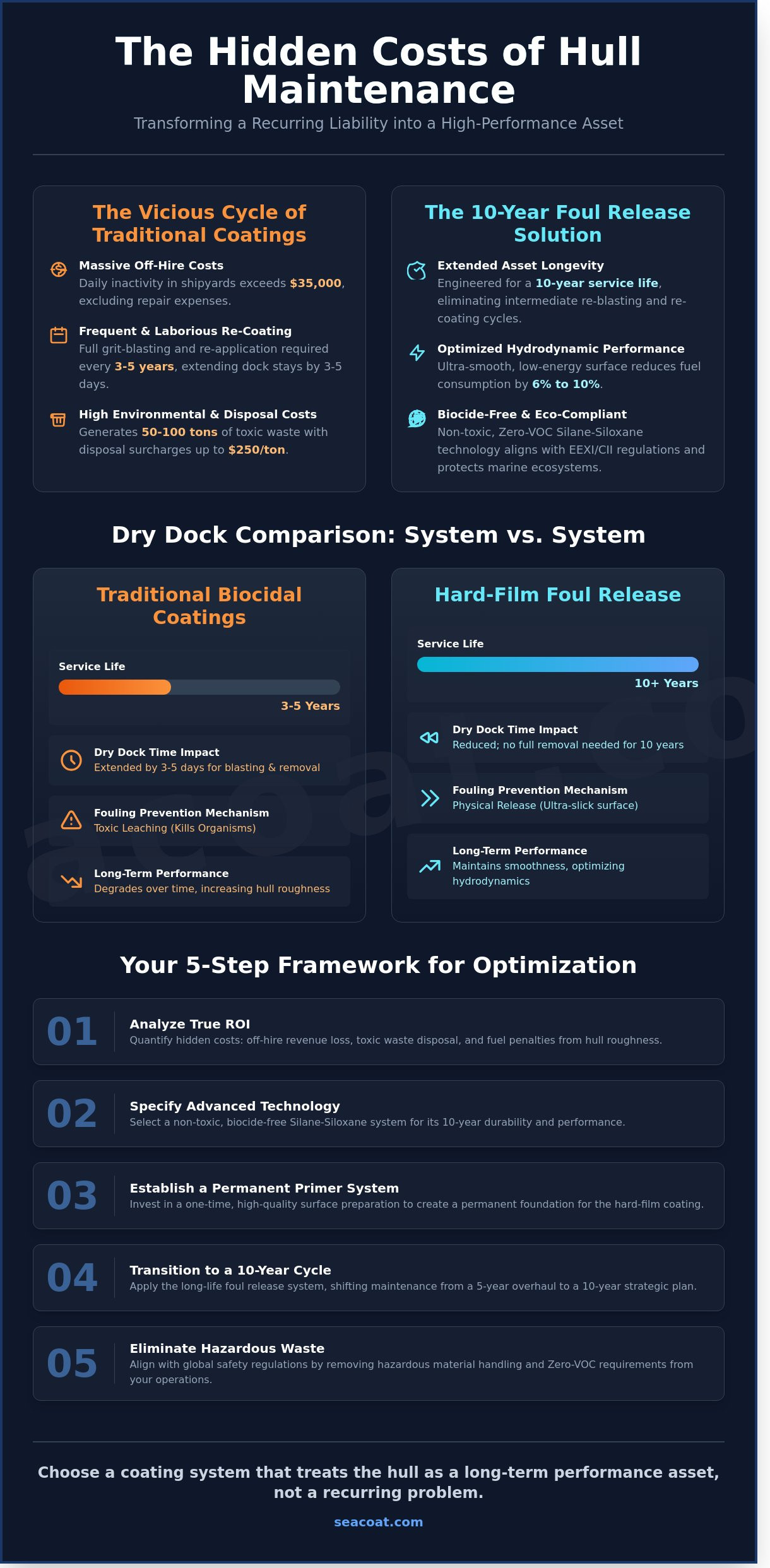
Hard-Film vs. Traditional Systems: A Dry Dock Comparison
Selecting a hull coating isn’t just about biofouling prevention; it’s a strategic decision that dictates the vessel’s operational tempo for the next decade. Traditional ablative systems often require a complex, multi-stage application involving three to five coats of primers, tie-coats, and biocidal layers. In contrast, advanced hard-film siloxanes achieve full protection in just two coats. This reduction in application steps is a primary lever for reducing dry dock time and costs, as it minimizes the critical path on the shipyard schedule by as much as 48 hours for a standard VLCC.
Physical durability remains a critical differentiator. Soft silicone coatings, while effective at foul release, are notoriously fragile. Friction from tugs or pressure from fenders during port calls can easily tear these surfaces, leading to localized corrosion and hydrodynamic drag. Hard-film systems provide a surface hardness of 3H to 5H on the pencil scale. They withstand the mechanical rigors of maritime operations without the need for frequent, costly touch-ups. This resilience ensures the hull remains smooth and efficient throughout the entire service interval, preventing the performance degradation typical of softer alternatives.
The Myth of the Sacrificial Layer
The industry’s reliance on ablative bottom paint creates a cycle of diminishing returns. These coatings are designed to erode, yet they rarely deplete uniformly. This uneven wear creates “ghosting” patterns and microscopic peaks that increase surface roughness over time. When a vessel returns to dock, these layers often require abrasive blasting to achieve a suitable profile for recoating. Hard films eliminate this necessity. Maintenance follows a “wash and go” protocol where a simple high-pressure water wash at 3,000 PSI removes slime without damaging the underlying film. This shift saves approximately 60% in surface preparation labor compared to traditional abrasive blasting methods.
Durability in High-Fouling Environments
In tropical zones where water temperatures exceed 25°C, traditional paints often fail during extended idle periods because they lack the necessary flow to “polish” and release biocide. Hard films don’t rely on movement for efficacy; they provide a permanent, non-stick barrier that prevents the attachment of invasive species. When evaluating the total cost of ownership (TCO) over a ten-year window, the data is clear. Transitioning to a permanent hard film is the most effective method for reducing dry dock time and costs while simultaneously lowering the vessel’s carbon footprint. These systems can reduce TCO by up to 40% by eliminating mid-cycle dry docking and maintaining a consistent 6% to 10% improvement in fuel efficiency. It’s a long-term asset management strategy that prioritizes both economic performance and environmental stewardship.
How to Reduce Dry Dock Time: A 5-Step Optimization Framework
Strategic vessel management requires a shift from reactive repair to a proactive optimization framework. Minimizing the duration of a vessel’s stay in the yard isn’t just about labor speed; it’s about selecting technologies that fundamentally alter the maintenance timeline. By integrating advanced material science with data-driven planning, operators are successfully reducing dry dock time and costs while extending the lifecycle of their assets.
This holistic approach extends to all onboard systems. Efficient dry docking means being prepared for any repair, not just scheduled surface treatments. For example, modern vessels rely heavily on polymer-based components in everything from ballast water management systems to exhaust gas scrubbers. Having the capability for rapid, durable repairs on these plastics is key to avoiding unforeseen delays. To learn more about the specialized equipment required for such tasks, professional suppliers offer detailed specifications.
This proactive mindset extends beyond marine applications to all large-scale industrial assets. For a look at how professional renovation and painting services approach asset longevity in demanding environments, you can check out NovoTech.
Step 1: The Pre-Docking Audit
Efficiency begins months before the vessel reaches the yard. Operators should utilize onboard sensor data to correlate fuel consumption increases with hull roughness, often following ISO 19030 standards. This data identifies specific drag-inducing areas that require intensive attention. A final in-water inspection by divers is essential to locate mechanical damage from ice or anchors that may not be visible from surface data. Identifying these specific repair zones early prevents the “scope creep” that often extends dock stays by 15% or more.
Step 2: Transition to a Permanent Primer System
Traditional coatings often require full removal and re-application, leading to repeated substrate exposure. Transitioning to a permanent, high-performance primer system eliminates the need for future grit blasting to bare metal. These siloxane-based systems provide a stable foundation that remains intact for 10 to 15 years, ensuring that subsequent dockings only require topcoat refreshment rather than intensive structural preparation.
Step 3: Streamlining the Application Process
The choice of marine coatings significantly impacts the critical path of a dry dock schedule. Selecting systems with fast over-coat times, sometimes as short as 4 hours at 20°C, allows for multiple applications within a single shift. High-build foul release systems that require fewer coats reduce the total “days on blocks” by 20% compared to multi-stage antifouling products. Precise ambient condition monitoring ensures that application occurs within optimal humidity windows, preventing the costly rework associated with adhesion failure.
Step 4: Implement a Standardized Grooming Schedule
Hard-film, biocide-free coatings allow for regular “grooming” or proactive in-water cleaning without damaging the coating’s integrity. This practice maintains a low hydrodynamic profile and can extend the interval between major dockings from the standard 5-year cycle to a 7.5 or 10-year cycle. By keeping the hull clean through scheduled maintenance, the workload during the actual dry dock is limited to minor touch-ups.
Step 5: Utilize Biocide-Free Technology
Toxic antifouling coatings create significant logistical hurdles. Yards must implement strict containment and filtration protocols to manage contaminated wash-water, which can add $15,000 to $50,000 to a docking invoice. Biocide-free technology bypasses these toxic waste protocols entirely. Because the wash-water contains no heavy metals or active pesticides, it can often be processed through standard yard filtration, accelerating the cleaning phase and reducing dry dock time and costs across the entire fleet.
Ready to optimize your fleet’s performance and minimize yard intervals? Explore SeaCoat’s high-build foul release solutions today.
The Seacoat Advantage: Sea-Speed V 10 X Ultra
Sea-Speed V 10 X Ultra stands as the definitive industry benchmark for hard-film foul release technology. Unlike traditional ablative or self-polishing coatings that deplete over time, this siloxane-based system is engineered for permanent performance. It carries a 10-year warranted performance life. This decade-long durability is central to reducing dry dock time and costs, as it eliminates the need for full hull stripping and recoating during intermediate surveys. By extending the service life of the coating, operators can transition from expensive, labor-intensive paint cycles to simple, proactive hull cleaning. The resulting ROI is measurable through decreased material costs and shortened time on the blocks.
Engineered for Performance
The technical superiority of Sea-Speed is rooted in its specific hydrodynamic profile. It achieves a surface roughness of less than 20 microns, a stark contrast to the 150 to 300 microns typically found in standard anti-fouling paints. This extreme smoothness minimizes skin friction and drag. In commercial cruise and military applications, this efficiency has resulted in fuel consumption reductions of up to 12% in documented trials. The coating is highly versatile, providing a robust bond to steel, aluminum, and fiberglass hulls without the risk of galvanic corrosion. It’s a proven solution for high-utilization sectors where maintaining hull speed is critical for mission success.
The hard-film nature of the product means it doesn’t leach chemicals into the water. It’s a non-depleting surface that can be cleaned repeatedly without damaging the integrity of the coating. This durability ensures that the vessel maintains its peak hydrodynamic efficiency for the duration of the 10-year cycle, regardless of the operating environment or water temperature.
The Path to Sustainable Fleet Management
Adopting Sea-Speed aligns vessel operations with modern ESG (Environmental, Social, and Governance) reporting requirements. The product is 100% biocide-free and non-toxic, holding certifications that simplify compliance with international maritime discharge regulations. Because it contains zero VOCs, it protects both the marine ecosystem and the shipyard workers during the application process. This commitment to safety doesn’t come at the expense of performance; rather, it enhances the long-term value of the asset.
Implementation is supported by a global logistics network and deep technical expertise based in Tomball, Texas. SeaCoat provides a clear roadmap for fleet-wide transitions, ensuring that each vessel achieves its maximum performance potential through precise application standards.
Securing a Decade of Maritime Operational Excellence
The shift toward advanced siloxane technology represents a critical evolution in maritime engineering. Traditional ablative coatings often fail to provide the longevity required for modern global shipping schedules. Transitioning to Sea-Speed V 10 X Ultra provides a 10-year operational life cycle that eliminates the need for mid-term re-coating. This hard-film system is Zero VOC and Biocide-free; it ensures your fleet remains compliant with evolving environmental mandates while protecting marine biodiversity. Data from commercial trials confirms 4% to 10% fuel savings through superior surface smoothness and reduced hydrodynamic drag. Prioritizing these technical advantages is the most effective strategy for reducing dry dock time and costs over the life of your vessel. It’s about moving beyond temporary fixes to secure a permanent performance advantage. We look forward to helping you optimize your fleet’s efficiency and sustainability profile.
Request a Technical Consultation for Your Next Dry Docking
Frequently Asked Questions
How much can a hard-film coating actually reduce my dry dock time?
Transitioning to a hard-film siloxane coating can reduce your dry dock time by up to 50% during subsequent maintenance cycles. Traditional ablative paints require full removal or extensive sanding, whereas Sea-Speed V 10 X Ultra requires only a high-pressure freshwater wash at 3,000 psi. This streamlined process eliminates the need for repeated abrasive blasting. It ensures your vessel returns to service 3 to 5 days faster than ships using conventional biocidal systems.
Is the initial cost of foul release coatings higher than traditional antifouling?
The initial investment for foul release coatings is approximately 1.5 to 2 times higher than standard self-polishing copolymers. However, this upfront cost is offset by a 10-year service life and documented fuel savings of 6% to 12%. When you calculate the total cost of ownership, the system pays for itself within 24 months. You’re investing in a strategic asset rather than a recurring maintenance expense.
Can Sea-Speed V 10 X Ultra be applied over existing hull paint?
Sea-Speed V 10 X Ultra cannot be applied over existing antifouling paint; it requires a substrate prepared to an SSPC-SP 10 or Sa 2.5 near-white metal blast standard. Achieving this specific surface profile ensures the siloxane bond reaches its maximum durability. While the initial preparation is intensive, it’s a one-time requirement that facilitates reducing dry dock time and costs over the next decade. Proper adhesion is critical for achieving the 10-year performance guarantee.
What is the expected lifespan of a hard-film siloxane coating?
A hard-film siloxane coating provides a functional lifespan of 10 years or more with minimal degradation. Unlike ablative coatings that thin out and lose effectiveness over 24 to 36 months, this technology maintains its hydrodynamic properties throughout the entire dry dock cycle. It’s a permanent solution that doesn’t leach chemicals. This longevity reduces the frequency of full hull repaints, providing a stable surface for a decade of operations.
How does a biocide-free coating affect fuel consumption?
Biocide-free coatings reduce fuel consumption by 6% to 12% by minimizing hydrodynamic drag through an ultra-smooth surface. Sea-Speed V 10 X Ultra achieves a surface roughness of less than 100 microns, which is significantly lower than the 250 to 300 microns typical of biocidal paints. This reduction in friction allows the vessel to maintain speed at lower RPMs. Lowering fuel burn directly translates to reduced operational expenses and a smaller carbon footprint.
Are hard-film coatings suitable for vessels that remain idle for long periods?
Hard-film coatings are exceptionally suitable for vessels that remain idle for 30 days or longer. Traditional antifouling depends on movement to release biocides, but siloxane technology uses a low-surface-energy non-stick principle. If marine growth accumulates during layup, it’s easily removed once the vessel reaches 10 knots or through a simple underwater cleaning. This makes it a superior choice for offshore support vessels and static maritime assets.
What kind of maintenance is required for a foul release system between dry dockings?
Maintenance involves periodic underwater grooming or simply operating the vessel at speeds above 10 knots to initiate the foul release mechanism. Because the film is a hard, non-ablative surface, it withstands mechanical cleaning without damaging the coating or releasing toxins into the water. This durability is a key factor in reducing dry dock time and costs by preventing the buildup of calcareous growth. Divers can clean the hull 50% faster compared to traditional systems.
Does using a non-toxic coating help with EEXI or CII compliance?
Non-toxic, low-friction coatings directly improve a vessel’s Carbon Intensity Indicator (CII) rating by reducing fuel-related emissions by up to 12%. As the IMO tightens EEXI requirements, optimizing hull efficiency becomes a critical compliance strategy. Our biocide-free technology ensures your fleet meets these 2023 mandates without sacrificing performance. It provides a data-backed pathway to regulatory adherence while demonstrating a commitment to marine ecosystem preservation.