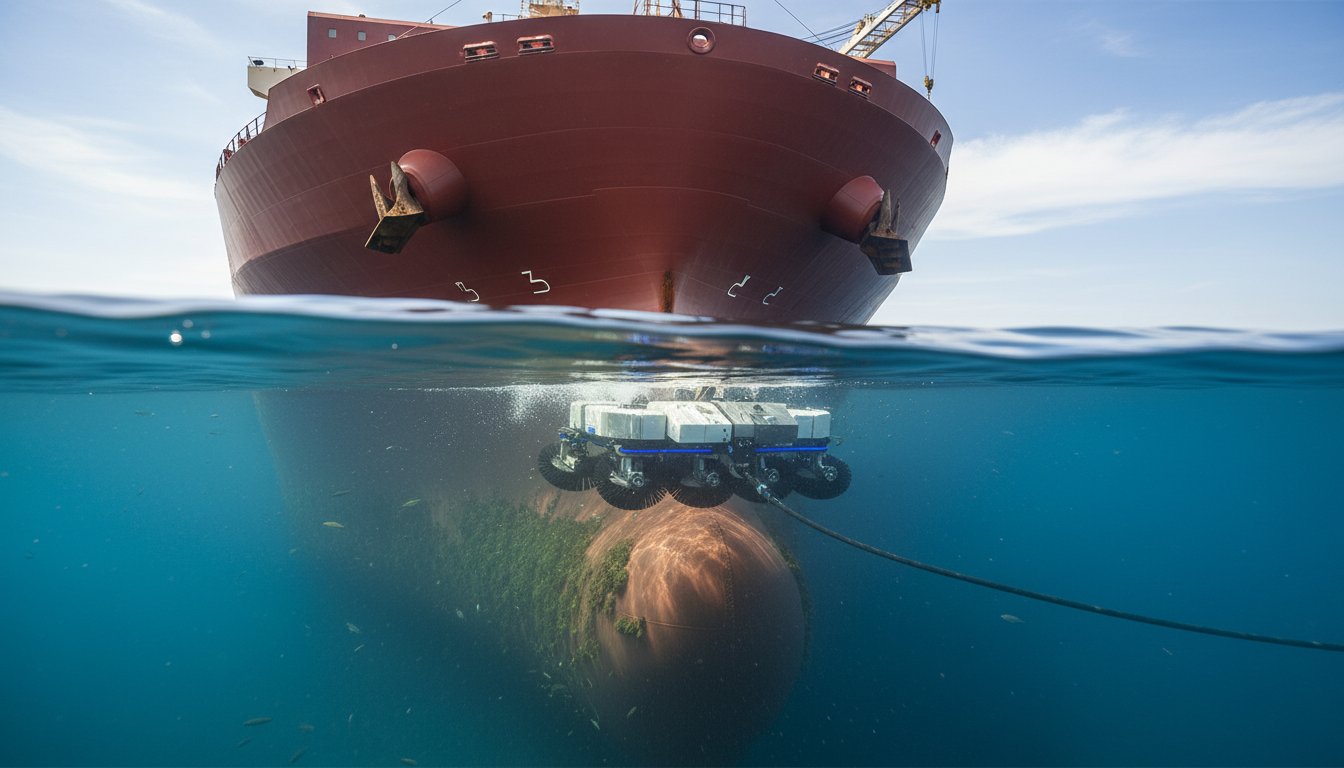
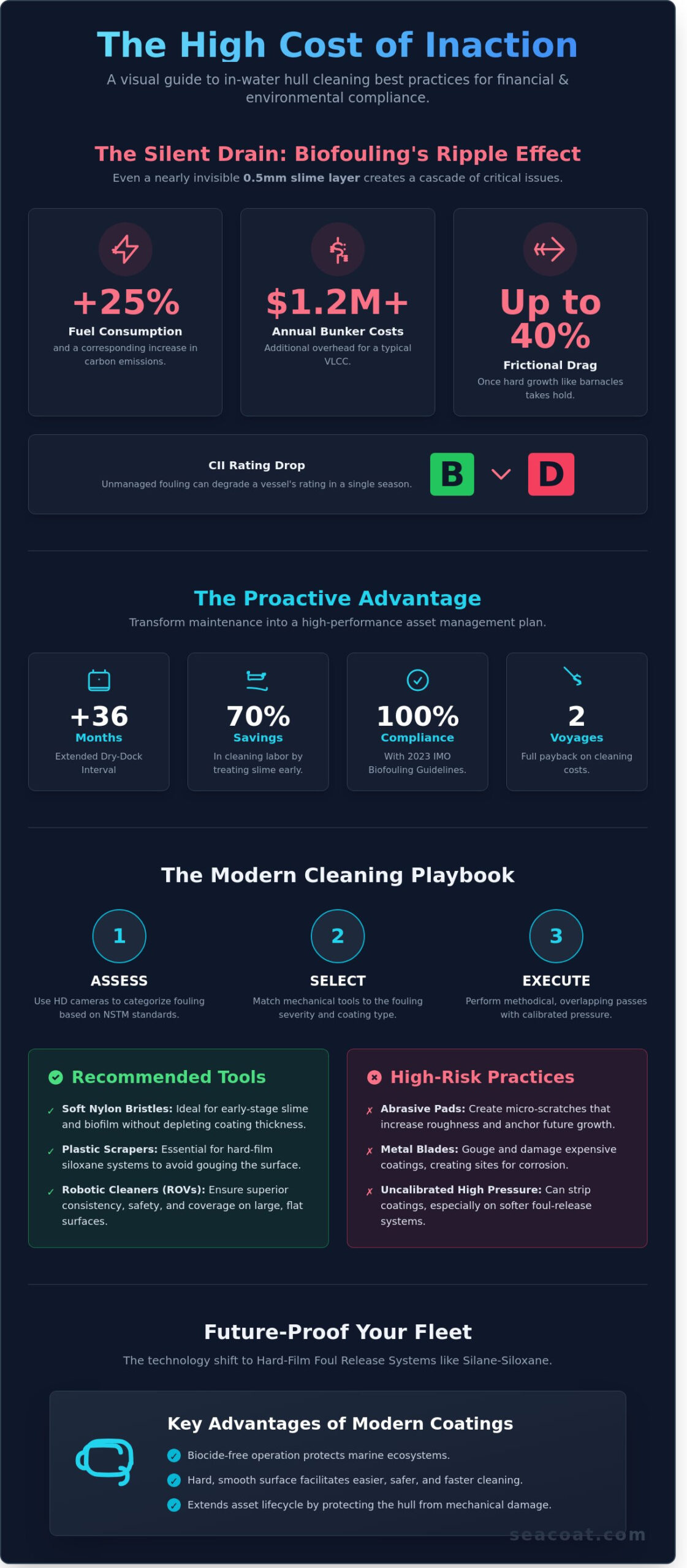
A slime layer as thin as 0.5 millimeters can trigger a 25% increase in fuel consumption and carbon emissions. For a typical VLCC, this translates to over $1.2 million in additional annual bunker costs. Implementing in-water hull cleaning best practices is no longer just a maintenance task; it’s a critical financial and environmental strategy. You’re likely already feeling the pressure of these overheads alongside the threat of regulatory fines for biocide leaching, which can reach tens of thousands of dollars per port call.
By mastering these technical standards, you can achieve 100% compliance with the 2023 IMO biofouling guidelines while maximizing your vessel’s hydrodynamic efficiency. This guide provides the framework to mitigate frictional drag and protect expensive siloxane coatings from mechanical damage. We’ll examine the specific protocols for non-abrasive cleaning, the data required for regulatory reporting, and the strategies that extend dry-dock intervals by a documented 36 months. You’ll gain the technical insight needed to transform your maintenance schedule into a high-performance asset management plan.
Key Takeaways
- Analyze the direct correlation between hull roughness and regulatory compliance to optimize your vessel’s EEXI and CII performance ratings.
- Determine the most effective growth removal techniques by matching specific mechanical tools to the severity of fouling and your existing coating system.
- Navigate complex environmental regulations by identifying the risks of biocide pulse release and understanding regional restrictions on underwater maintenance.
- Master in-water hull cleaning best practices to develop a site-specific maintenance schedule based on water salinity, temperature, and coating chemistry.
- Explore the technical advantages of hard-film silane-siloxane technology in facilitating easier, safer cleaning while extending the operational lifecycle of your assets.
The Strategic Importance of In-Water Hull Cleaning in 2026
Ship operators face a critical junction in 2026. The International Maritime Organization (IMO) has tightened Carbon Intensity Indicator (CII) thresholds, making hydrodynamic efficiency a non-negotiable asset. Biofouling isn’t just a cosmetic issue; it’s a structural drag on the balance sheet. Research from the GloFouling Partnerships indicates that even a light layer of slime, less than 0.5 mm thick, can trigger a 10% increase in fuel consumption. This represents the tipping point where microscopic biofilms transition into calcareous hard growth. Once barnacles or tubeworms establish a foothold, the drag penalty can escalate to 40% within weeks. Implementing in-water hull cleaning best practices ensures that vessels maintain their design speed without burning excess heavy fuel oil.
- Frictional Drag: Direct correlation between surface roughness and turbulent flow.
- CII Ratings: Hull fouling can drop a vessel’s rating from B to D in a single season.
- Asset Longevity: Proactive grooming extends dry-dock cycles from 5 to 7.5 years.
- Biological Thresholds: Identifying slime before it calcifies saves 70% in cleaning labor.
Hydrodynamic Optimization and Fuel Savings
Maintaining a smooth hull surface is the most cost-effective method for carbon mitigation. A 10-micron increase in average hull roughness correlates to a 0.5% to 1% increase in power requirements. For a standard VLCC (Very Large Crude Carrier), proactive cleaning cycles extend the period between dry-docking by up to 36 months. This shift from reactive haul-outs to scheduled maintenance provides a measurable ROI. Owners see a full payback on cleaning costs within the first two voyages following a groom. It’s about preserving the integrity of the foul-release coating while minimizing the vessel’s environmental footprint.
Regulatory Compliance and Biofouling Management
The 2026 maritime regulatory environment demands strict adherence to biofouling management plans. The IMO’s revised guidelines emphasize mechanical foul-release maintenance over traditional biocide-based systems. Ports in New Zealand and California already enforce “Clean Before Departure” mandates to prevent the spread of invasive aquatic species. Failing to follow in-water hull cleaning best practices can result in vessel detention or costly offshore cleaning requirements. By 2026, the industry has moved toward biocide-free, siloxane-based coatings that facilitate easy cleaning without releasing toxic heavy metals into the water column. This alignment of operational efficiency and ecological stewardship defines the modern fleet strategy.
Essential Tools and Techniques for Effective Growth Removal
Tool Selection: Brushes, Scrapers, and Pads
The choice of mechanical interface determines the long-term viability of the hull coating. For hard-film siloxane systems, technicians should utilize plastic scrapers rather than metal blades. Metal tools often gouge the surface, creating sites for accelerated corrosion. Brush stiffness must correlate with the fouling level; soft nylon bristles effectively manage light biofilm without depleting the coating’s thickness. It’s critical to avoid abrasive pads that create micro-scratches. These microscopic indentations increase surface roughness and provide a mechanical anchor for future recruitment of barnacles and tubeworms.
Step-by-Step Cleaning Execution
A systematic workflow ensures 100% surface coverage and maintains the vessel’s 10-year performance cycle. Following a standardized protocol prevents missed patches that could lead to rapid re-colonization.
- Initial Assessment: Use high-definition cameras to categorize fouling based on the Naval Ships’ Technical Manual (NSTM) Chapter 081 standards, ranging from Level 0 (clean) to Level 10 (heavy calcareous growth).
- Methodical Passes: Execute cleaning in overlapping vertical strips. This ensures no patches of growth remain to seed new colonies.
- Pressure Calibration: Utilize low-pressure methods for early-stage slime. This preserves the non-toxic foul release properties of the substrate.
- Documentation: Generate a comprehensive post-cleaning report. This includes before-and-after photography to monitor technical performance and fuel consumption metrics.
Effective maintenance strategies often integrate these steps to reduce fuel consumption by up to 15% through optimized hull smoothness. For those managing high-value assets, implementing a proactive grooming schedule can extend the interval between dry-docking events significantly. By adhering to these in-water hull cleaning best practices, fleet managers protect both their operational margins and the marine environment.
Navigating Environmental Regulations and Biocide Release
The maritime industry faces a critical juncture regarding in-water hull cleaning best practices as port authorities tighten heavy metal discharge limits. A primary concern for fleet managers is the “pulse release” effect. This phenomenon occurs when mechanical cleaning of traditional biocidal coatings triggers a sudden, concentrated discharge of copper or zinc into the water column. Data suggests that a single cleaning event on an ablative surface can release the equivalent of 180 days of passive leaching in under three hours. Because of this, ports in California and New Zealand have implemented strict bans on cleaning soft, ablative paints to prevent localized toxicity in harbor basins.
Adopting non-toxic, hard-film coatings simplifies the permitting process for harbor maintenance. When a vessel uses a biocide-free siloxane or epoxy system, the risk of chemical discharge is neutralized. This shift transforms hull maintenance from a high-stakes regulatory hurdle into a routine operational task. It’s a strategic move that aligns with the 2023 IMO Biofouling Guidelines, ensuring that maintenance doesn’t compromise the 10-year life cycle of the asset or the health of the local ecosystem.
Biocide Leaching and Water Quality Standards
Traditional antifouling relies on the depletion of biocides like cuprous oxide. These chemicals disrupt the endocrine systems of non-target marine life, leading to significant biodiversity loss in high-traffic ports. To comply with Clean Water Act Section 303(d) standards, operators must utilize advanced capture systems. These vacuum-based technologies are designed to recover 95% of all removed debris and chemical particulates, ensuring that effluent water meets local safety thresholds before it’s filtered and returned to the sea.
Preventing the Spread of Invasive Species
Vessel biofouling is responsible for approximately 60% of established invasive aquatic species (IAS) globally. Biosecurity protocols now require rigorous cleaning before a ship transits between distinct biogeographic regions to prevent the introduction of non-native pathogens. The Macro-fouling Threshold is defined as the specific point where biological growth exceeds 5% coverage of the submerged hull surface, representing a critical risk level for the translocation of invasive species. Effective in-water hull cleaning best practices prioritize the removal of these organisms before they reach reproductive maturity, protecting the ecological integrity of the vessel’s next port of call.
Optimizing Cleaning Frequency Based on Coating Type
Effective in-water hull cleaning best practices depend entirely on the specific chemical composition of the vessel’s underwater coating system. Standard ablative coatings function through a controlled erosion process; aggressive mechanical cleaning often strips these biocide layers prematurely, shortening the service life by up to 40%. Silicone foul-release systems rely on low surface energy to shed organisms, yet they face a significant “self-cleaning” limitation. Most silicone coatings require a constant speed of at least 22 knots to effectively shed macro-fouling. Because the average commercial transit speed has dropped to 14 knots due to slow-steaming initiatives, these coatings often accumulate slime that necessitates manual intervention.
Environmental variables such as water temperature and salinity levels act as biological accelerators. Biofouling rates typically increase by 15% for every 3°C rise in sea surface temperature. In high-salinity environments like the Red Sea, where levels exceed 40 PSU (Practical Salinity Units), calcium carbonate secretion in barnacles accelerates. To mitigate this growth, operators must move away from fixed schedules and toward condition-based monitoring. Utilizing performance software compliant with ISO 19030 allows managers to track speed-power degradation in real-time. A 2% increase in fuel consumption serves as a precise technical trigger for an inspection, ensuring maintenance occurs before hard growth compromises the coating integrity.
Coating Durability and Mechanical Resistance
Soft silicone coatings possess a Shore A hardness often below 25, which leaves them vulnerable to “tearing” or delamination when contacted by heavy-duty mechanical brushes. These physical defects increase surface roughness and destroy the hydrodynamic profile of the hull. In contrast, silane-siloxane systems provide a hard-film surface that resists mechanical abrasion. This durability is critical for maintaining a 10-year life cycle. Hard-film systems allow for frequent “grooming” with specialized brushes to remove micro-fouling without depleting the coating thickness or releasing toxic VOCs into the marine ecosystem.
Developing a Site-Specific Maintenance Plan
A vessel’s operational profile is the primary driver of fouling pressure. Ships with a port-stay ratio exceeding 60% face significantly higher risks than high-activity commercial liners. Seasonal “bloom” periods in tropical regions require cleaning intervals to be shortened from 6 months to 90 days to prevent permanent attachment of calcareous organisms. Integrating these site-specific variables into a broader vessel management strategy reduces long-term maintenance costs by approximately 20% while ensuring the ship remains compliant with tightening bio-security regulations.
Optimize your fleet’s efficiency with our biocide-free hard-film coatings designed for long-term hydrodynamic performance.
Hard-Film Foul Release: The Future of Maintenance Efficiency
Sea-Speed V 10 X Ultra represents a fundamental shift in how the maritime industry approaches hull protection. Unlike traditional ablative paints that rely on the constant depletion of toxic biocides, this Silane-Siloxane technology creates an inert, non-porous surface. At a molecular level, the coating generates a low-energy surface that marine organisms simply can’t grip. This science eliminates biocide release entirely while providing a verified 10-year service life. Because it’s a hard-film coating, it doesn’t suffer from the fragility associated with soft silicone oils. This technical superiority is why SeaCoat technology is the specified choice for high-value military vessels and global commercial fleets that prioritize long-term ROI over temporary fixes.
The Sea-Speed Advantage for Divers and ROVs
Implementing in-water hull cleaning best practices is significantly more efficient when the coating works with the maintenance crew rather than against them. Sea-Speed’s hard-film surface requires substantially lower force for biofouling removal, which directly reduces diver fatigue and extends ROV battery life during deep-water operations. Unlike soft foul-release systems that can be torn by mechanical brushes, Sea-Speed is highly resistant to high-pressure cleaning. It maintains its hydrodynamic profile even after multiple cleaning cycles. Data from recent field applications shows a 20% reduction in cleaning time compared to standard silicone systems, allowing vessels to return to service faster.
Long-Term Asset Protection and Sustainability
Global port authorities are increasingly restricting the discharge of heavy metals and VOCs. Sea-Speed meets these challenges head-on with a zero VOC, non-toxic formulation that ensures unrestricted port access. The coating’s durability is directly linked to its ability to maintain a low surface roughness profile over a 10-year period. While traditional paints become rougher as they age and leach, Sea-Speed remains smooth, ensuring that in-water hull cleaning best practices result in a near-new hydrodynamic state every time. This consistency is vital for maintaining fuel efficiency and reducing the carbon footprint of the entire fleet. It’s a strategic asset that balances environmental stewardship with rigorous operational demands. To find the right solution for your hull type, consult with our technical team to optimize your fleet maintenance.
Future-Proofing Your Fleet’s Hydrodynamic Efficiency
Navigating the maritime landscape of 2026 requires more than just routine maintenance; it demands a strategic shift toward permanent hydrodynamic optimization. By implementing rigorous in-water hull cleaning best practices, operators can mitigate the 40% increase in fuel consumption often caused by macro-fouling while ensuring total compliance with tightening international environmental regulations. Transitioning from traditional ablative paints to hard-film, foul-release systems minimizes biocide discharge and extends service intervals significantly. This shift isn’t just about compliance; it’s about protecting your bottom line through sustained drag reduction.
SeaCoat’s technology represents the pinnacle of this evolution. Our Sea-Speed V 10 X Ultra utilizes a proprietary Silane-Siloxane chemistry that’s completely non-toxic and biocide-free. It’s a proven solution currently utilized by global military and commercial shipping fleets to maintain peak efficiency in the most demanding conditions. With a documented 10-year life cycle and minimal maintenance requirements, it transforms your hull into a strategic asset. You’ll reduce your environmental footprint while securing a superior return on investment for the next decade. Explore Sea-Speed V 10 X Ultra for long-term hull performance and lead the industry toward a cleaner, more efficient future.
Frequently Asked Questions
Is in-water hull cleaning legal in most international ports?
Legality depends on local port authority regulations and the specific use of debris capture technology. For instance, the Port of Rotterdam and the California State Lands Commission mandate that 95% of removed biological material must be captured and filtered. Vessels using non-biocidal foul release coatings often face fewer restrictions than those with toxic paints. Following in-water hull cleaning best practices ensures compliance with the IMO 2023 Guidelines for biofouling management.
Will underwater scrubbing damage my expensive foul release coating?
Harsh mechanical scrubbing can damage the low-energy surface of a foul release coating if the equipment isn’t calibrated for siloxane-based films. These coatings rely on a specific surface tension to shed organisms during transit. Using abrasive pads can increase surface roughness by 20 microns or more; this negates the hydrodynamic benefit. Professional operators use soft nylon brushes or contactless water jets to preserve the 10-year integrity of the film.
How often should I clean my boat hull to maintain peak fuel efficiency?
You should schedule cleaning every 4 to 8 weeks depending on your geographic location and vessel activity levels. A slime layer just 0.5 millimeters thick can increase hull drag by 20%, leading to a 10% rise in fuel consumption. Regular maintenance prevents the transition from light slime to heavy calcareous growth. This proactive approach maintains the hydrodynamic profile and maximizes the ROI of your specialized coating system.
Can I clean my own boat hull or should I always hire a professional diver?
You should hire a certified professional diver or a robotic ROV operator to ensure both safety and regulatory compliance. The principle of using professionals for specialized maintenance to protect high-value assets applies at every scale. Just as a homeowner might rely on a company like Snugs Services for exterior upkeep, a ship operator needs a certified team. For large commercial ships, these teams use specialized reclamation systems that filter effluent down to 5 microns, a requirement in many international jurisdictions. DIY attempts often lack the precision to avoid coating abrasion or accidental damage. Hiring experts ensures your hull meets the ISO 19030 standard for hull and propeller performance monitoring.
What is the best tool for removing barnacles without scratching the hull?
A plastic scraper or a specialized rotary brush with soft bristles is the most effective tool for removing calcareous growth without compromising the substrate. Metal scrapers often gouge the protective layer, creating sites for localized corrosion. For SeaCoat’s hard-film siloxane coatings, a plastic blade removes barnacle bases while maintaining the 0% VOC surface integrity. This precision prevents the increase in drag typically associated with mechanical scarring.
How does water temperature affect the rate of marine biofouling?
Marine biofouling accelerates significantly as water temperatures rise, with metabolic rates of organisms often doubling for every 10 degree Celsius increase. In tropical regions where temperatures exceed 28 degrees Celsius, primary slime layers can form in under 24 hours. This rapid colonization necessitates more frequent adherence to in-water hull cleaning best practices. Cold water environments below 15 degrees Celsius typically see a 60% reduction in the speed of macro-fouling development.
What are the risks of cleaning an ablative antifouling paint in the water?
The primary risk of cleaning ablative paint in the water is the uncontrolled release of toxic biocides like cuprous oxide into the marine ecosystem. These coatings are designed to wear away; mechanical scrubbing triggers a massive pulse of heavy metals. This process can release 50 times more biocide than natural leaching. Most modern ports now prohibit the cleaning of ablative paints unless a 100% closed-loop collection system is utilized.
Does in-water cleaning help with EEXI and CII compliance?
Regular in-water cleaning is a critical strategy for improving a vessel’s Carbon Intensity Indicator (CII) rating and meeting EEXI requirements. By reducing hydrodynamic drag, a clean hull can lower CO2 emissions by up to 15% per voyage. Maintaining a smooth surface ensures the vessel operates within its designed efficiency parameters. This technical optimization is essential for older vessels struggling to meet the stringent 2024 IMO carbon reduction targets.