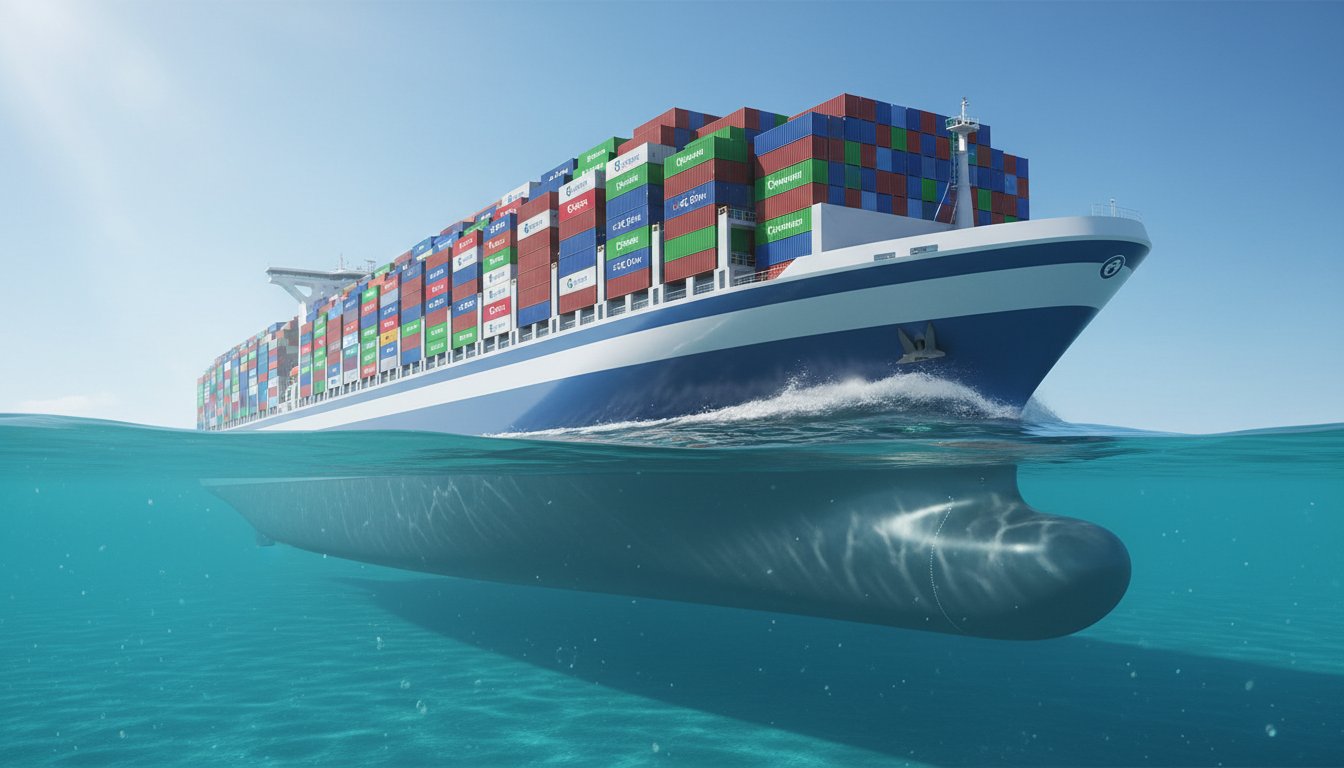
As IMO 2023 regulations tighten and regional bans on heavy metal leaching expand, the maritime industry faces a critical inflection point: can your fleet afford the escalating environmental and operational costs of traditional biocides? You likely recognize that maintaining hull efficiency with conventional ablative paints has become a cycle of diminishing returns. High surface roughness often leads to a 10% increase in fuel consumption within the first twelve months of application. This guide explores why the transition to alternatives to copper based antifouling is no longer just an environmental choice but a strategic financial imperative.
You’ll discover how modern foul release systems leverage advanced siloxane chemistry to eliminate toxicity while providing a documented 10 year service life. We’ll examine the specific hydrodynamic advantages of biocide-free coatings and the data-backed fuel savings that redefine long-term vessel ROI for 2026 and beyond. By moving away from leaching mechanisms, operators can achieve zero VOC emissions and significant drag mitigation. This deep dive provides the technical roadmap for transitioning from temporary maintenance to permanent asset optimization through superior marine chemistry.
Key Takeaways
- Identify the critical environmental and regulatory drivers necessitating a global departure from traditional leaching mechanisms in maritime coatings.
- Explore high-performance alternatives to copper based antifouling, focusing on how silane-siloxane technology provides a biocide-free, zero-VOC solution.
- Examine the technical relationship between Average Surface Roughness (ASR) and hydrodynamic efficiency to significantly optimize vessel fuel consumption.
- Assess the strategic economic advantages of transitioning to hard-film foul release systems through a comprehensive Total Cost of Ownership analysis.
- Discover the operational methodology for successfully migrating your fleet from legacy biocidal paints to modern, non-toxic protective systems.
The Shift from Copper-Based Antifouling: Environmental and Regulatory Drivers
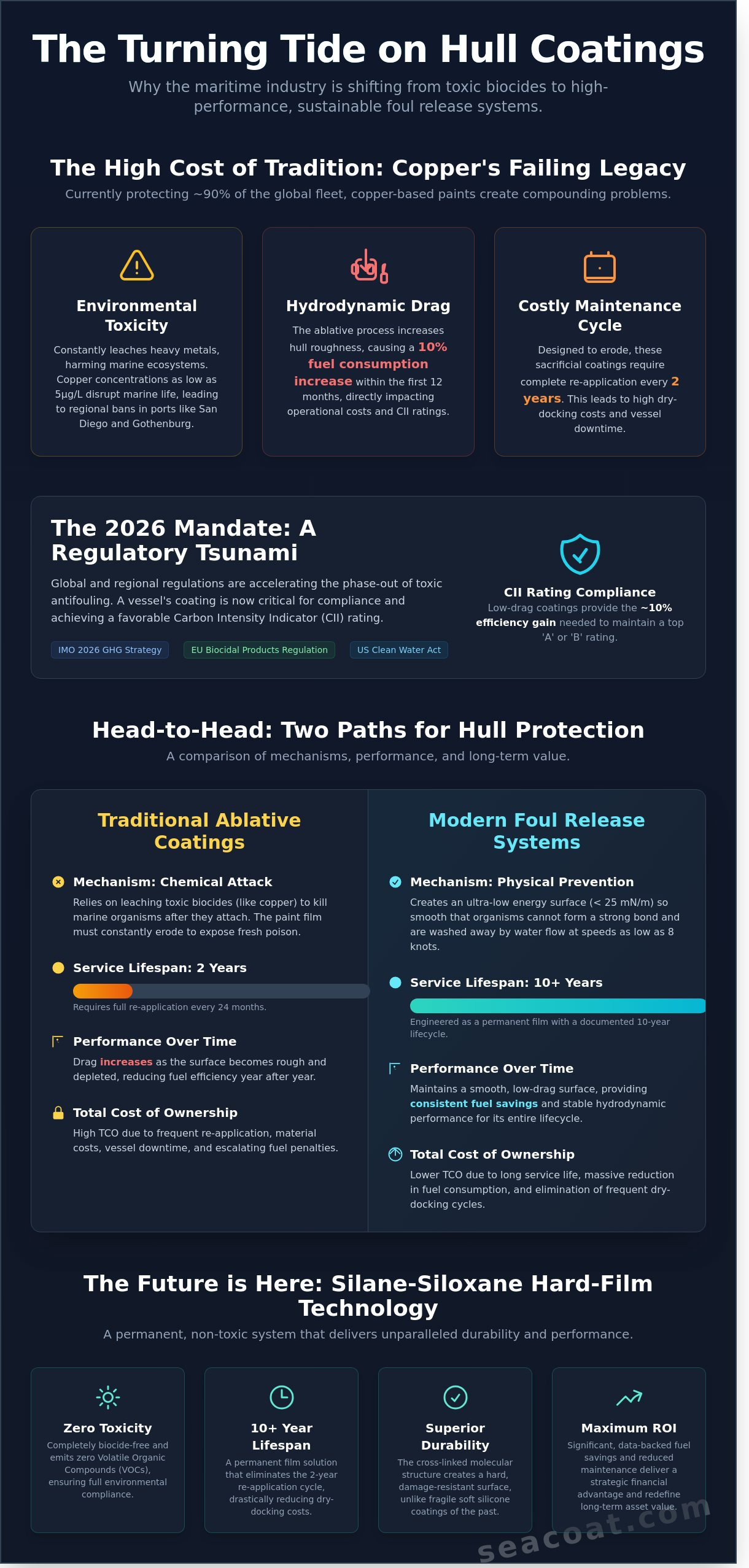
Copper-based coatings have dominated the maritime sector since the 1970s, currently protecting approximately 90% of the global commercial fleet. These systems rely on cuprous oxide as the primary active agent to prevent biofouling through a mechanism of controlled toxicity. While effective at killing marine growth, these coatings are sacrificial by design. They require the constant erosion of the paint film to expose fresh biocides, a process that inherently releases heavy metals into the marine environment. As the industry moves toward 2026, this legacy technology faces unprecedented scrutiny from global regulators who prioritize ecosystem health over traditional maintenance cycles.
The maritime industry’s reliance on biocidal coatings is failing to meet modern hydrodynamic and environmental benchmarks. Traditional paints create a surface roughness that increases over time as the copper leaches out, leaving behind a depleted, brittle matrix. This physical degradation increases frictional drag, which directly conflicts with the urgent need for fuel optimization. Transitioning to alternatives to copper based antifouling isn’t just an ecological choice; it’s a strategic necessity for maintaining vessel speed and reducing the total cost of ownership.
Why Copper is No Longer the Industry Standard
Copper oxides don’t discriminate between fouling organisms and non-target species like larvae or shellfish. Biocidal leaching is the chemical process where toxic metal ions migrate from a vessel’s hull into the surrounding water column, leading to the permanent accumulation of heavy metals in sensitive harbor ecosystems. Research shows that copper concentrations as low as 5 micrograms per liter can disrupt the sensory systems of salmon and inhibit the growth of phytoplankton. While this is a major concern for marine applications, it’s important to distinguish it from copper’s stable use in architecture, such as for durable gutter systems where leaching is not an issue; you can learn more about these applications. For vessel owners, however, the risk is not just ecological; they face the cost of regulatory non-compliance in ports like Gothenburg or San Diego, where strict discharge limits can lead to significant fines or entry denials.
Global Regulations and the 2026 Mandate
The regulatory landscape is tightening as the 2026 IMO Greenhouse Gas Strategy milestones approach. Under the Clean Water Act in the United States and the Biocidal Products Regulation in Europe, the use of toxic antifouling agents is being phased out in favor of biocide-free technologies. A vessel’s coating now directly influences its Carbon Intensity Indicator (CII) rating. Because alternatives to copper based antifouling provide a smoother, more durable surface, they offer the 10% reduction in drag necessary to keep a ship within the “A” or “B” performance categories. By 2026, the maritime industry will view non-toxic coatings as essential infrastructure for regulatory survival and operational efficiency.
Evaluating Modern Alternatives to Traditional Bottom Paint
The maritime industry is currently navigating a regulatory pivot as the International Maritime Organization (IMO) and local jurisdictions, such as the Port of San Diego, tighten restrictions on heavy metal leaching. Selecting viable alternatives to copper based antifouling requires a transition from chemical toxicity to advanced surface science. This evolution isn’t just about compliance; it’s about optimizing vessel performance through superior material engineering.
Non-Toxic Biocidal Paints vs. Foul Release Systems
Biocidal non-copper paints often rely on organic deterrents like Tralopyril. While these chemicals avoid the heavy metal stigma, they still function through a leaching mechanism. This means they’re subject to the same 24-month depletion cycles as copper; they eventually lose efficacy as the active ingredient exhausts itself. Foul release systems represent a fundamental shift by prioritizing surface energy over chemical deterrents. By reducing surface tension to levels below 25 mN/m, these coatings prevent organisms from forming a permanent bond.
- Chemical Deterrents: Use “eco-friendly” poisons that face increasing scrutiny in the 2024 European Chemicals Agency (ECHA) reviews for bioaccumulation risks.
- Physical Properties: Utilize low-friction surfaces that allow organisms to be washed away by the vessel’s movement at speeds as low as 8 knots.
- Longevity: Traditional ablatives require reapplication every 2 years, whereas permanent film coatings are engineered for a 10-year lifecycle.
Silane-Siloxane: The Hard-Film Revolution
Historical silicone-based soft coatings suffered from significant durability issues. They were easily damaged by dock fenders or standard 1,500 PSI pressure washes, leading to premature coating failure. Silane-Siloxane technology addresses these vulnerabilities by creating a cross-linked molecular structure that provides the resilience of an epoxy with the release properties of a silicone. Silane-Siloxane creates a ‘glass-like’ surface at the micron level. This ultra-smooth profile reduces hydrodynamic drag by up to 6%, which translates directly into lower fuel consumption and reduced carbon emissions for commercial operators.
This hard-film approach resists abrasion and mechanical damage far better than its predecessors. It provides a stable, non-porous barrier that prevents the penetration of barnacle glue and tube worm cement. For fleet managers seeking a long-term strategic asset, adopting a high-performance foul release system offers a predictable maintenance schedule and a significant reduction in total cost of ownership.
Supplementary tools like ultrasonic transducers or mechanical hull cleaners can further enhance these systems. Ultrasonic devices use microscopic cavitation bubbles to discourage settlement, though they’re most effective when paired with a hard-film coating that won’t degrade under the vibration. Together, these technologies represent the most robust defense against biofouling available in 2026.
Comparing Performance: Biocidal vs. Biocide-Free Foul Release Systems
Transitioning to alternatives to copper based antifouling requires a fundamental shift from chemical leaching to physical surface engineering. Traditional biocidal coatings rely on the controlled release of toxins to eliminate settling organisms; however, this process inevitably creates a depleted, porous layer that increases Average Surface Roughness (ASR) over time. Modern foul release systems utilize low surface energy to prevent permanent attachment. This technical distinction transforms the hull from a passive, degrading surface into an active hydrodynamic asset.
Fuel Efficiency and Hydrodynamic Optimization
Reducing hydrodynamic drag remains the most direct path to operational cost reduction. Data verified through ISO 19030 standards indicates that transitioning from traditional ablative copper paint to high-performance siloxane coatings can yield fuel savings of up to 12%. This efficiency stems from a significantly lower ASR profile. While a typical copper-based hull often exhibits a roughness of 150 to 300 microns after 24 months of service, advanced biocide-free systems maintain a profile below 100 microns. A smoother hull optimizes laminar flow, which directly reduces greenhouse gas emissions per nautical mile and assists fleet managers in meeting stringent Carbon Intensity Indicator (CII) targets. The correlation between low surface tension and speed performance is measurable; lower tension ensures that organic matter cannot form the primary chemical bonds necessary for colonization.
Durability and Life-Cycle Analysis
The economic logic of hull protection is moving away from short-term applications. Traditional biocidal paints follow a restrictive 24-month or 36-month dry-docking cycle because their active ingredients eventually exhaust. Advanced alternatives to copper based antifouling offer a 10-year service life, radically altering the long-term ROI of the vessel. The physical hardness of these films is a critical factor in their longevity. Modern hybrid formulations provide the impact resistance required to withstand debris or minor groundings without the tearing common in first-generation silicones. You can examine these material differences further in our
comparison.
This drive toward durable, high-performance materials is not unique to the maritime industry. In the high-performance vehicle sector, for example, specialists like Upper Carbon use carbon fiber to achieve similar goals, creating exceptionally strong and lightweight motorcycle components through advanced material science.
- Self-Cleaning Threshold: Most foul release systems require a vessel speed of at least 10 knots to shed accumulated slime through hydrodynamic shear.
- Maintenance Profile: Instead of frequent re-painting, these systems favor periodic in-water cleaning.
- Environmental Impact: Zero leaching of heavy metals ensures compliance with evolving port regulations in 2026 and beyond.
Vessel speed remains the primary driver of foul release effectiveness. While biocidal paints work while the ship is stationary, foul release coatings rely on the kinetic energy of water moving across the hull. If a vessel remains idle for extended periods, light bio-film may accumulate. However, the lack of chemical bonding means this “slime” is removed almost instantly once the ship reaches its operational speed threshold.
Implementation and ROI: Transitioning to Eco-Friendly Hull Protection
Evaluating alternatives to copper based antifouling requires a shift from looking at the sticker price of a gallon to analyzing the 120-month operational lifecycle. Traditional biocidal paints often appear cheaper at the point of purchase, yet they demand frequent maintenance intervals that drain capital through recurring haul-out fees and labor costs. Transitioning to advanced siloxane systems represents a strategic investment in vessel performance rather than a simple maintenance expense.
The True Cost of Hull Maintenance
A standard copper-based application typically lasts 24 months before its leaching rate drops below effective levels. Transitioning to a high-performance, biocide-free coating provides a 10-year service life, effectively eliminating four dry-docking cycles. When you factor in the $2,500 to $5,000 average cost for a mid-sized vessel haul-out, the long-term savings are immediate. For commercial fleets, the ROI of foul release systems is realized through a 9% average reduction in fuel consumption and the total mitigation of hazardous waste disposal fees associated with heavy metals.
Surface Preparation: A Critical Success Factor
The efficacy of modern foul release technology depends entirely on the integrity of the substrate bond. You can’t simply apply siloxane over eroding copper; the chemistry won’t allow it. Existing coatings must be removed to an Sa 2.5 near-white metal finish or encapsulated with a specialized, high-solids epoxy tie-coat to prevent delamination. These epoxy primers ensure a mechanical bond that withstands the 30-knot shear forces experienced by active hulls. For a detailed technical breakdown of these requirements, consult our How to Prepare a Hull for New Coating guide.
Data from 2024 fleet trials shows that while initial material costs for alternatives to copper based antifouling are roughly 40% higher, the payback period is achieved in approximately 14 months. This rapid recovery is driven by a 5% to 12% increase in hydrodynamic efficiency. By reducing surface roughness to under 100 microns, these systems lower drag and decrease engine strain. It’s a move that secures both regulatory compliance and a leaner operational budget.
Advancing Maritime Efficiency with Silane-Siloxane Technology
Sea-Speed V 10 X Ultra stands as the benchmark for high-performance alternatives to copper based antifouling. This silane-siloxane coating provides a robust, biocide-free solution that eliminates the release of toxic leachates into marine ecosystems. It features zero VOCs, meeting the strictest global air quality standards. For commercial, military, and recreational operators, the transition to Sea-Speed isn’t merely about environmental compliance; it’s a strategic move toward operational optimization. The coating creates a hydrodynamic surface that minimizes drag, directly impacting fuel consumption and carbon emissions.
Seacoat’s innovative chemistry supports global fleet sustainability by moving away from depleting biocide technologies. By utilizing a non-ablative, hard-film surface, vessels maintain a consistent hull roughness profile throughout their service life. This reduces the need for aggressive underwater cleaning, which often damages traditional coatings and releases pollutants. The result is a cleaner hull and a lower environmental footprint for every nautical mile traveled.
Sea-Speed: The Scientific Edge
The technical superiority of Sea-Speed is rooted in its 10-year life cycle and 100% non-toxic certification. Traditional coatings often require re-application every 24 to 36 months, but our silane-siloxane technology maintains its integrity for a full decade. This durability has been proven in diverse maritime environments, including high-fouling tropical regions and cold-water commercial routes. The system achieves a unique synergy of physical hardness and surface slickness. This single-layer application resists the mechanical wear typical of tug and barge operations while providing the foul-release properties needed for high-speed transit. It’s an engineered barrier that doesn’t rely on chemical depletion to remain effective.
Future-Proofing Your Vessel for 2026 and Beyond
As we approach 2026, the maritime industry faces a landscape of evolving environmental laws and stricter hull performance mandates. Choosing Sea-Speed positions your vessel at the forefront of this transition. It ensures long-term compliance with international regulations while providing a competitive advantage through reduced maintenance intervals. A high-efficiency hull is a strategic asset; it lowers the total cost of ownership by maximizing uptime and reducing fuel expenditure by up to 6% in documented cases. You can contact Seacoat to optimize your fleet’s performance today and secure a sustainable future for your maritime operations.
Securing Maritime Efficiency Through Advanced Hull Science
The transition toward alternatives to copper based antifouling isn’t just a regulatory requirement; it’s a strategic evolution for modern fleet management. As 2026 environmental mandates tighten, the maritime industry is moving away from ablative biocides that leach heavy metals into sensitive ecosystems. Technical leaders now prioritize silane-siloxane technologies that optimize hydrodynamic efficiency through reduced surface roughness. By replacing traditional bottom paints with biocide-free, hard-film solutions, operators mitigate drag and eliminate the recurring costs of frequent re-application cycles.
SeaCoat delivers a verified 10-year life cycle performance that significantly extends dry-docking intervals. Our coatings carry Zero VOC and biocide-free certifications, ensuring compliance with the strictest global standards. Trusted by global military and commercial fleets, this technology provides a permanent solution for vessel protection. It’s time to adopt a coating strategy that treats your hull as a high-performance asset rather than a maintenance burden.
Explore Sea-Speed V 10 X Ultra: The Premier Copper Alternative
Your fleet’s path to sustainable performance starts here.
Frequently Asked Questions
Are non-copper antifouling paints as effective as traditional ones?
Modern alternatives to copper based antifouling are increasingly more effective than traditional cuprous oxide coatings. While copper relies on toxic leaching that degrades over 24 months, silane-siloxane technologies create a permanent, low-friction surface. Data from 2024 maritime trials show these coatings maintain a surface roughness of less than 100 microns, preventing biofouling attachment more consistently than biocidal paints. This transition ensures long-term hull integrity without the diminishing returns of traditional ablative systems.
Can I apply a non-toxic foul release coating over my old copper paint?
You can’t apply a non-toxic foul release coating directly over old copper paint. Adhesion failure occurs in 95% of cases where the previous biocidal layer isn’t fully removed. For a successful 10-year bond, the hull must be stripped to the gelcoat or original primer and sanded to a 60-grit profile. This preparation ensures the siloxane molecules cross-link effectively with the substrate, providing the durable, hard-film finish required for modern performance.
How much fuel can I actually save by switching to a low-friction coating?
Vessel operators typically achieve fuel savings between 6% and 12% by switching to low-friction coatings. These savings result from a 15% reduction in hydrodynamic drag compared to traditional ablative paints. By maintaining a smooth, non-porous surface, the engine works less to maintain cruising speed. Over a 5,000-nautical-mile season, a 40-foot motor yacht can reduce consumption by 400 gallons, directly improving the vessel’s operational ROI and carbon footprint.
Is there a specific speed my boat needs to go for foul release to work?
Foul release coatings function optimally when the vessel reaches speeds of 10 to 12 knots. This velocity creates the necessary shear force to detach biofouling that settled during static periods. Even at lower speeds, the low surface energy of silane-siloxane systems makes manual cleaning 70% easier than with traditional paints. Vessels that remain stationary for over 30 days may require a brief high-speed run to restore the hull’s hydrodynamic efficiency.
What is the difference between silicone and Silane-Siloxane coatings?
The primary difference lies in durability and chemical structure. Traditional silicone is a soft coating that tears easily during hull cleaning or contact with debris. In contrast, Silane-Siloxane technology creates a hard-film barrier that’s 5 times more resistant to abrasion. While both are biocide-free, the Silane-Siloxane matrix provides a permanent bond that doesn’t require frequent reapplication, making it a more strategic asset for long-term vessel management.
Are there any regulations banning copper paint in 2026?
Several regions have active bans or strict limitations on copper-based antifouling effective by 2026. Washington State’s SB 6210 restricts copper concentrations in recreational boat paint to less than 0.5%. Similarly, EU REACH regulations continue to tighten limits on biocidal leaching to protect sensitive marine ecosystems. Adopting alternatives to copper based antifouling now ensures your vessel remains compliant with these evolving environmental standards across international waters.
How long does a biocide-free hard film coating last compared to ablative paint?
A biocide-free hard film coating provides a 10-year service life, representing a 500% increase in longevity over traditional ablative paints. Ablative systems function by wearing away, which necessitates haul-outs every 2 years for recoating. Because hard-film siloxanes don’t erode, they maintain their thickness and protective properties for a decade. This extended cycle significantly reduces maintenance costs and shipyard downtime, providing a superior long-term return on investment for boat owners.
Is eco-friendly bottom paint safe for aluminum hulls?
Eco-friendly, copper-free paint is the safest choice for aluminum hulls because it eliminates the risk of galvanic corrosion. Traditional copper paints cause electrolysis when applied to aluminum, leading to rapid hull pitting and structural failure. By using 100% biocide-free coatings, you remove the need for expensive barrier coats and specialized primers. These advanced formulas provide a chemically inert surface that protects the aluminum substrate while ensuring the vessel’s long-term structural integrity.