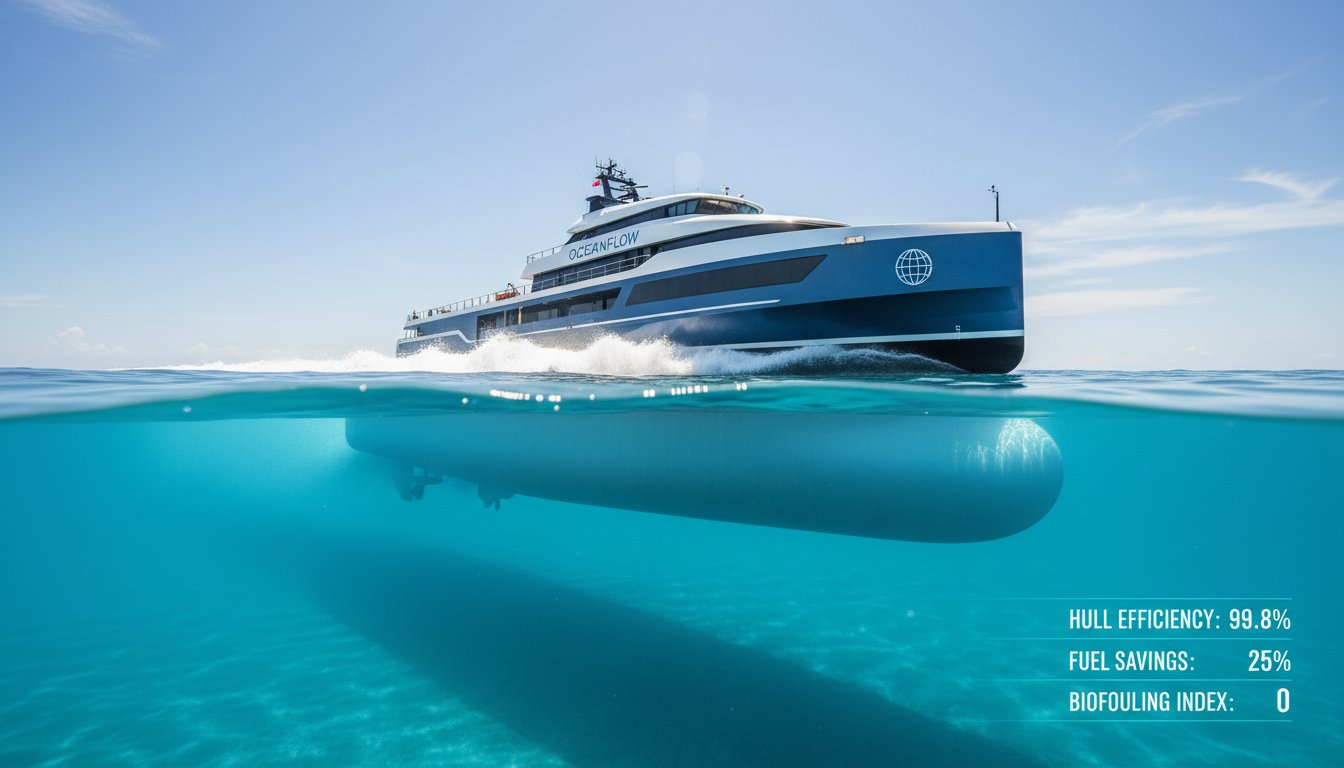
By 2026, the maritime industry faces a critical inflection point where traditional biocide-based coatings are no longer just an environmental liability but a direct threat to operational solvency. Research indicates that a mere 10 microns of increased hull roughness can trigger a 1 percent rise in fuel consumption, a figure that compounds rapidly as biofouling matures. You’ve likely accepted the high cost of annual haul-outs and the frustration of declining vessel speeds as unavoidable realities of ship ownership. It’s a common sentiment among operators who feel trapped between rising fuel costs and tightening environmental regulations regarding toxic leachates. Selecting the correct antifouling boat paint is no longer a simple maintenance task; it’s a high-stakes decision for your asset’s long-term ROI.
This guide provides the technical roadmap to transition from these temporary fixes to a strategic 10-year hull management cycle. You’ll learn how to achieve a zero-VOC profile while simultaneously reducing drag and extending dry-dock intervals through advanced siloxane technology. We’ll analyze the latest performance metrics from the 2025 shipping season to help you balance hydrodynamic efficiency with rigorous environmental compliance.
Key Takeaways
- Navigate the shifting 2026 regulatory landscape to ensure your vessel remains compliant with emerging biocide-free and copper-restricted environmental standards.
- Compare the chemical properties of traditional antifouling boat paint against modern foul release systems to optimize the balance between protection and hydrodynamic performance.
- Quantify the real-world ROI of a slick hull by understanding the direct relationship between surface roughness, frictional drag, and reduced fuel consumption.
- Identify the specific coating requirements for your vessel type, from high-speed performance yachts to aluminum-hulled displacement vessels prone to galvanic corrosion.
- Discover how advanced silane-siloxane technology provides a sustainable, zero-VOC solution that extends maintenance intervals while maximizing operational efficiency.
Understanding Antifouling Boat Paint in 2026: Trends and Regulations
For decades, the maritime industry relied on sacrificial coatings designed to leach toxins into the surrounding water. This method creates a persistent environmental debt. Traditional antifouling boat paint functions by releasing biocides, primarily cuprous oxide, to kill settling larvae and organic growth. By 2026, the regulatory framework has shifted. International Maritime Organization guidelines and regional bans in jurisdictions like the European Union and specific North American ports now mandate a transition toward copper-free and TBT-free alternatives. For a broader technical background, Understanding Antifouling Paint offers a detailed look at the history and chemical evolution of these coatings.
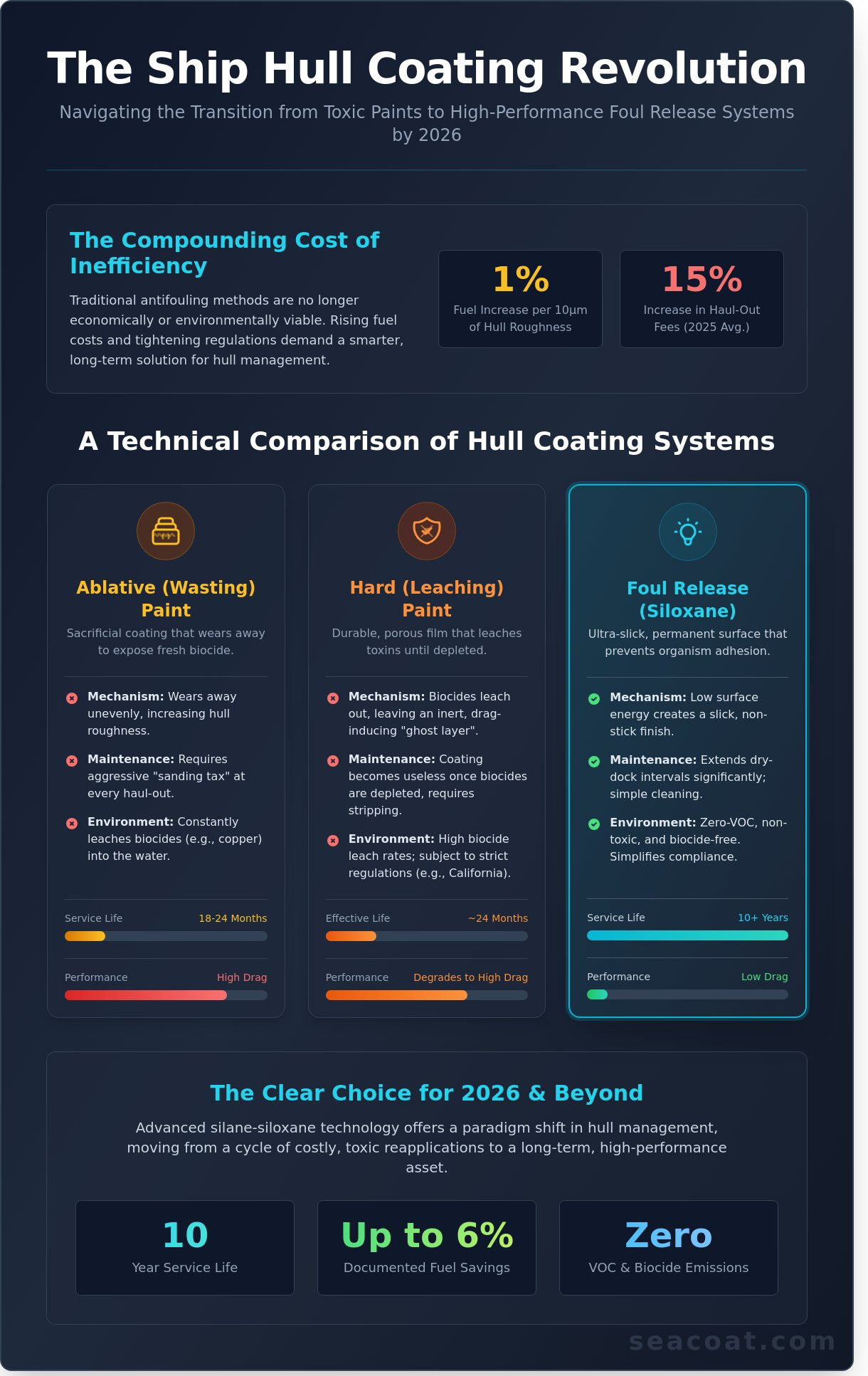
Financial pressures are accelerating this transition. In 2025, average haul-out fees increased by 15% across major global maritime hubs. Vessel owners can’t justify the 18 to 24 month drydock cycle required by depleting ablative paints. The industry is moving toward permanent assets that offer a 10 year service life; this shifts the focus from temporary killing layers to durable releasing surfaces that maintain hydrodynamic performance over the long term.
The Shift Toward Biocide-Free Solutions
Global maritime bodies now prioritize zero-VOC and non-toxic coatings to mitigate the 40,000 tons of copper estimated to enter the oceans annually from ship hulls. Leaching chemicals lead to harbor restrictions and heavy metal accumulation in local ecosystems. Adopting non-toxic coatings simplifies regulatory compliance for international voyaging. It removes the risk of being barred from sensitive ecological zones or facing fines in strictly regulated ports, providing a clear path for fleet-wide standardization.
Foul Release vs. Traditional Antifouling
The technical distinction lies in surface energy. Traditional antifouling boat paint attempts to poison organisms through chemical leaching. Foul release systems use siloxane-based chemistry to create a surface so slick that organisms cannot achieve a permanent bond. Traditional biocides often fail during stationary periods because the chemical cloud dissipates. Hard-film foul release technology solves the durability issues of older soft silicones. These modern films reduce hull roughness to below 100 microns, which optimizes hydrodynamic efficiency and results in documented fuel savings of up to 6%.
Comparing Ablative, Hard, and Foul Release Systems
Selecting an effective antifouling boat paint requires a technical understanding of the trade-off between chemical leaching and hydrodynamic efficiency. While the industry has historically relied on sacrificial coatings, the shift toward permanent, low-drag solutions is driven by both operational costs and tightening environmental standards.
Ablative Antifouling: The ‘Wasting’ Paint
Ablative coatings function through a self-polishing copolymer (SPC) mechanism where the paint film physically wears away as the vessel moves through the water. This controlled erosion is designed to reveal a fresh layer of biocides; however, this “wasting” process creates an inherently uneven surface profile. Owners face a significant “sanding tax” during every haul-out because the residual layers become brittle and unstable, requiring aggressive mechanical removal before a new application. Average surface roughness for these systems often exceeds 50 microns after a single season, leading to a measurable increase in fuel consumption as the hull loses its smoothness.
Hard Antifouling: Durability with a Toxic Core
Hard-film paints utilize a porous, non-soluble structure that allows water to penetrate the film and leach biocides while the coating remains physically intact. This is often the choice for high-speed racing vessels that require a scrubbable surface, but the technology has a fundamental flaw: biocide depletion. Once the active chemicals leach out, they leave behind a “ghost” layer of useless material that adds weight and drag without providing protection. Environmental oversight has intensified regarding these systems, particularly with California’s copper paint regulations, which establish strict leach rate limits to mitigate heavy metal accumulation in marinas. These regulatory pressures make traditional antifouling boat paint a high-risk choice for long-term fleet management.
Silane-Siloxane Foul Release: The High-Tech Choice
Modern foul release technology utilizes a Silane-Siloxane molecular structure to create a low-surface-energy barrier that prevents marine organisms from forming a permanent bond. Unlike traditional silicone coatings that are soft and easily torn by debris or fenders, Silane-Siloxane creates a hard-film finish that resists mechanical damage. This advanced chemistry yields a surface roughness of less than 20 microns, which is a 60% reduction in drag compared to the 50-plus microns typical of ablative systems. Silane-Siloxane is a non-migratory, permanent coating solution that doesn’t rely on the depletion of active ingredients to maintain its efficacy. By transitioning to a biocide-free foul release system, operators can achieve a 10-year service life while ensuring 100% compliance with global environmental mandates.
Calculating the Real ROI: Speed, Fuel, and Maintenance
Traditional antifouling boat paint is often viewed as a recurring expense. However, shifting the perspective toward a long-term hydrodynamic strategy reveals how surface smoothness dictates operational profitability. Hull roughness increases frictional drag; even a small increase in texture can force an engine to work 15% harder to maintain the same velocity. By minimizing this resistance, Sea-Speed transforms the hull into a high-performance asset rather than a maintenance burden.
Hydrodynamic Efficiency and Speed Gains
A slick, non-ablative surface can increase top speeds by 5% to 10% depending on vessel type and engine configuration. This reduction in resistance directly mitigates engine strain, which extends the service life of critical mechanical components. Commercial operators utilize these performance gains to meet rigorous EEXI targets, as lower drag equals a direct reduction in greenhouse gas emissions per nautical mile. It’s a measurable path toward decarbonization that pays for itself through optimized fuel consumption.
Extending the Dry-Dock Interval
The financial logic of Seacoat SCT, LLC technology rests on its 10-year lifecycle. Most traditional antifouling boat paint products require renewal every 12 to 24 months. By choosing a durable, biocide-free solution, owners can skip 3 to 4 haul-out cycles over a decade. This longevity eliminates several significant overhead costs:
- Labor reduction: You eliminate the need for annual sanding and the intensive labor costs associated with surface preparation.
- Waste mitigation: There are no hazardous waste disposal fees because the coating doesn’t leach heavy metals or toxins into the environment.
- Fuel optimization: Commercial fleets often report up to 12% annual fuel savings when maintaining a clean, hard-film surface.
Maintenance is simplified through a sophisticated foul-release mechanism. Because the surface is exceptionally smooth, bio-fouling can’t gain a permanent foothold. In-water cleaning requires nothing more than a soft sponge or cloth to wipe away biofilm. This ease of care ensures the vessel remains at peak efficiency without the need for aggressive, abrasive scrubbing that typically damages the integrity of softer, ablative coatings. For the recreational yacht owner, it means more time on the water and less time in the yard.
Selecting the Right Coating for Your Specific Vessel
Choosing a hull coating requires a technical evaluation of your vessel’s operational profile. High-speed performance yachts demand a surface that minimizes hydrodynamic drag to optimize fuel consumption and top-end velocity. In contrast, slow-moving displacement hulls require a stable surface that prevents heavy colonization during long periods of low-speed transit. Traditional antifouling boat paint often relies on a leaching mechanism that becomes less effective when the vessel is stationary. Siloxane-based foul release systems like Sea-Speed V offer a distinct advantage by utilizing low surface energy to prevent attachment, regardless of the vessel’s knots per hour.
Aluminum hulls present a specific chemical challenge due to the risk of galvanic corrosion. When copper-based coatings are applied to aluminum, the resulting electrolytic reaction can lead to severe hull pitting and structural failure. Sea-Speed is a dielectric material, meaning it does not conduct electricity. It provides a permanent, non-metallic barrier that eliminates the threat of electrolysis. Owners should ignore marketing fluff that promises “aluminum-safe” biocides without providing specific dielectric strength data. Reliable technical data sheets must list a VOC content of 0 grams per liter and confirm a surface roughness of less than 20 microns to ensure true performance.
Commercial and Military Fleet Requirements
Fleet operators prioritize durability and regulatory compliance. For ice-breaking vessels or tugboats, a coating must reach a Shore D hardness of 75 or higher to resist extreme abrasion. Global port access depends on meeting the IMO AFS Convention standards, which favor biocide-free chemistries. Implementing a standardized, single-coat application protocol can reduce dry-docking intervals by 40% compared to traditional multi-coat systems. This transition shifts the coating from a recurring maintenance cost to a long-term strategic asset with a 10-year life cycle.
Pleasure Craft and Racing Yachts
Racing sailors focus on the skin friction coefficient to gain a competitive edge. Reducing hull friction by 3% can translate to significant lead changes in regattas. Clear foul release coatings are also a preferred choice for luxury yachts, as they maintain the aesthetic integrity of the gelcoat while preventing calcium carbonate buildup. These hard-film systems don’t crack or degrade during seasonal storage or frequent trailering. This resilience ensures the hull remains protected and hydrodynamically efficient year after year without the need for annual sanding.
This principle of maximizing on-water time and performance isn’t just for racers; it’s critical for any marine business. For example, premier charter services such as Celtic Quest Fishing depend on reliable, efficient vessels to provide the best possible experience for their guests, making advanced hull care a key part of their operational strategy.
Explore how our siloxane technology outperforms traditional antifouling boat paint by visiting our technical specifications and product guide.
The Sea-Speed Advantage: Advanced Silane-Siloxane Technology
Since 2001, Seacoat has operated as an expert innovator in the field of marine chemistry. We’ve led the transition away from the toxic leaching inherent in traditional antifouling boat paint toward permanent, sophisticated foul release solutions. Sea-Speed V 10 X Ultra is the premier result of this evolution. It utilizes a proprietary silane-siloxane structure that creates an ultra-smooth, non-stick surface. Because the formulation is 100% biocide-free and contains zero VOCs, it meets the strictest global environmental regulations while delivering measurable hydrodynamic efficiency.
Why Sea-Speed Outperforms Traditional Brands
Many competitors rely on soft silicone coatings that are fragile and prone to tearing during routine cleaning or hull contact. Sea-Speed V 10 X Ultra provides a durable hard film that withstands mechanical scrubbing and high-speed water friction without degrading. Professional yards prefer the Seapoxy primer system because it streamlines the application process and ensures a high-strength bond to the substrate. Sea-Speed has been proven in commercial use for over two decades, providing reliable protection for diverse maritime assets.
- Unmatched Durability: Resists damage from debris and fenders unlike fragile soft silicones.
- Hydrodynamic Efficiency: Reduces surface roughness to minimize drag and fuel consumption.
- Environmental Stewardship: Contains zero heavy metals or leachable toxins.
Taking the Next Step Toward Hull Optimization
Transitioning to a 10 year life cycle coating requires a strategic approach. For industrial stakeholders, we provide comprehensive technical consultations to assist with fleet-wide implementation and performance metrics. Recreational vessel owners can purchase individual kits directly through the Seacoat store to bring commercial-grade protection to their private craft. Optimize your vessel’s performance with Seacoat’s advanced coatings to eliminate the maintenance cycles associated with standard antifouling boat paint. Our global support network provides the logistical infrastructure needed for bulk industrial orders and specialized marine projects across all major international ports.
Future-Proofing Your Maritime Operations for 2026 and Beyond
As the maritime industry navigates the rigorous environmental mandates of 2026, the transition from traditional biocidal coatings to high-performance foul release systems has become a strategic necessity. Selecting the most effective antifouling boat paint requires a deep understanding of how surface roughness impacts hydrodynamic drag and total fuel consumption. SeaCoat’s advanced Silane-Siloxane technology has been in continuous commercial use since 2001, providing a proven track record of durability and performance across diverse global fleets. This system ensures your vessel meets all current IMO and EEXI environmental standards through a Zero-VOC, non-toxic formulation that prioritizes marine ecosystem health. Efficiency is no longer just a goal; it’s a requirement. By focusing on a ten-year life cycle, operators can significantly reduce maintenance intervals and overall operational costs. You’ll find that investing in superior surface technology is the most reliable way to secure long-term ROI in an evolving regulatory landscape. Technical precision and environmental stewardship now work together to enhance your bottom line. This principle of protecting high-value assets through expert maintenance is mirrored in other sectors, where firms like Poseidon Power Washing LLC specialize in professional exterior cleaning for luxury properties.
Explore the Sea-Speed V 10 X Ultra Product Range
Frequently Asked Questions
Is antifouling boat paint being banned in 2026?
There isn’t a global ban on all antifouling boat paint in 2026, but specific regional regulations like Washington State’s SB 6210 and the EPA’s ongoing review of biocides indicate a hard shift toward copper-free alternatives. California’s Department of Pesticide Regulation has already implemented leach rate limits of 9.5 micrograms per square centimeter per day. Choosing a biocide-free siloxane coating now mitigates the risk of future non-compliance and avoids the high costs of emergency hull stripping.
What is the difference between ablative and foul release coatings?
Ablative paints function by eroding over time to expose fresh biocides, whereas foul release coatings utilize a low-surface-energy film to prevent organisms from adhering. Sea-Speed represents the latter, providing a hard, non-ablative surface that achieves a surface roughness of less than 100 microns. This technical distinction means you aren’t releasing heavy metals into the water column; instead, you’re using hydrodynamics to shed biofouling as the vessel moves.
Can I apply foul release coating over my existing bottom paint?
You can’t apply a high-performance foul release coating directly over existing ablative or copper-based antifouling boat paint because the bond will fail. To ensure a 10-year service life, the hull must be abrasive blasted to an SSPC-SP10 “Near-White” finish or equivalent. This process removes all depleted biocide layers and provides the mechanical profile necessary for our siloxane technology to achieve maximum adhesion and durability.
How much fuel can I actually save with a low-friction hull coating?
Independent sea trials and ISO 19030 data show that Sea-Speed V 10 X Ultra reduces hull friction enough to cut fuel consumption by 6% to 12%. By maintaining a smooth surface with a coefficient of friction significantly lower than traditional paints, vessels can maintain speed at lower RPMs. For a standard commercial vessel, this translates to thousands of gallons of fuel saved annually, directly impacting operational ROI and carbon footprint metrics.
Are non-toxic boat paints as effective as traditional copper-based paints?
Modern non-toxic antifouling boat paint often outperforms traditional copper-based products in terms of longevity and drag reduction. While copper relies on chemical toxicity to kill larvae, Sea-Speed uses a physical barrier that prevents attachment entirely. Data from 10-year case studies indicates that our siloxane-based technology maintains its integrity and foul-release properties long after traditional paints have leached their effective biocide content and required recoating.
How long does a professional-grade foul release coating last?
A professional-grade coating like Sea-Speed V 10 X Ultra is engineered for a 10-year service life. Unlike traditional products that require bi-annual recoating, this hard-film siloxane doesn’t polish away or lose its efficacy over time. This extended lifecycle reduces haul-out frequency by 50%, providing a strategic asset management advantage for fleet owners who prioritize long-term durability over short-term maintenance fixes and temporary coatings.
Is Sea-Speed V 10 X Ultra suitable for aluminum boats?
Sea-Speed V 10 X Ultra is ideal for aluminum hulls because it’s completely biocide-free and contains no copper. Traditional copper-based paints cause galvanic corrosion when applied to aluminum, leading to structural degradation of the hull. Our siloxane technology acts as an inert barrier, protecting the metal while eliminating the risk of electrolytic reactions. It’s a safe, non-conductive solution for aluminum workboats and high-speed ferries.
Do I need to haul my boat out every year for cleaning if I use foul release?
You don’t need to haul out annually for cleaning because Sea-Speed allows for easy underwater grooming. Most accumulated slime or soft growth can be removed with a soft brush or by simply running the vessel at speeds over 10 knots. Because the coating is a hard film with zero VOCs, it withstands mechanical cleaning without releasing toxins, extending the interval between dry-dockings to 60 or even 120 months.